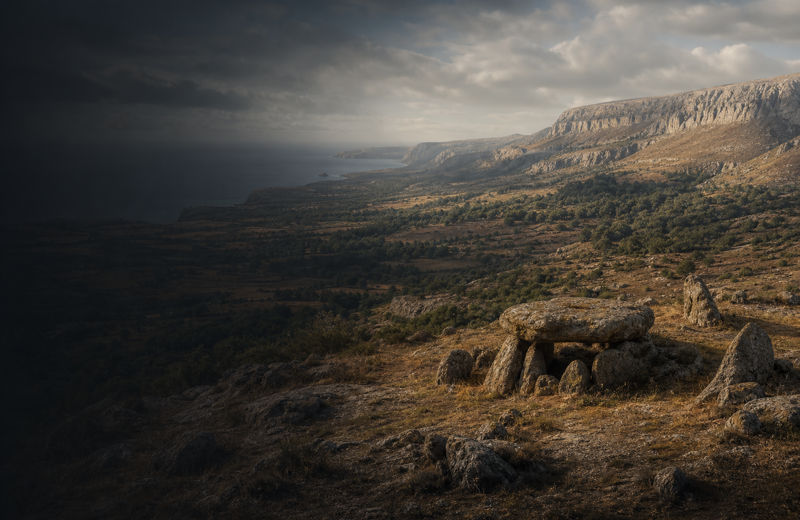
Iberian Neolithic: Farmers of the Atlantic Edge
4700–2500 BCE Spain: caves, tombs and DNA illuminate the first farming communities
DNA Spotlights · Ancient and Historical Cultures
Download PDF creates a visual, rasterized copy. Use Print for selectable text and better assistive-technology support.
Explore the places, time periods, and published research behind ancient DNA samples and the cultures associated with them.
Browse the collection1–12 of 12 spotlights
4700–2500 BCE Spain: caves, tombs and DNA illuminate the first farming communities
LBK communities around Asparn Schletz revealed by archaeology and ancient DNA
Five Varna burials (4714–4368 BCE) reveal early social splendor and mixed farmer lineages
Middle Neolithic communities in eastern Croatia, seen through archaeology and ancient DNA
A Croation Neolithic farming community revealed by bones, pottery and DNA
Five Bronze Age individuals from Moni Odigitria connect material culture with early DNA
The first farmer villages in the Carpathian Basin, 6000–5300 BCE
Late Neolithic farmers on the Hungarian Plain in vivid archaeological and genetic relief
Neolithic farmers (6000–4300 BCE) along the lower Danube, glimpsed through archaeology and five ancient genomes.
Three Neolithic individuals from Vojvodina offer a glimpse of the first farmers' lives and genes.
Early farmers around Nitra (5400–4800 BCE) where pottery and genomes trace a Near Eastern lineage
Early Neolithic farmers on the Lower Danube, 5800–5400 BCE — where pottery meets genome
Our guides explain the methods we use, from population comparisons to matching segments of DNA.