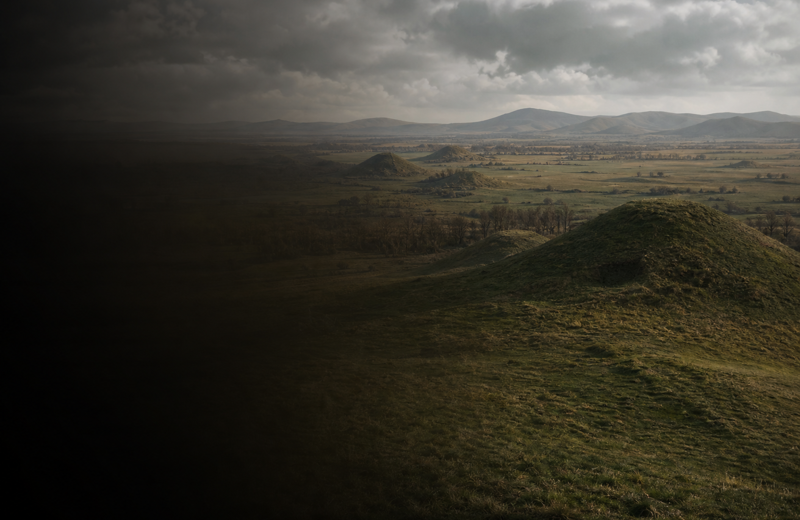
Nuštar: Avar-Age Crossroads
Early medieval community in eastern Croatia where local and steppe threads meet

DNA Spotlights · Ancient and Historical Cultures
Download PDF creates a visual, rasterized copy. Use Print for selectable text and better assistive-technology support.
Explore the places, time periods, and published research behind ancient DNA samples and the cultures associated with them.
Browse the collection1–12 of 19 spotlights
Early medieval community in eastern Croatia where local and steppe threads meet
Archaeology and DNA from 2800–1800 BCE across German Bell Beaker landscapes
Graves and genomes from Bavaria, 250–650 CE reveal continuity and contact
12 Early Avar burials (600–670 CE) show a strong Y‑DNA N signal and East Eurasian maternal lineages in central Hungary.
A fragmentary genetic portrait from 7 Late Avar burials in central Hungary
Middle–Late Avar burials (650–800 CE), Danube–Tisza, Hungary — four ancient genomes
A Carpathian snapshot of movement, mixture, and material culture (580–720 CE)
A Carpathian landscape shaped by migration, elite horse culture, and mixed ancestries
A genomics-informed portrait of Late Avar communities in the Carpathian Basin (600–977 CE)
Burials from 600–883 CE in Hungary that trace a tapestry of steppe ties and local ancestry
Archaeology and ancient DNA from 6th–9th century Avar communities across Hungary
650–804 CE Avar communities on the Hungarian plain where archaeology and DNA reveal layered origins
Our guides explain the methods we use, from population comparisons to matching segments of DNA.