A man buried in Russia in the Late Upper Paleolithic era

Download PDF creates a visual, rasterized copy. Use Print for selectable text and better assistive-technology support.

Loading Report

Preparing your ancestry journey

Preparing the available report content...

Your report will open automatically.

Skip to main content
Reference library / Sample profile

A man buried in Russia in the Late Upper Paleolithic era

Explore the recorded context, genetic comparisons and research behind this reference sample.

RussiaAfontova Gora 2 Site, Russia

A reference profile describes this sample. It does not establish a personal or family relationship.

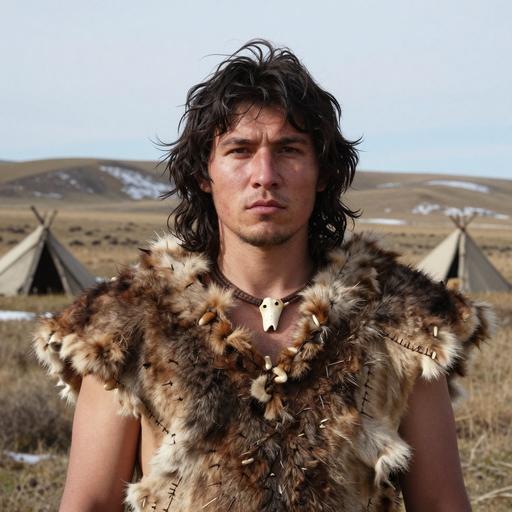
AI portrait reconstruction for A man buried in Russia in the Late Upper Paleolithic era
AI-generated artistic reconstruction, not a photograph of the individual.
Record

Sample details

Recorded details and available lineage markers.

Individual

Paleolithic Cultures of Siberia individual, Russia

Sample ID: AfontovaGora2

Date Range

15001 BCE - 14640 BCE

Cultural Period

Afontova Gora 2 Site, Russia

Biological Sex

Male

mtDNA Haplogroup

Not available

Y-DNA Haplogroup

Q-NGQ11

Social Role

Hunter (AI estimate, era-typical)

Geography

Location

Where this individual was discovered

Country Russia
Locality Afontova Gora
Coordinates 56.0160, 92.8660
Chronology

Date range

When this individual lived in the broader context of human history

Paleolithic Cultures of Siberia individual, Russia 15001 BCE - 14640 BCE
Context

Historical context

Background information associated with the reference record.

Afontova Gora 2 is one of the key archaeological sites providing insight into Upper Paleolithic cultures in Siberia, specifically from the late Upper Paleolithic period, around 20,000 to 10,000 years ago. Located near the city of Krasnoyarsk on the Yenisey River in Russia, Afontova Gora 2 is part of a broader complex of sites that have offered a wealth of information about the prehistoric peoples who inhabited this region during the Paleolithic era.

Geographical Context

The Afontova Gora complex is situated on a series of terraces on the left bank of the Yenisey River. The region is characterized by its harsh climate, with cold, snowy winters and relatively short, mild summers. During the late Upper Paleolithic, the climate would have been even more severe due to glacial conditions, making human habitation challenging. The site’s location along the Yenisey River likely provided strategic advantages, offering access to water, transportation routes, and a variety of ecological niches for hunting and gathering.

Archaeological Discoveries

Afontova Gora 2 has yielded a significant number of archaeological artifacts, giving considerable insight into the lifestyle, technology, and culture of its inhabitants. Artifacts discovered at the site include:

  • Stone Tools: A variety of lithic tools were found, including blades, scrapers, and projectile points. These tools suggest advanced methods of tool production and use typical of Upper Paleolithic technology. The presence of microblade technology is particularly noteworthy, indicating a sophisticated approach to tool making.

  • Bone and Antler Implements: The use of organic materials for tool production is evident in the bone and antler artifacts recovered, including needles and points, which suggest clothing production and detailed crafting skills.

  • Art and Ornamentation: Personal adornments such as beads and pendants made from bones and teeth have been uncovered, indicating a complex social structure with symbolic or aesthetic expressions. These items suggest that, beyond survival, aesthetic considerations and perhaps even social status played roles in this society.

  • Animal Remains: Faunal analysis shows remains primarily of large herbivores such as mammoths, bison, and reindeer, indicating that hunting was a significant part of the Afontova Gora 2 economy. The variety of species also implies seasonal hunting strategies and potentially sophisticated methods for processing and using animal products.

Cultural and Social Structure

The inhabitants of Afontova Gora 2 were likely highly adaptable, managing to survive in a demanding environment. Their toolkit suggests they were skilled hunters and gatherers with detailed knowledge of their environment. The societal structure of these groups may have been organized around extended family units or small bands that were semi-nomadic, moving seasonally to exploit different resources.

These groups likely had complex social organization, as indicated by the presence of trade networks suggested by the discovery of non-local materials. Additionally, the crafting of personal ornaments highlights the possible role of individual and group identity, indicating sophisticated cognitive and cultural development.

Significance

The significance of Afontova Gora 2 lies in its contribution to the understanding of Upper Paleolithic cultures in Siberia, a region that previously had been less understood compared to Western Europe. The site provides critical evidence for the migration and adaptation of human groups during the harsh climatic conditions of the late Ice Age and expands the knowledge of early human technological, social, and cultural evolution.

Conclusion

Afontova Gora 2 is a vital archaeological site for understanding the Upper Paleolithic cultures of Siberia. The richness of the artifacts found at this site provides valuable insights into the adaptive strategies, social structures, and cultural expressions of prehistoric humans in a challenging environment. Through continued research and excavation, Afontova Gora 2 continues to reveal the complexities of human life tens of thousands of years ago in Siberia.

Analysis

Genetic comparisons

These comparisons show genetic similarity, not identity or origin. The populations listed are those whose genomes show statistical alignment to this ancient individual.
Similarity reflects shared history, not shared identity. These are analytical comparisons, not claims about who this person was.

Modern Genetic Admixture

This analysis compares the DNA profile with present-day reference populations, showing statistical similarity to modern reference populations from different regions. The excavation site records where this individual was found, not a fixed modern genetic identity.

Europe 68.9%
Northwestern European 38.1%
Finnish 31.3%
Northwestern European 6.8%
Eastern European 30.9%
Asia 16.4%
Central Asian, Northern Indian & Pakistani 16.4%
Indian 10.5%
Pakistan 5.9%
America 13.6%
America 13.6%
Native American 13.6%
Oceania 1.1%
Melanesian 1.1%
Papuan 1.1%

Closest Modern Populations

These are the modern populations showing the closest statistical alignment to A man buried in Russia in the Late Upper Paleolithic era, ranked by genetic distance. Lower distance values indicate closer statistical similarity. Cross-region similarity can reflect shared ancestry, population movement, continuity, or later admixture.

1
Komi A
6.1606
2
Tatar Mishar
6.4844
3
Tatar Kazan
6.8065
4
Russian Leshukonsky
6.8128
5
Saami Kola
7.5149
6
Russian Pinezhsky
7.6418
7
Besermyan
7.9587
8
Russian Pinega
7.9859
9
Russian Krasnoborsky
8.3435
10
Mordovian
8.4424
Context

Related Samples

This individual exists within a broader network of ancient samples. No ancient genome stands alone.

Individual Culture/Period Date Location Action
Paleolithic Cultures of Siberia individual, Russia Afontova Gora 2 Site, Russia 15001 BCE Afontova Gora, Russia View
Paleolithic individual, Russia MA1 Hunter-Gatherer, Russia 22621 BCE Mal'ta, Russia View
Palaeolithic individual, Russia 22621 BCE Mal'ta, Russia View
Palaeolithic individual, Russia 15001 BCE Afontova Gora, Russia View
Page 1
Individual Culture/Period Date Location Action
Paleolithic Cultures of Siberia individual, Russia Afontova Gora 2 Site, Russia 15001 BCE Afontova Gora, Russia View
Page 1
Sources

References

Scientific publications and genetic data that inform this profile.

G25 Coordinates

These coordinates represent a position in genetic space, a tool for comparison, not a conclusion. You can use these to perform custom admixture analysis in G25 Studio.

AfontovaGora2,0.1111243,0.02837866,0.06513818,0.07909374,-0.00093678,0.02358504,-0.02578296,-0.02549886,-0.00379678,-0.0278955,0.0049085,-0.00714218,0.01186774,0.0072301,-0.0049865,-0.00398672,-0.00113998,-0.0025929,-0.00105394,-0.00449756,0.00028536,-6.098E-05,-0.00914622,0.0048476,-0.00174275
Continue in G25 Studio
Use code for 30% off • Expires Nov 16