overview
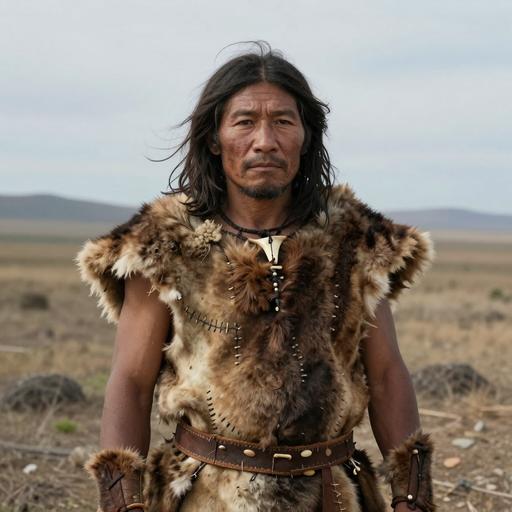
The MA1 Hunter-Gatherer phase is defined by a very early Upper Paleolithic date within Siberia (here given as 24,000 BCE) and by assignment to the Malta-Buret Culture. It reflects mobile hunter-gatherer practices during the Pleistocene, where survival depended on planning, craft, and the ability to exploit seasonally available resources.
region_environment
The broader setting is Siberia, characterized by cold-season constraints and major seasonal variation in resources. Hunter-gatherers would have relied on landscapes that supported game, water access, and raw material procurement, with movement and site use likely tied to seasonal cycles.
historical_context
An Upper Paleolithic context at this time sits within a period when people across northern Eurasia used complex stone-and-bone technologies and maintained flexible settlement strategies. In Siberia, cultural labels such as Malta-Buret are used to organize archaeological similarity across sites and assemblages.
populations_lifeways
As hunter-gatherers, people in this horizon would have relied on hunting and processing animal resources, supplemented by gathering where possible. Tool production and maintenance were central activities, and camps were likely revisited or replaced as conditions and resource availability changed.
archaeology_material_culture
The Malta-Buret Culture points to a recognizable set of Upper Paleolithic material patterns, typically involving worked stone tools and portable equipment. Without specific artifact inventories, the safest characterization is that assemblages show systematic lithic technology and associated craft practices consistent with Upper Paleolithic lifeways.
culture_society
Material traditions suggest shared learning and cultural continuity, even among mobile populations. Recurring patterns in tool-making and equipment organization imply communication between groups or sustained cultural inheritance, though the scale of interaction cannot be precisely determined from labels alone.
legacy_transition
This MA1 horizon contributes to the long Upper Paleolithic sequence in Siberia that later transitions toward Mesolithic and Neolithic patterns. The key legacy is continuity in hunter-gatherer adaptation—particularly in technology and mobility—across successive prehistoric phases.