


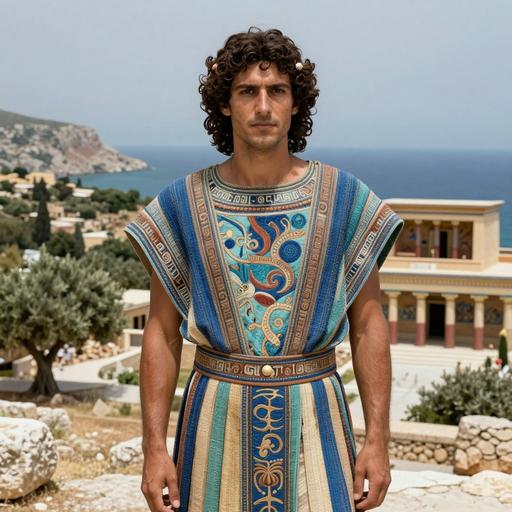
| Individual | Culture/Period | Date | Location | Action |
|---|---|---|---|---|
| Crete Hg Charalambos EMBA individual, Greece | Minoan Lassithi, Greece | 2400 BCE | Crete. Lassithi, Greece | View |
| Crete Hg Charalambos EMBA individual, Greece | Minoan Lassithi, Greece | 2400 BCE | Crete. Lassithi, Greece | View |
| Crete Hg Charalambos EMBA individual, Greece | Minoan Lassithi, Greece | 2400 BCE | Crete. Lassithi, Greece | View |
| Crete Hg Charalambos EMBA individual, Greece | Minoan Lassithi, Greece | 2400 BCE | Crete. Lassithi, Greece | View |
| Apatheia BA individual, Greece | Mycenaean Greece | 1400 BCE | Peloponnese. Galatas Apatheia, Greece | View |
| Crete Hg Charalambos EMBA individual, Greece | Minoan Lassithi, Greece | 2400 BCE | Crete. Lassithi, Greece | View |
| Salamis BA individual, Greece | Mycenaean Greece | 1413 BCE | Agia Kyriaki. Salamis, Greece | View |
| Peristeria BA individual, Greece | Mycenaean Greece | 1418 BCE | Peristeria Tryfilia. Peloponnese, Greece | View |
| Apatheia BA individual, Greece | Mycenaean Greece | 1400 BCE | Peloponnese. Galatas Apatheia, Greece | View |
| Crete Necropolisof Armenoi BA individual, Greece | Armenoi Site, Crete, Greece | 1370 BCE | Armenoi. Crete, Greece | View |
| Crete Moni Odigitria BA individual, Greece | Minoan Odigitria, Greece | 2210 BCE | Crete. Heraklion. Moni Odigitria, Greece | View |
| Crete Moni Odigitria BA individual, Greece | Minoan Odigitria, Greece | 2210 BCE | Crete. Heraklion. Moni Odigitria, Greece | View |
| Crete Moni Odigitria BA individual, Greece | Minoan Odigitria, Greece | 2210 BCE | Crete. Heraklion. Moni Odigitria, Greece | View |
| Crete Moni Odigitria BA individual, Greece | Minoan Odigitria, Greece | 2210 BCE | Crete. Heraklion. Moni Odigitria, Greece | View |
| Crete Moni Odigitria BA individual, Greece | Minoan Odigitria, Greece | 2210 BCE | Crete. Heraklion. Moni Odigitria, Greece | View |
| BA individual, Turkey | Early Bronze Age Turkey | 2621 BCE | Mediterranean. Isparta. Harmanören-Göndürle Höyük, Turkey | View |
| BA individual, Turkey | Early Bronze Age Turkey | 2560 BCE | Mediterranean. Isparta. Harmanören-Göndürle Höyük, Turkey | View |
| Aegean Neolithic individual, Greece | Neolithic Peloponnese, Greece | 5477 BCE | Diros. Alepotrypa Cave, Greece | View |
| BA individual, Turkey | Early Bronze Age Turkey | 2836 BCE | Mediterranean. Isparta. Harmanören-Göndürle Höyük, Turkey | View |
| Greece N individual, Greece | 5477 BCE | Diros. Alepotrypa Cave, Greece | View |
Page 1
| Individual | Culture/Period | Date | Location | Action |
|---|---|---|---|---|
| Crete Moni Odigitria BA individual, Greece | Minoan Odigitria, Greece | 2210 BCE | Crete. Heraklion. Moni Odigitria, Greece | View |
| Crete Moni Odigitria BA individual, Greece | Minoan Odigitria, Greece | 2210 BCE | Crete. Heraklion. Moni Odigitria, Greece | View |
| Crete Moni Odigitria BA individual, Greece | Minoan Odigitria, Greece | 2210 BCE | Crete. Heraklion. Moni Odigitria, Greece | View |
| Crete Moni Odigitria BA individual, Greece | Minoan Odigitria, Greece | 2210 BCE | Crete. Heraklion. Moni Odigitria, Greece | View |
| Crete Moni Odigitria BA individual, Greece | Minoan Odigitria, Greece | 2210 BCE | Crete. Heraklion. Moni Odigitria, Greece | View |
Page 1