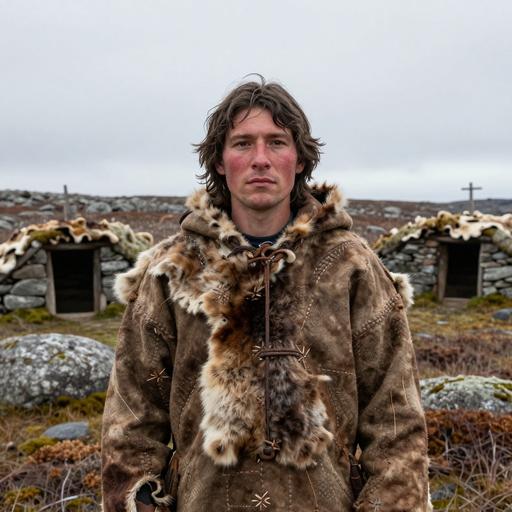
Late Dorset communities in Arctic and sub-Arctic Canada navigated a challenging coastal and sea-ice environment through hunting-oriented lifeways and distinctive winter technologies. Across the period, the archaeological record shows continued regional adaptation in tools, dwellings, and transport equipment.
Region & Environment
Late Dorset is best understood from archaeological sequences in Arctic and sub-Arctic Canada, where people lived along coasts, near sheltered bays, and in areas that allowed access to marine resources. The environment combined cold winters, seasonal sea-ice, and productive coastal zones supporting marine mammals and other subsistence species. Local differences in snow cover, shoreline resources, and sea-ice conditions shaped where groups traveled and how they organized seasonal routines.
Historical Context
Between roughly 800 and 1300 CE, Late Dorset communities persisted in many parts of the Canadian Arctic. This period sits after earlier Dorset phases and before later developments associated with Paleo-Inuit traditions. Although the broader Arctic world experienced cultural change over these centuries, the Late Dorset record primarily reflects continuity in Dorset lifeways along with regional variation.
Populations & Lifeways
The Late Dorset population is commonly characterized as small, mobile groups whose subsistence depended heavily on hunting in maritime settings. Mobility likely increased during seasons when animals were accessible and during periods when snow, ice, and weather influenced travel routes. Lifeways were organized around acquiring and processing animal resources, maintaining equipment for winter movement, and preparing stored food and materials for colder months.
Archaeology & Material Culture
Archaeological sites attributed to Late Dorset preserve evidence of household activities, hunting-related tools, and durable equipment suitable for cold-weather travel. Typical remains include stone tools (often small and finely made), features associated with dwellings, and equipment fragments related to hunting and processing. Organic materials do not always survive, but patterns in tool manufacture and site organization indicate attention to tasks such as cutting, scraping, and preparing animal products.
Culture & Society
Late Dorset culture is defined archaeologically through recurring styles and technological choices in stone tool production and associated site practices. Social life likely involved cooperation within household groups for hunting, processing, and maintaining specialized gear for winter and coastal travel. The distribution of material across landscapes suggests repeated use of certain resource zones, implying learned knowledge of seasonal opportunities.
Legacy & Transition
Late Dorset traditions eventually gave way to later Arctic cultural developments in the centuries after 1300 CE. Archaeologically, this transition is observed through changes in artifact styles and technology, as well as shifts in settlement and subsistence patterns associated with subsequent populations. The Late Dorset record therefore marks a key stage in the long sequence of Arctic adaptations before later Paleo-Inuit-influenced developments reshaped the region’s material culture and mobility strategies.