A man buried in Ireland in the Neolithic era

Download PDF creates a visual, rasterized copy. Use Print for selectable text and better assistive-technology support.

Loading Report

Preparing your ancestry journey

Preparing the available report content...

Your report will open automatically.

Skip to main content
Reference library / Sample profile

A man buried in Ireland in the Neolithic era

Explore the recorded context, genetic comparisons and research behind this reference sample.

IrelandIreland N

A reference profile describes this sample. It does not establish a personal or family relationship.

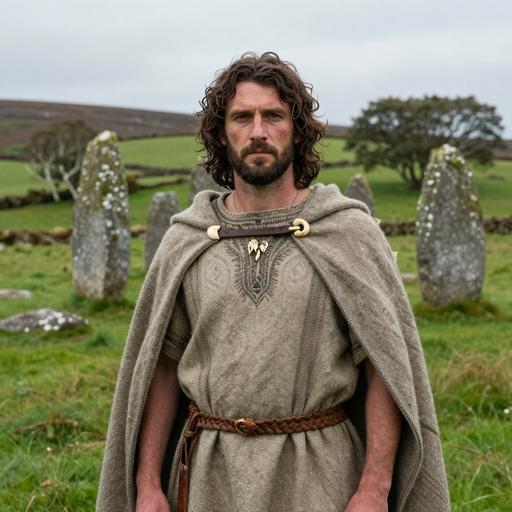
AI portrait reconstruction for A man buried in Ireland in the Neolithic era
AI-generated artistic reconstruction, not a photograph of the individual.
Record

Sample details

Recorded details and available lineage markers.

Individual

N individual, Ireland

Sample ID: CAK534

Date Range

3100 BCE - 2600 BCE

Cultural Period

Ireland N

Biological Sex

Male

mtDNA Haplogroup

X2b4

Y-DNA Haplogroup

I

Social Role

Farmer (AI estimate, era-typical)

Geography

Location

Where this individual was discovered

Country Ireland
Locality Ireland. Sligo. Carrowkeel
Coordinates 54.0586, -8.3821
Chronology

Date range

When this individual lived in the broader context of human history

N individual, Ireland 3100 BCE - 2600 BCE
Context

Historical context

Background information associated with the reference record.

The Irish Neolithic (c. 4000–2500 BCE) represents the island’s long transition from earlier hunter-gatherer patterns to widespread farming and settled life. This era is part of the Atlantic Neolithic Complex, linking Irish developments to broader western European trends while maintaining distinct local traditions.

Region & Environment

Across Ireland, Neolithic settlers lived in a temperate environment shaped by coasts, river valleys, and extensive woodland and pasture. Seasonal climates supported crop cultivation and herding, while forest resources were important for construction, fuel, and woodworking. People also exploited local ecologies—such as wetlands and uplands—within a largely agrarian economy.

Historical Context

The Neolithic era in Ireland corresponds to a period when agriculture and sedentary village practices became increasingly widespread. Over time, communities developed stable routines for cultivation, animal management, craft production, and building. Monumental construction and the public use of particular landscapes became prominent features of how communities organized social relationships.

Populations & Lifeways

Populations were predominantly agricultural. Livelihoods focused on growing crops and raising domestic animals, complemented by the use of locally available natural resources. Settlements and activity areas show repeated daily practices—food preparation, tool maintenance, and other household tasks—suggesting that many households operated in relatively enduring localities. Community coordination is implied where large stones, labor investment, and shared architectural conventions are involved.

Archaeology & Material Culture

Archaeological remains for the Irish Neolithic typically include domestic features (e.g., hearths and pits), worked stone and ground-stone implements associated with daily work and food processing, and pottery styles that define Neolithic phases in Ireland. Monument-related evidence—such as large stone settings and structured contexts—indicates that material culture also served communal and ceremonial functions, not only household needs.

Culture & Society

Neolithic society combined household production with broader communal activity. Monumental sites likely served as focal points for gatherings, ceremonies, and reinforcement of social ties and local identities. Material patterns, including recurring ceramic and stone-working traditions, reflect participation in wider Atlantic Neolithic networks while adapting them to Irish conditions and regional settlement histories.

Legacy & Transition

By the end of the Neolithic, Irish communities had created long-lived agricultural landscapes and a monument-rich cultural geography. These foundations supported subsequent developments into later prehistoric periods, when changes in craft practice, settlement organization, and monument use would continue to reshape how people lived and commemorated the past.

Analysis

Genetic comparisons

These comparisons show genetic similarity, not identity or origin. The populations listed are those whose genomes show statistical alignment to this ancient individual.

Similarity reflects shared history, not shared identity. These are analytical comparisons, not claims about who this person was.

Modern Genetic Admixture

This analysis compares the DNA profile with present-day reference populations, showing statistical similarity to modern reference populations from different regions. The excavation site records where this individual was found, not a fixed modern genetic identity.

Europe 94.1%
Southern European 78.3%
Iberian 52.9%
Italian 14.3%
Sardinian 11.1%
Northwestern European 15.8%
Scandinavian 9.8%
Northwestern European 5.9%
Asia 5.9%
Arab, Egyptian & Levantine 5.9%
Arabian 5.9%

Closest Modern Populations

These are the modern populations showing the closest statistical alignment to A man buried in Ireland in the Neolithic era, ranked by genetic distance. Lower distance values indicate closer statistical similarity. Cross-region similarity can reflect shared ancestry, population movement, continuity, or later admixture.

1
Sardinian
3.8663
2
Spanish La Rioja
4.9558
3
French Corsica
5.2373
4
Spanish Castilla La Mancha
5.2969
5
Spanish Pirineu
5.3576
6
Spanish Castello
5.3602
7
Spanish Aragon
5.3871
8
Spanish Navarra
5.4009
9
Spanish Burgos
5.4050
10
Spanish Cantabria
5.4178
Context

Related Samples

This individual exists within a broader network of ancient samples. No ancient genome stands alone.

Individual Culture/Period Date Location Action
MN individual, Ireland Middle Neolithic Ireland 3637 BCE Ireland. Limerick. Annagh, Ireland View
MN individual, Ireland Middle Neolithic Ireland 3707 BCE Ireland. Limerick. Annagh, Ireland View
MN individual, Ireland Middle Neolithic Ireland 3599 BCE Ireland. Tipperary. Ardcrony, Ireland View
MN individual, Ireland Middle Neolithic Ireland 3640 BCE Ireland. Tipperary. Ashleypark, Ireland View
EN MN individual, Ireland Early to Middle Neolithic Ireland 3764 BCE Ireland. Tipperary. Ashleypark, Ireland View
MN individual, Ireland Middle Neolithic Ireland 3633 BCE Ireland. Carlow. Baunogenasraid, Ireland View
LN individual, Ireland Late Neolithic Ireland 2884 BCE Ireland. Sligo. Carrowkeel, Ireland View
LN individual, Ireland Late Neolithic Ireland 2883 BCE Ireland. Sligo. Carrowkeel, Ireland View
LN individual, Ireland Late Neolithic Ireland 3013 BCE Ireland. Sligo. Carrowkeel, Ireland View
LN individual, Ireland Late Neolithic Ireland 3087 BCE Ireland. Sligo. Carrowkeel, Ireland View
N individual, Ireland Neolithic Ireland 3100 BCE Ireland. Sligo. Carrowkeel, Ireland View
LN individual, Ireland Late Neolithic Ireland 2834 BCE Ireland. Sligo. Carrowkeel, Ireland View
MN individual, Ireland Middle Neolithic Ireland 3646 BCE Ireland. Cavan. Cohaw, Ireland View
MN individual, Ireland Middle Neolithic Ireland 3513 BCE Ireland. Mayo. Glennamong, Ireland View
MN individual, Ireland Middle Neolithic Ireland 3366 BCE Ireland. Mayo. Glennamong, Ireland View
Celtic individual, Ireland Middle Neolithic Ireland 3702 BCE Ireland. Kilkenny. Jerpoint West, Ireland View
Mesolithic individual, Ireland Mesolithic Ireland 4797 BCE Ireland. Limerick. Killuragh, Ireland View
MN individual, Ireland Middle Neolithic Ireland 3494 BCE Ireland. Down. Millin Bay. Keentagh Td., Ireland View
MN individual, Ireland Middle Neolithic Ireland 3339 BCE Ireland. Meath. Newgrange. Main Chamber, Ireland View
MN individual, Ireland Middle Neolithic Ireland 3322 BCE Ireland. Meath. Site Z. Newgrange, Ireland View
MN individual, Ireland Middle Neolithic Ireland 3626 BCE Ireland. Clare. Parknabinnia, Ireland View
MN individual, Ireland Middle Neolithic Ireland 3642 BCE Ireland. Clare. Parknabinnia, Ireland View
MN individual, Ireland Middle Neolithic Ireland 3516 BCE Ireland. Clare. Parknabinnia, Ireland View
MN individual, Ireland Middle Neolithic Ireland 3628 BCE Ireland. Clare. Parknabinnia, Ireland View
EN MN individual, Ireland Early to Middle Neolithic Ireland 3654 BCE Ireland. Clare. Parknabinnia, Ireland View
MN individual, Ireland Middle Neolithic Ireland 3634 BCE Ireland. Clare. Parknabinnia, Ireland View
MN individual, Ireland Middle Neolithic Ireland 3625 BCE Ireland. Clare. Parknabinnia, Ireland View
MN individual, Ireland Middle Neolithic Ireland 3628 BCE Ireland. Clare. Parknabinnia, Ireland View
MN individual, Ireland Middle Neolithic Ireland 3362 BCE Ireland. Clare. Parknabinnia, Ireland View
MN individual, Ireland Middle Neolithic Ireland 3523 BCE Ireland. Clare. Parknabinnia, Ireland View
MN individual, Ireland Middle Neolithic Ireland 3639 BCE Ireland. Clare. Parknabinnia, Ireland View
EN MN individual, Ireland Early to Middle Neolithic Ireland 3706 BCE Ireland. Clare. Poulnabrone, Ireland View
MN individual, Ireland Middle Neolithic Ireland 3633 BCE Ireland. Clare. Poulnabrone, Ireland View
EN individual, Ireland Early Neolithic Ireland 3946 BCE Ireland. Clare. Poulnabrone, Ireland View
EN individual, Ireland Early Neolithic Ireland 3944 BCE Ireland. Clare. Poulnabrone, Ireland View
MN individual, Ireland Middle Neolithic Ireland 3633 BCE Ireland. Clare. Poulnabrone, Ireland View
MN individual, Ireland Middle Neolithic Ireland 3623 BCE Ireland. Clare. Poulnabrone, Ireland View
EN individual, Ireland Early Neolithic Ireland 3932 BCE Ireland. Clare. Poulnabrone, Ireland View
EN individual, Ireland Early Neolithic Ireland 3945 BCE Ireland. Clare. Poulnabrone, Ireland View
EN MN individual, Ireland Early to Middle Neolithic Ireland 3704 BCE Ireland. Clare. Poulnabrone, Ireland View
MN individual, Ireland Middle Neolithic Ireland 3523 BCE Ireland. Clare. Poulnabrone, Ireland View
EN MN individual, Ireland Early to Middle Neolithic Ireland 3708 BCE Ireland. Clare. Poulnabrone, Ireland View
MN individual, Ireland Middle Neolithic Ireland 3630 BCE Ireland. Clare. Poulnabrone, Ireland View
Mesolithic individual, Ireland Mesolithic Ireland 4226 BCE Ireland. Leitrim. Sramore, Ireland View
Page 1
Individual Culture/Period Date Location Action
N individual, Ireland Neolithic Ireland 3100 BCE Ireland. Sligo. Carrowkeel, Ireland View
Celtic individual, Ireland Neolithic Ireland 3346 BCE Ballynahatty. County Down, Ireland View
Page 1
Sources

References

Scientific publications and genetic data that inform this profile.

G25 Coordinates

These coordinates represent a position in genetic space, a tool for comparison, not a conclusion. You can use these to perform custom admixture analysis in G25 Studio.

CAK534,0.1206042,0.1600314,0.0338788,-0.026713,0.0572374,-0.0142854,-0.0017438,0.006303,0.0364014,0.0616772,-0.0059804,0.01436,-0.0254304,-0.0123106,-0.0033452,0.0035204,0.0026756,-0.0009088,-0.0010042,-0.0030228,0.0023812,0.0054448,-0.0118758,-0.017505,0.00412624
Continue in G25 Studio
Use code for 30% off • Expires Nov 16