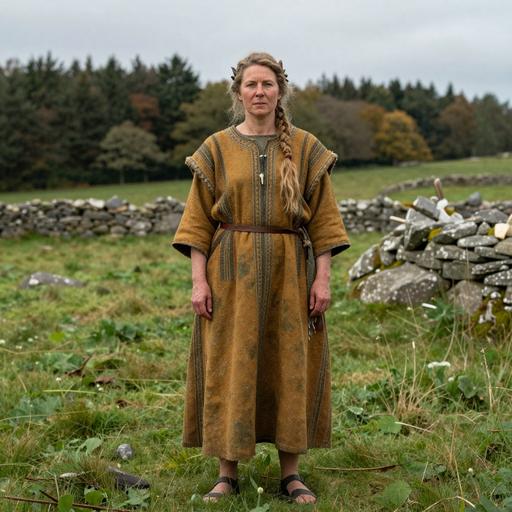
The Irish Neolithic (c. 4000–2500 BCE) represents the island’s long transition from earlier hunter-gatherer patterns to widespread farming and settled life. This era is part of the Atlantic Neolithic Complex, linking Irish developments to broader western European trends while maintaining distinct local traditions.
Region & Environment
Across Ireland, Neolithic settlers lived in a temperate environment shaped by coasts, river valleys, and extensive woodland and pasture. Seasonal climates supported crop cultivation and herding, while forest resources were important for construction, fuel, and woodworking. People also exploited local ecologies—such as wetlands and uplands—within a largely agrarian economy.
Historical Context
The Neolithic era in Ireland corresponds to a period when agriculture and sedentary village practices became increasingly widespread. Over time, communities developed stable routines for cultivation, animal management, craft production, and building. Monumental construction and the public use of particular landscapes became prominent features of how communities organized social relationships.
Populations & Lifeways
Populations were predominantly agricultural. Livelihoods focused on growing crops and raising domestic animals, complemented by the use of locally available natural resources. Settlements and activity areas show repeated daily practices—food preparation, tool maintenance, and other household tasks—suggesting that many households operated in relatively enduring localities. Community coordination is implied where large stones, labor investment, and shared architectural conventions are involved.
Archaeology & Material Culture
Archaeological remains for the Irish Neolithic typically include domestic features (e.g., hearths and pits), worked stone and ground-stone implements associated with daily work and food processing, and pottery styles that define Neolithic phases in Ireland. Monument-related evidence—such as large stone settings and structured contexts—indicates that material culture also served communal and ceremonial functions, not only household needs.
Culture & Society
Neolithic society combined household production with broader communal activity. Monumental sites likely served as focal points for gatherings, ceremonies, and reinforcement of social ties and local identities. Material patterns, including recurring ceramic and stone-working traditions, reflect participation in wider Atlantic Neolithic networks while adapting them to Irish conditions and regional settlement histories.
Legacy & Transition
By the end of the Neolithic, Irish communities had created long-lived agricultural landscapes and a monument-rich cultural geography. These foundations supported subsequent developments into later prehistoric periods, when changes in craft practice, settlement organization, and monument use would continue to reshape how people lived and commemorated the past.