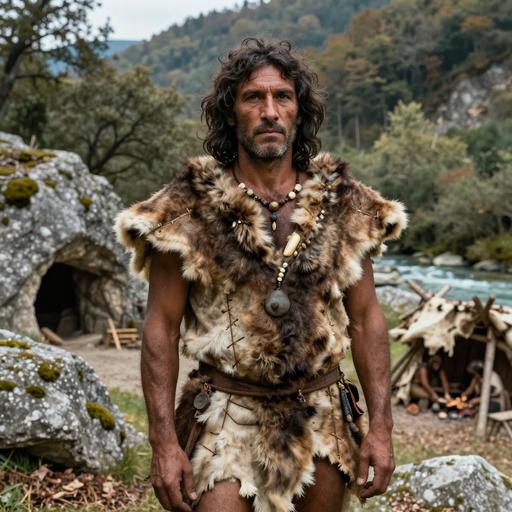
The Tagliente Late Paleolithic horizon in northern Italy (c. 16,500–14,500 BCE) belongs to the late phases of foraging societies in a warming post-glacial world. Archaeological evidence, especially stone-tool technology, provides insight into how people adapted to changing landscapes and prey availability.
Region & Environment
Northern Italy includes plains, river systems, and uplands that could support seasonal resource harvesting. During this interval, climatic conditions were shifting compared with the peak cold of earlier glacials, contributing to changes in vegetation and animal habitats across the wider region.
Historical Context
Tagliente is placed in the Late Paleolithic and associated here with Epigravettian traditions. Across much of Eurasia, Epigravettian-linked groups are often associated with regional toolkits and local technological variants, reflecting adaptation rather than a uniform culture.
Populations & Lifeways
Hunter-gatherers likely followed mobility strategies tied to seasonal resources. Their lifeways centered on hunting and processing wild plants and animals, supported by stone tools manufactured for cutting, scraping, and other tasks required in daily subsistence.
Archaeology & Material Culture
The most informative material remains are lithic artifacts and manufacturing debris, which can show standardized approaches to tool production. Tool typologies and technological choices associated with the Epigravettian complex help distinguish this horizon from earlier or later Paleolithic phases in the region.
Culture & Society
Because the Late Paleolithic record is typically dominated by stone tools, social interpretation must remain cautious. Still, repeated technological patterns suggest shared conventions and learned practices, possibly reinforced through networks among groups using overlapping territories.
Legacy & Transition
The Tagliente Late Paleolithic horizon belongs to the run-up to broader post-glacial transformations that reshaped European environments and, later, the archaeological pathways toward Mesolithic lifeways. Changes in lithic traditions over time document how communities adjusted their toolkits as conditions and resources evolved.