A man buried in Italy in the era

Download PDF creates a visual, rasterized copy. Use Print for selectable text and better assistive-technology support.

Loading Report

Preparing your ancestry journey

Preparing the available report content...

Your report will open automatically.

Skip to main content
Reference library / Sample profile

A man buried in Italy in the era

Explore the recorded context, genetic comparisons and research behind this reference sample.

ItalyLate Paleolithic

A reference profile describes this sample. It does not establish a personal or family relationship.

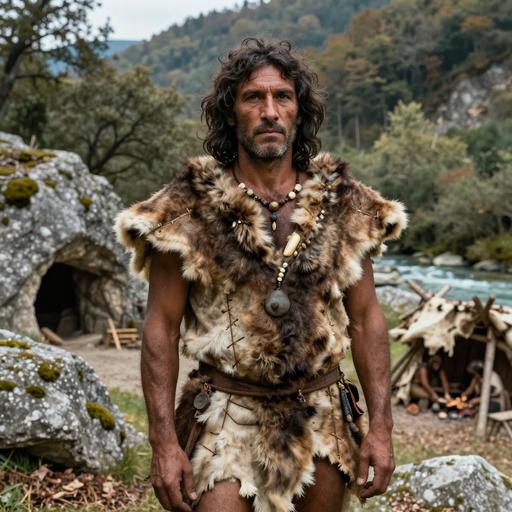
AI portrait reconstruction for A man buried in Italy in the  era
AI-generated artistic reconstruction, not a photograph of the individual.
Record

Sample details

Recorded details and available lineage markers.

Individual

Late Paleolithic individual, Italy

Sample ID: RIP001

Date Range

15026 BCE - 14560 BCE

Cultural Period

Late Paleolithic

Biological Sex

Male

mtDNA Haplogroup

Not available

Y-DNA Haplogroup

Not available

Social Role

Hunter (AI estimate, era-typical)

Geography

Location

Where this individual was discovered

Country Italy
Locality Verona. Stallavena di Grezzana. Riparo Tagliente
Coordinates 45.5400, 11.0100
Chronology

Date range

When this individual lived in the broader context of human history

Late Paleolithic individual, Italy 15026 BCE - 14560 BCE
Context

Historical context

Background information associated with the reference record.

Region & Environment

The Late Paleolithic encompassed a wide range of environments depending on region, often influenced by climatic variability. Changes in temperature and precipitation affected the distribution of animals and the availability of plant resources, shaping where groups traveled and camped.

Historical Context

During this long period, human groups continued to live primarily by hunting and gathering rather than food production. Regional differences are significant: tool traditions, mobility strategies, and social networks varied from place to place.

Populations & Lifeways

Late Paleolithic lifeways were typically organized around seasonal resource cycles. Mobile camps, repeated use of landscapes, and complex hunting strategies are often inferred from artifact distributions and the presence of specialized tool types.

Archaeology & Material Culture

Stone tools are central to understanding the Late Paleolithic. Archaeologists study reduction techniques, blade or flake technologies (where documented), and patterns of tool maintenance and replacement, alongside raw material procurement strategies.

Culture & Society

In many regions, Late Paleolithic material culture includes evidence for symbolic behavior such as personal ornamentation or art, though these are not uniform everywhere. Social organization is inferred indirectly from site use, patterned tool assemblages, and indicators of shared traditions or networks.

Legacy & Transition

The Late Paleolithic transitions into later phases associated with broader changes in climate, technology, and—regionally—the eventual adoption of food production. The archaeological record from this era provides key context for how technologies and lifeways were adapted during major environmental shifts.

Analysis

Genetic comparisons

These comparisons show genetic similarity, not identity or origin. The populations listed are those whose genomes show statistical alignment to this ancient individual.

Similarity reflects shared history, not shared identity. These are analytical comparisons, not claims about who this person was.

Modern Genetic Admixture

This analysis compares the DNA profile with present-day reference populations, showing statistical similarity to modern reference populations from different regions. The excavation site records where this individual was found, not a fixed modern genetic identity.

Europe 99.3%
Northwestern European 99.3%
Scandinavian 38.4%
Finnish 30.9%
English 26.9%
Northwestern European 3.0%
Africa 0.7%
African Hunter-Gatherer 0.7%

Closest Modern Populations

These are the modern populations showing the closest statistical alignment to A man buried in Italy in the era, ranked by genetic distance. Lower distance values indicate closer statistical similarity. Cross-region similarity can reflect shared ancestry, population movement, continuity, or later admixture.

1
Polish Kashubian
2.5303
2
Swedish
3.1581
3
Polish
3.1905
4
Estonian
3.3296
5
Finnish Southwest
3.5720
6
Russian Kursk
3.5920
7
Russian Kaluga
3.6088
8
Ukrainian Dnipro
3.6199
9
Ukrainian Rivne
3.6235
10
Russian Voronez
3.6404
Context

Related Samples

This individual exists within a broader network of ancient samples. No ancient genome stands alone.

Individual Culture/Period Date Location Action
European Paleolithic individual, Italy Late Paleolithic Tagliente, Italy 15026 BCE Verona. Stallavena di Grezzana. Riparo Tagliente, Italy View
Late Paleolithic individual, Italy 15026 BCE Verona. Stallavena di Grezzana. Riparo Tagliente, Italy View
Page 1
Individual Culture/Period Date Location Action
Late Paleolithic individual, Taiwan 6378 BCE Liangdao, Taiwan View
Late Paleolithic individual, Taiwan 5640 BCE Liangdao, Taiwan View
Late Paleolithic individual, Italy 15026 BCE Verona. Stallavena di Grezzana. Riparo Tagliente, Italy View
Late Paleolithic individual, China 12371 BCE Amur River Basin, China View
Late Paleolithic individual, China 10774 BCE Amur River Basin, China View
Page 1
Sources

References

Scientific publications and genetic data that inform this profile.

G25 Coordinates

These coordinates represent a position in genetic space, a tool for comparison, not a conclusion. You can use these to perform custom admixture analysis in G25 Studio.

RIP001,0.13254638,0.12287828,0.08071608,0.07045426,0.04006488,0.02769788,0.00793546,0.01401404,0.00046702,-0.02172512,-0.00174468,-0.00277108,0.00844082,0.00892302,0.00848566,0.00076916,-0.00484856,-0.00164934,0.00452094,0.00035602,0.0031196,-0.00292016,-0.00277204,0.00678442,-0.00110768
Continue in G25 Studio
Use code for 30% off • Expires Nov 16