An individual buried in Russia in the era

Download PDF creates a visual, rasterized copy. Use Print for selectable text and better assistive-technology support.

Loading Report

Preparing your ancestry journey

Preparing the available report content...

Your report will open automatically.

Skip to main content
Reference library / Sample profile

An individual buried in Russia in the era

Explore the recorded context, genetic comparisons and research behind this reference sample.

RussiaBolshoy Oleniy Ostrov Culture

A reference profile describes this sample. It does not establish a personal or family relationship.

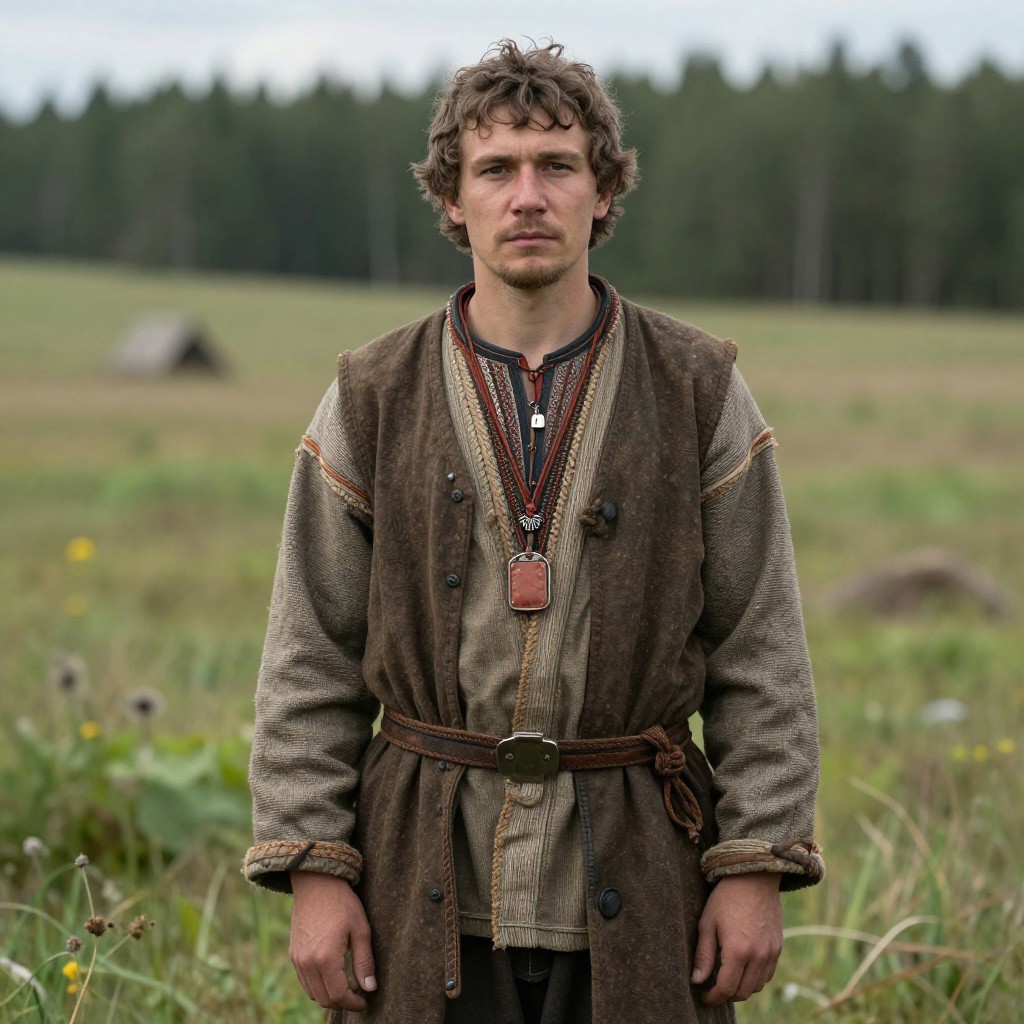
AI portrait reconstruction for An individual buried in Russia in the  era
AI-generated artistic reconstruction, not a photograph of the individual.
Record

Sample details

Recorded details and available lineage markers.

Individual

Bolshoy Oleniy Ostrov MBA individual, Russia

Sample ID: BOO008

Date Range

2093 BCE - 1457 BCE

Cultural Period

Bolshoy Oleniy Ostrov Culture

Biological Sex

Not known

mtDNA Haplogroup

Not available

Y-DNA Haplogroup

Not available

Geography

Location

Where this individual was discovered

Country Russia
Locality Bolshoy-Oleniy-Ostrov (Murmansk Oblast, Alexandrovsk Municipality)
Coordinates 69.2239, 33.4828
Chronology

Date range

When this individual lived in the broader context of human history

Bolshoy Oleniy Ostrov MBA individual, Russia 2093 BCE - 1457 BCE
Context

Historical context

Background information associated with the reference record.

The Bolshoy Oleniy Ostrov culture, named after an archaeological site located on the island of Bolshoy Oleniy Ostrov in the Barents Sea, offers rich insights into the early Proto-Sami culture during the transition from the Bronze Age to the Iron Age, roughly around 2000–500 BCE. This culture represents one of the pivotal links in tracing the ethno-cultural and linguistic roots of the Sami people, who are indigenous to parts of Norway, Sweden, Finland, and Russia's Kola Peninsula.

Geographic and Environmental Context

Bolshoy Oleniy Ostrov is situated in a region characterized by its harsh, subarctic climate. This environment profoundly influenced the way of life of the ancient communities residing there. The island itself is part of the larger ecological context of northern Scandinavia and the Kola Peninsula, featuring tundra landscapes, coniferous forests, and abundant waterways. Such a setting provided both challenges and resources, dictating the subsistence strategies of its inhabitants.

Subsistence and Economy

The economy of the Bolshoy Oleniy Ostrov culture relied heavily on fishing, hunting, and gathering. The cold waters of the Barents Sea were rich with marine life, including fish and seals, serving as staple sources of protein and fat. Hunting of terrestrial animals, like reindeer and elk, complemented the diet and provided materials for clothing and tools. The use of bone, antler, and stone depicts a society adept in crafting essential items for survival and daily life.

The seasonal movement of reindeer herds likely played a significant role in dictating the migratory patterns and settlement strategies of these early communities. Additionally, the gathering of berries, roots, and other edible plants contributed to a diverse diet and revealed a deep understanding of the natural ecosystem.

Material Culture and Artifacts

The archaeological findings on Bolshoy Oleniy Ostrov include a variety of tools and decorative items, indicating skilled craftsmanship and a rich material culture. Tools made from bone, antler, and stone suggest advanced techniques in fashioning weapons and implements necessary for hunting and processing food. Pottery fragments found at the site display intricate designs, offering insights into the aesthetic values and artistic expressions of the people.

Moreover, metalwork, though less prevalent, shows early experimentation with bronze, indicating some level of contact or trade with neighboring cultures. This interaction likely facilitated the exchange of technological knowledge and cultural influences, essential for the evolution of the Proto-Sami society.

Social Structure and Organization

While direct evidence of social stratification is sparse, the Bolshoy Oleniy Ostrov culture likely comprised small, kin-based groups characterized by egalitarian structures typical of hunter-gatherer societies. Cooperation and group cohesion would have been essential for survival in the demanding Arctic environment. The presence of ceremonial artifacts, such as pendants and amulets, suggests a spiritual dimension to their social organization, potentially indicating shamanistic practices.

Spiritual Beliefs and Practices

Spirituality in the Bolshoy Oleniy Ostrov culture was probably animistic, centered on the reverence of natural elements and the surrounding landscape. The significance of animal motifs found in carvings and artifacts points to a belief system emphasizing the interconnectedness of humans, animals, and the environment.

The occurrence of burial sites, with accompanying grave goods, sheds light on their concepts of life, death, and the afterlife. Such practices underscore a complex belief system where the dead were honored and possibly believed to continue participating in the spiritual life of the community.

Linguistic and Cultural Influence

As a Proto-Sami culture, the inhabitants of Bolshoy Oleniy Ostrov are considered ancestral to the Sami people. Linguistically, they would represent an early form of the Finno-Ugric language group, from which the Sami languages eventually developed. The dissemination of cultural traits such as clothing styles, oral traditions, and reindeer domestication practices from these early communities helped shape the cultural identity of the Sami people over the millennia.

Conclusion

The Bolshoy Oleniy Ostrov culture provides a window into the lives of prehistoric communities that laid the foundation for the contemporary Sami culture. Despite the challenges posed by their environment, these resilient peoples developed a rich cultural heritage that resonates through their descendants today. Understanding this culture further enriches our appreciation of the historical complexities involved in the development and continuity of indigenous traditions in the circumpolar north.

Analysis

Genetic comparisons

These comparisons show genetic similarity, not identity or origin. The populations listed are those whose genomes show statistical alignment to this ancient individual.

Similarity reflects shared history, not shared identity. These are analytical comparisons, not claims about who this person was.

Modern Genetic Admixture

This analysis compares the DNA profile with present-day reference populations, showing statistical similarity to modern reference populations from different regions. The excavation site records where this individual was found, not a fixed modern genetic identity.

Europe 49.9%
Eastern European 44.8%
Northwestern European 5.1%
Finnish 5.1%
Asia 39.4%
Northern Asian 34.9%
Siberian 34.9%
Central Asian, Northern Indian & Pakistani 4.1%
Indian 4.1%
America 10.5%
America 10.5%
Native American 10.5%

Closest Modern Populations

These are the modern populations showing the closest statistical alignment to An individual buried in Russia in the era, ranked by genetic distance. Lower distance values indicate closer statistical similarity. Cross-region similarity can reflect shared ancestry, population movement, continuity, or later admixture.

1
Udmurt
4.0333
2
Besermyan
4.5294
3
Saami
5.1773
4
Khanty O1
5.4810
5
Chuvash
6.8509
6
Tatar Kazan
7.2862
7
Saami Kola
7.4027
8
Komi A
7.8308
9
Tatar Lipka
8.7160
10
Mari
9.2045
Context

Related Samples

This individual exists within a broader network of ancient samples. No ancient genome stands alone.

Individual Culture/Period Date Location Action
Bolshoy Oleniy Ostrov MBA individual, Russia 2093 BCE Bolshoy-Oleniy-Ostrov (Murmansk Oblast, Alexandrovsk Municipality), Russia View
Bolshoy Oleniy Ostrov BA individual, Russia 991 BCE Bolshoy-Oleniy-Ostrov (Murmansk Oblast, Alexandrovsk Municipality), Russia View
Rostovka EMBA Irtysh Seima Turbino individual, Russia 1943 BCE Rostovka (Omsk Oblast, Omsk District, Rostovka Village), Russia View
Rostovka EMBA Irtysh Seima Turbino individual, Russia 2227 BCE Rostovka (Omsk Oblast, Omsk District, Rostovka Village), Russia View
Rostovka EMBA Irtysh Seima Turbino individual, Russia 2213 BCE Rostovka (Omsk Oblast, Omsk District, Rostovka Village), Russia View
Rostovka EMBA Irtysh Seima Turbino individual, Russia 2227 BCE Rostovka (Omsk Oblast, Omsk District, Rostovka Village), Russia View
Rostovka EMBA Irtysh Seima Turbino individual, Russia 2035 BCE Rostovka (Omsk Oblast, Omsk District, Rostovka Village), Russia View
Rostovka EMBA Irtysh Seima Turbino individual, Russia 2227 BCE Rostovka (Omsk Oblast, Omsk District, Rostovka Village), Russia View
Rostovka EMBA Irtysh Seima Turbino individual, Russia 2128 BCE Rostovka (Omsk Oblast, Omsk District, Rostovka Village), Russia View
Rostovka EMBA Irtysh Seima Turbino individual, Russia 2153 BCE Rostovka (Omsk Oblast, Omsk District, Rostovka Village), Russia View
Rostovka EMBA Irtysh Seima Turbino individual, Russia 2227 BCE Rostovka (Omsk Oblast, Omsk District, Rostovka Village), Russia View
Page 1
Individual Culture/Period Date Location Action
Murmansk MBA individual, Russia Bolshoy Oleniy Ostrov Culture 1625 BCE Bolshoy-Oleniy-Ostrov (Murmansk Oblast, Alexandrovsk municipality), Russia View
Murmansk MBA individual, Russia Bolshoy Oleniy Ostrov Culture 1738 BCE Bolshoy-Oleniy-Ostrov (Murmansk Oblast, Alexandrovsk municipality), Russia View
Murmansk MBA individual, Russia Bolshoy Oleniy Ostrov Culture 1687 BCE Bolshoy-Oleniy-Ostrov (Murmansk Oblast, Alexandrovsk municipality), Russia View
Bolshoy Oleniy Ostrov MBA individual, Russia 2093 BCE Bolshoy-Oleniy-Ostrov (Murmansk Oblast, Alexandrovsk Municipality), Russia View
Page 1
Sources

References

Scientific publications and genetic data that inform this profile.

G25 Coordinates

These coordinates represent a position in genetic space, a tool for comparison, not a conclusion. You can use these to perform custom admixture analysis in G25 Studio.

BOO008,0.10889542,-0.03360868,0.0886266,0.06965532,-0.02238722,0.00638974,-0.0082611,-0.00698324,-0.00577074,-0.03255416,0.02176546,-0.00602052,0.01973166,-0.01800926,-0.0129979,-0.00764634,-0.0085313,-0.00055968,-0.00649866,-0.00232452,-0.00749024,0.00837264,0.00378392,-0.00653016,-0.00393333
Continue in G25 Studio
Use code for 30% off • Expires Nov 16