Overview
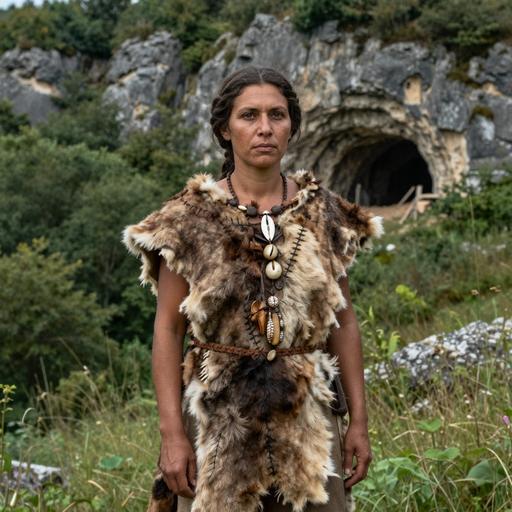
The early Upper Paleolithic occupation at Peștera Muierii anchors human activity in Romania during a late Pleistocene timeframe often summarized as 35,000–30,000 BCE. The “Peștera Muierii” cultural label reflects how archaeologists associate the cave’s lithic evidence with a recognizable Upper Paleolithic horizon.
Region & Environment
Peștera Muierii is in Romania’s karst region, where caves provide stable sheltered conditions compared with exposed landscapes. Around the site, local valleys and mixed habitats would have formed a changing ecological mosaic as Pleistocene climate shifted. These conditions would have influenced both the seasonal availability of prey and the timing of visits to the cave.
Historical Context
The period belongs to the broader Upper Paleolithic of Eastern Europe, when early modern human populations used increasingly widespread stone-tool approaches and returned to strategic landscape features. Cave occupations are central to this context because they preserve sequences of artifacts and activity areas that reflect repeated use over time.
Populations & Lifeways
People living during this horizon were hunter-gatherers, moving across landscapes to exploit seasonally varying resources. The cave setting suggests they arrived to conduct specific tasks—such as tool making/maintenance and processing animal products—while sheltering from weather. Archaeological interpretations generally treat such sites as locations within a broader mobility system rather than as year-round settlements.
Archaeology & Material Culture
The key evidence for the early Upper Paleolithic attribution comes from stone artifacts typical of the period: tools and manufacturing debris that indicate working and resharpening of cutting edges. While exact technological details depend on the stratified assemblage, the overall pattern supports regular engagement in lithic production and the practical use of those tools for daily tasks.
Culture & Society
Material culture points to learned technological traditions shared among groups within the Upper Paleolithic world. Such continuity implies communication and social learning, but it does not provide direct evidence for political authority, complex institutions, or named cultural identities. The social dimension visible in archaeology is thus mainly inferred from repeated activity patterns and technological style.
Legacy & Transition
Peștera Muierii’s early Upper Paleolithic phase helps document how hunter-gatherers adapted to late Pleistocene conditions in the Carpathian region. Later Upper Paleolithic developments and subsequent prehistoric changes would follow as climates, environments, and technologies shifted, altering the roles that caves and other landscape features played in daily life.