Menu
Store
Blog
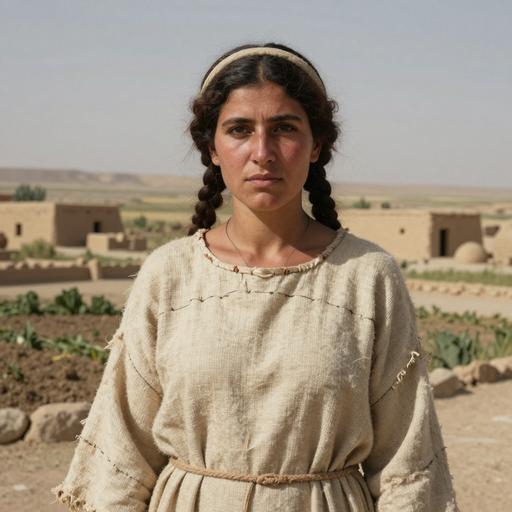
Portrait reconstruction of AH4
Ancient Individual

A woman buried in Iran in the Neolithic era

AH4
8201 BCE - 7751 BCE
Female
Neolithic Tepe Abdul Hosein, Iran
Iran
Scroll to begin
Chapter I

Identity

The biological and cultural markers that define this ancient individual

Sample ID

AH4

Date Range

8201 BCE - 7751 BCE

Biological Sex

Female

mtDNA Haplogroup

T2c2

Cultural Period

Neolithic Tepe Abdul Hosein, Iran

Chapter II

Place

Where this individual was discovered

Country Iran
Locality Tepe Abdul Hosein. Central Zagros
Coordinates 34.1883, 48.3689
Chapter III

Time

When this individual lived in the broader context of human history

AH4 8201 BCE - 7751 BCE
Chapter IV

Story

The narrative of this ancient life

The Neolithic Tepe Abdul Hosein site is a significant archaeological location in the context of Ancient Near Eastern civilization, providing crucial insights into the transition from nomadic lifestyles to settled agricultural communities. This site, located in the Zagros Mountains of modern-day Iran, is notable for its contributions to our understanding of Neolithic culture in the region.

Geographic and Environmental Context

Tepe Abdul Hosein is situated in the western part of Iran, within the fertile crescent zone, which played a pivotal role in early human settlement and agriculture. The region's climatic conditions during the Neolithic era were conducive to the development of early farming, with adequate rainfall and fertile soil supporting the growth of crops. The proximity to water sources and diverse ecosystems allowed for a mixed subsistence strategy that included hunting, gathering, and farming.

Chronology and Phases

The site dates to roughly the 8th millennium BCE, falling within the Pre-Pottery and Pottery Neolithic periods. Throughout these phases, major cultural shifts occurred, including the advent of agriculture and the domestication of animals. The Neolithic period at Tepe Abdul Hosein can be divided into several phases, marked by advancements in tool-making, architecture, and social organization.

Material Culture

Architecture

One of the site’s remarkable features is its architectural remains, which include round and semi-subterranean structures built with mud bricks and stones. These early dwellings reflect a transition from temporary shelters to more permanent homes, indicative of a sedentary lifestyle. The architectural layout suggests an organized settlement with designated areas for living, communal activities, and possibly ritualistic practices.

Tools and Technology

The inhabitants of Tepe Abdul Hosein employed a range of tools made from locally sourced materials. Microliths, bladelets, and ground stone tools are commonly found at the site, demonstrating a sophisticated level of technological development. The presence of sickle blades and grinding stones indicates the practice of agriculture, while hunting tools reflect the continuation of hunting activities.

Pottery

The introduction of pottery is another hallmark of the Neolithic culture at Tepe Abdul Hosein. Initially rudimentary and undecorated, ceramics gradually evolved with intricate designs and improved firing techniques. Pottery played a significant role in daily life, serving utilitarian functions such as storage, cooking, and transporting goods.

Subsistence Strategies

The economy of the Tepe Abdul Hosein inhabitants was based on a combination of agriculture, herding, and foraging. Archaeobotanical studies reveal the cultivation of wheat, barley, lentils, and peas, while zooarchaeological evidence suggests the domestication of sheep, goats, and cattle. This diversified subsistence base allowed for greater food security and population growth.

Social Organization and Cultural Practices

Community Life

The social structure at Tepe Abdul Hosein likely revolved around kinship and familial ties, with evidence pointing towards communal cooperation in farming and building projects. As populations grew, social stratification may have emerged, although current evidence primarily supports a relatively egalitarian society.

Rituals and Beliefs

Artifacts such as figurines and ceremonial objects suggest that spiritual and religious practices were integral to Neolithic life at Tepe Abdul Hosein. These items indicate the potential worship of deities or nature spirits, possibly related to fertility and agricultural cycles. Ritual activities might have been conducted in designated communal spaces, serving to reinforce social cohesion and cultural identity.

Interaction with Neighboring Cultures

The location of Tepe Abdul Hosein facilitated interactions with other Neolithic cultures across the Near East. Trade networks likely existed, as evidenced by the exchange of goods such as obsidian, shells, and exotic stones. These interactions may have contributed to cultural and technological diffusion, influencing local practices and accelerating development.

Conclusion

The Neolithic era at Tepe Abdul Hosein represents a critical period in human history, characterized by significant advancements in agriculture, technology, and social organization. As a site of substantial archaeological importance, it offers invaluable insights into the lives of early settlers in the Ancient Near East, illuminating the complex processes that shaped the foundations of civilization. Continued research and excavation at Tepe Abdul Hosein hold the potential to uncover further details about this transformative epoch in human history.

Chapter V

Genetics

The genetic ancestry of this ancient individual

Ancient Genetic Admixture

This analysis compares the DNA profile of AH4 with ancient reference populations, showing the genetic composition in terms of prehistoric ancestral groups.

Neolithic Farmers 75.9%
Ancient Asians 18.4%
Western Steppe Pastoralists 3.6%
Ancient Africans 2.1%

Modern Genetic Admixture

This analysis compares the DNA profile with present-day reference populations, showing what percentage of genetic makeup resembles modern populations from different regions.

Asia 100.0%
Central Asian, Northern Indian & Pakistani 81.3%
Pakistan 55.1%
Indian 26.1%
Northern West Asian 18.7%
Mesopotamian 18.7%

Closest Modern Populations

These are the modern populations showing the closest statistical alignment to A woman buried in Iran in the Neolithic era, ranked by genetic distance. Lower distance values indicate closer statistical similarity.

1
Iranian Persian Khorasan
5.5072
2
Parsi Pakistan
5.6735
3
Parsi India
5.7606
4
Iranian Mazandarani O
6.3032
5
Turkmen O
6.5413
6
Iranian Mazandarani
6.7248
7
Irani Zoroastrian India
6.7835
8
Iranian Persian Shiraz
6.8261
9
Iranian Central
6.8690
10
Azerbaijani Dagestan
6.9745
Chapter VI

Context

Other ancient individuals connected to this sample

Sources

References

Scientific publications and genetic data

Scientific Publication

Early Neolithic genomes from the eastern Fertile Crescent

Authors Broushaki F, Thomas MG, Link V
Abstract

We sequenced Early Neolithic genomes from the Zagros region of Iran (eastern Fertile Crescent), where some of the earliest evidence for farming is found, and identify a previously uncharacterized population that is neither ancestral to the first European farmers nor has contributed substantially to the ancestry of modern Europeans. These people are estimated to have separated from Early Neolithic farmers in Anatolia some 46,000 to 77,000 years ago and show affinities to modern-day Pakistani and Afghan populations, but particularly to Iranian Zoroastrians. We conclude that multiple, genetically differentiated hunter-gatherer populations adopted farming in southwestern Asia, that components of pre-Neolithic population structure were preserved as farming spread into neighboring regions, and that the Zagros region was the cradle of eastward expansion.

G25 Coordinates

The G25 coordinates for sample AH4 can be used for detailed admixture analysis in our G25 Studio tool.

AH4,0.09087036,0.06437236,-0.08125444,0.00136548,-0.05709112,0.00914792,0.00814616,-0.00149152,-0.03690986,-0.0159831,-0.00430986,0.00571464,-0.01521946,0.00504408,0.00684856,-0.01350658,0.0154513,-0.00425648,-0.0059408,0.01068582,0.0107406,-0.0005359,0.00672666,-0.0060781,-0.00587421
Analyze in G25 Studio
Use code for 40% off Expires Feb 26