Menu
Store
Blog
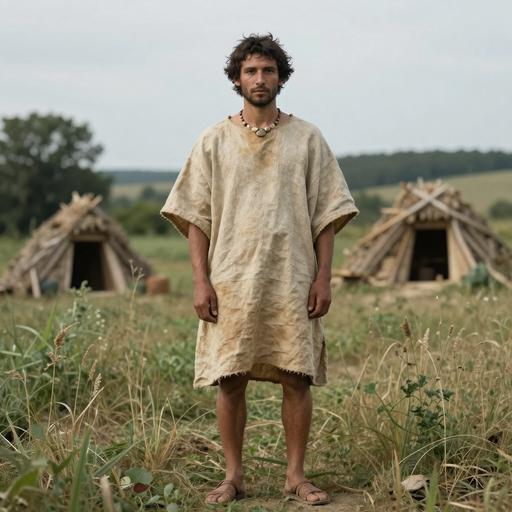
Portrait reconstruction of ANY-4027
Ancient Individual

A man buried in Hungary in the Early Neolithic era

ANY-4027
5000 BCE - 4000 BCE
Male
Early Neolithic Starcevo Culture in Hungary
Hungary
Scroll to begin
Chapter I

Identity

The biological and cultural markers that define this ancient individual

Sample ID

ANY-4027

Date Range

5000 BCE - 4000 BCE

Biological Sex

Male

mtDNA Haplogroup

H46

Y-DNA Haplogroup

Not available

Cultural Period

Early Neolithic Starcevo Culture in Hungary

Chapter II

Place

Where this individual was discovered

Country Hungary
Locality Tolna County. Alsónyék-Bátaszék. Mérnökségitelep
Coordinates 46.2248, 18.8031
Chapter III

Time

When this individual lived in the broader context of human history

ANY-4027 5000 BCE - 4000 BCE
Chapter IV

Story

The narrative of this ancient life

The Early Neolithic Starcevo culture, active approximately between 6200 and 4500 BCE, marked a significant era in the prehistory of Central Europe, particularly in the region corresponding to modern-day Hungary and its neighboring territories such as the Balkans. This culture is one of the earliest manifestations of the Neolithic way of life in Southeast Europe, known for its agricultural advancements, settlement patterns, and material culture.

Geographical and Environmental Context

The Starcevo culture primarily developed along the Danube and adjacent river valleys, taking advantage of fertile floodplains for agriculture. The environment of the region was characterized by a temperate climate with rich resources that supported both farming and hunting-gathering activities. The location offered an ideal setting for early farmers who relied on the rich alluvial soils to cultivate their crops.

Subsistence Economy

The economy of the Starcevo culture was based on a combination of farming, animal husbandry, hunting, fishing, and gathering. They practiced early forms of agriculture, cultivating crops like wheat, barley, peas, and lentils. The domestication of animals such as sheep, goats, cattle, and pigs also played a crucial role in their subsistence, providing meat, milk, and secondary products.

Settlement Patterns

Starcevo communities were typically small, consisting of single or few family units. Settlements were usually located on low terraces above floodplains, providing some protection from flooding while still allowing easy access to water resources. The houses were predominantly rectangular and constructed using wattle and daub techniques, with thatched or wooden roofs.

Material Culture

Artifacts from the Starcevo culture show a high level of craftsmanship, especially in ceramics. Their pottery is characterized by flat bases and simple shapes, often decorated with white or red paint applied in geometric patterns. This became one of their most distinctive features and suggests a possible symbolic or communicative function of their designs.

In addition to ceramics, the Starcevo people made tools from stone, bone, and wood. They created polished stone axes, which were crucial for clearing forests for fields and constructing settlements. They also produced bone tools, including awls and needles, and practiced spinning and weaving, as indicated by the presence of spindle whorls and loom weights.

Social Structure and Culture

The social organization of the Starcevo culture remains speculative, yet it is inferred that they lived in relatively egalitarian communities based on subsistence farming. The burial practices suggest a lack of significant social stratification, with burials being simple and lacking elaborate grave goods.

Ceremonial and ritualistic aspects of the culture are not well-documented, but the presence of figurines and possibly ritual objects suggests the existence of spiritual or religious beliefs, likely centered around fertility, agriculture, and nature.

Trade and Interaction

The Starcevo culture engaged in networks of exchange both locally and regionally. Trade likely played a role in the distribution of raw materials and finished goods such as obsidian, shell, and pottery, indicating that these communities were not entirely isolated but rather part of a broader network of Neolithic cultures in the region.

Decline and Legacy

The Starcevo culture eventually transitioned into or was replaced by successive Neolithic cultures, such as the Vinča and Lengyel cultures, as farming practices and social structures evolved further. The archaeological evidence from Starcevo sites provides significant insights into the early phases of agriculture and settled life in Europe, marking a critical step in the transition from hunter-gatherer lifestyles to more permanent agricultural societies. The innovations and adaptations of the Starcevo people laid foundational elements for later European prehistoric developments.

Chapter V

Genetics

The genetic ancestry of this ancient individual

Ancient Genetic Admixture

This analysis compares the DNA profile of ANY-4027 with ancient reference populations, showing the genetic composition in terms of prehistoric ancestral groups.

Neolithic Farmers 66.5%
European Hunter-Gatherers 28.8%
Western Steppe Pastoralists 4.7%

Modern Genetic Admixture

This analysis compares the DNA profile with present-day reference populations, showing what percentage of genetic makeup resembles modern populations from different regions.

Europe 83.8%
Southern European 83.8%
Italian 35.4%
Sardinian 33.8%
Balkan 14.6%
Asia 14.4%
Arab, Egyptian & Levantine 9.4%
Levantine 9.4%
Northern West Asian 4.7%
Cypriot 4.7%
Africa 1.8%
North African 1.8%
North African 1.8%

Closest Modern Populations

These are the modern populations showing the closest statistical alignment to A man buried in Hungary in the Early Neolithic era, ranked by genetic distance. Lower distance values indicate closer statistical similarity.

1
Sardinian
3.6764
2
French Corsica
6.8081
3
Belmonte Jew
6.8468
4
Italian Lazio
7.6605
5
Italian Umbria
7.9448
6
Sicilian West
7.9567
7
Italian Campania
8.2088
8
Sicilian East
8.2459
9
Italian Calabria
8.2877
10
Italian Lombardy
8.3260
Chapter VI

Context

Other ancient individuals connected to this sample

Sources

References

Scientific publications and genetic data

Scientific Publication

The genetic origin of Huns, Avars, and conquering Hungarians

Authors Maróti Z, Neparáczki E, Schütz O
Abstract

Huns, Avars, and conquering Hungarians were migration-period nomadic tribal confederations that arrived in three successive waves in the Carpathian Basin between the 5th and 9th centuries. Based on the historical data, each of these groups are thought to have arrived from Asia, although their exact origin and relation to other ancient and modern populations have been debated. Recently, hundreds of ancient genomes were analyzed from Central Asia, Mongolia, and China, from which we aimed to identify putative source populations for the above-mentioned groups. In this study, we have sequenced 9 Hun, 143 Avar, and 113 Hungarian conquest period samples and identified three core populations, representing immigrants from each period with no recent European ancestry. Our results reveal that this "immigrant core" of both Huns and Avars likely originated in present day Mongolia, and their origin can be traced back to Xiongnus (Asian Huns), as suggested by several historians. On the other hand, the "immigrant core" of the conquering Hungarians derived from an earlier admixture of Mansis, early Sarmatians, and descendants of late Xiongnus. We have also shown that a common "proto-Ugric" gene pool appeared in the Bronze Age from the admixture of Mezhovskaya and Nganasan people, supporting genetic and linguistic data. In addition, we detected shared Hun-related ancestry in numerous Avar and Hungarian conquest period genetic outliers, indicating a genetic link between these successive nomadic groups. Aside from the immigrant core groups, we identified that the majority of the individuals from each period were local residents harboring "native European" ancestry.

G25 Coordinates

The G25 coordinates for sample ANY-4027 can be used for detailed admixture analysis in our G25 Studio tool.

ANY-4027,0.10955588,0.16015332,0.00933512,-0.0594206,0.0496809,-0.02860122,-0.00333634,0.00373796,0.04197316,0.06631992,-0.00129084,0.0106518,-0.01781158,-0.01279348,-0.01326056,0.00655684,0.01326784,0.00036414,0.00057182,-0.00227904,0.0001447,0.00497778,-0.01176548,-0.0182956,0.0036423
Analyze in G25 Studio
Use code for 40% off Expires Feb 26