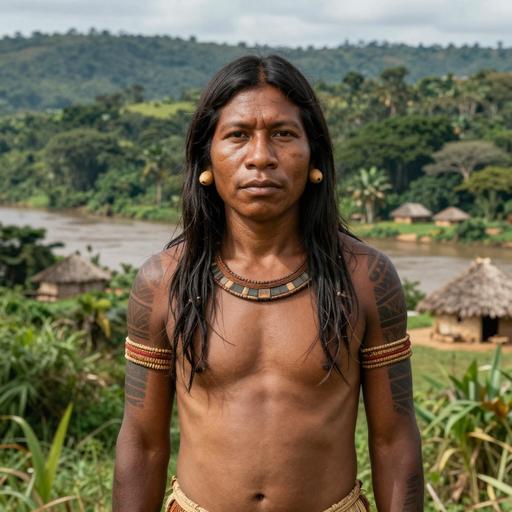
The Botocudo people, also known as the Aimoré, are an indigenous group native to the eastern region of Brazil, primarily in the states of Minas Gerais and Espírito Santo. Their history and culture have been shaped by their interactions with the environment, neighboring tribes, and, eventually, European colonizers. The Botocudo people offer a fascinating glimpse into the rich cultural tapestry of Indigenous Amerindian societies in Brazil, marked by their unique traditions, social structures, and adaptations to various challenges over time.
Origins and Language
The Botocudo speak languages belonging to the Macro-Jê language family, which is a branch of the larger Jê linguistic family. These languages reflect a complex web of social interaction and migration patterns among the Indigenous peoples of Brazil. Unfortunately, due to the effects of colonization, many of these languages are now either extinct or critically endangered, with only a few speakers remaining.
Physical Appearance and Traditional Practices
The Botocudo were known for their distinct physical appearance, which was heavily influenced by traditional body modification practices. They were named \Botocudo" by Portuguese colonizers because of the large wooden disks, known as "botoques," that they traditionally wore in their lower lips and earlobes. This custom held significant cultural value and was a rite of passage for members of the tribe, symbolizing maturity and tribal identity.
Social Structure and Lifestyle
The Botocudo traditionally lived in small, semi-nomadic bands, subsisting primarily through hunting, gathering, and fishing. Their survival strategies included foraging for wild fruits, roots, and nuts, hunting local game, and fishing in the numerous rivers and streams of their territory. They built temporary shelters from natural materials, allowing them flexibility to move in response to environmental conditions or resource availability.
Their social organization was primarily based on kinship ties, with extended families forming the core social unit. Leadership within the group was typically more egalitarian, with decisions often made collectively by the elders or through consensus among adult members.
Spiritual Beliefs and Practices
Spiritual beliefs among the Botocudo were deeply rooted in their connection with nature. They practiced animism, believing that both animate and inanimate objects possessed spirits. This spiritual worldview encouraged a harmonious relationship with the natural environment, which was reflected in their cultural practices and daily interactions with the ecosystem.
Rituals and ceremonies played a crucial role in Botocudo society, often marking important life events such as births, deaths, marriages, and transitions into adulthood. Music and dance were integral parts of these ceremonies, serving both as entertainment and as a method of conveying cultural stories and traditions.
European Contact and Consequences
The arrival of European settlers in Brazil had profound and often devastating impacts on the Botocudo people. Initial contact with Portuguese colonists in the 19th century resulted in violent conflicts, as the Europeans sought to expand their territories and exploit natural resources, leading to displacement and a significant decline in the Botocudo population due to warfare and diseases introduced by the Europeans.
In an effort to assimilate Indigenous peoples, the Brazilian government implemented a series of policies aimed at "civilizing" the Botocudo, which often involved forcibly relocating them to reservations, suppressing their cultural practices, and converting them to Christianity. Despite these pressures, the Botocudo have to some extent managed to preserve aspects of their cultural identity, though much of their traditional knowledge and practices have been irretrievably lost.
Contemporary Situation
Today, the Botocudo people face ongoing challenges related to cultural preservation, land rights, and socio-economic development. Efforts have been made by various organizations, both governmental and non-governmental, to protect the rights of Indigenous peoples in Brazil, promote the revitalization of traditional languages and cultures, and ensure access to healthcare and education.
Despite these efforts, the legacy of colonization and ongoing issues such as deforestation, land encroachment, and socio-economic marginalization continue to threaten the survival and well-being of the Botocudo and other Indigenous groups in Brazil. Advocacy and increased awareness of their cultural heritage are critical to preserving the history and legacy of the Botocudo people for future generations.
In summary, the Botocudo people of Brazil exemplify the resilience and adaptability of Indigenous cultures in the face of external challenges. Their unique social, cultural, and spiritual practices provide valuable insights into the diverse and complex history of Indigenous peoples in the Americas."