Menu
Store
Blog
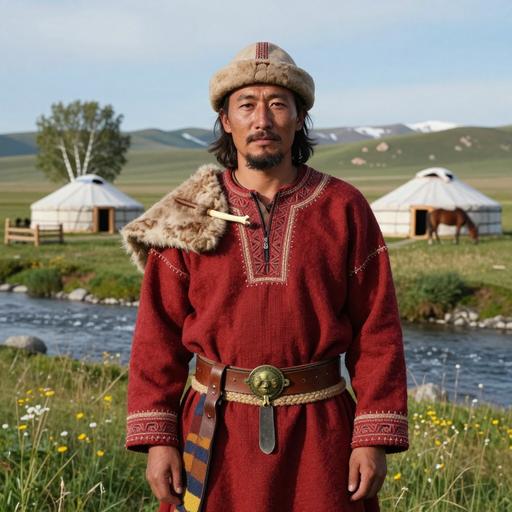
Portrait reconstruction of C1706
Ancient Individual

A man buried in China in the Iron Age era

C1706
368 BCE - 173 BCE
Male
Iron Age Kalatasi, Xinjiang, China
China
Scroll to begin
Chapter I

Identity

The biological and cultural markers that define this ancient individual

Sample ID

C1706

Date Range

368 BCE - 173 BCE

Biological Sex

Male

mtDNA Haplogroup

D4c1b1

Y-DNA Haplogroup

C2b1c

Cultural Period

Iron Age Kalatasi, Xinjiang, China

Chapter II

Place

Where this individual was discovered

Country China
Locality Xinjiang. Aletai Region. Buerjin County. Kalatasi
Coordinates 47.7000, 86.8700
Chapter III

Time

When this individual lived in the broader context of human history

C1706 368 BCE - 173 BCE
Chapter IV

Story

The narrative of this ancient life

The Iron Age in the region of Kalatasi, Xinjiang, China, is a fascinating period within the broader tapestry of ancient Chinese civilization. This period is characterized by significant cultural, technological, and societal developments, influenced by both indigenous innovation and external interactions. Xinjiang's location along the historic Silk Road made it a melting pot of cultures, ideas, and technologies, and the Iron Age Kalatasi culture is a testament to this dynamic exchange.

Geographical Context

Xinjiang is located in the northwestern part of China, serving as a bridge between Eastern China, Central Asia, and beyond. The region is known for its diverse geography, including vast deserts such as the Taklamakan, mountain ranges like the Tianshan, and fertile oases that supported agricultural activities. Kalatasi, within this vast landscape, thrived due to its strategic position and rich natural resources.

Cultural Influences and Interactions

During the Iron Age, the Kalatasi culture was strongly influenced by interactions with neighboring cultures along the Silk Road. This era saw the convergence of nomadic pastoralists, settled agricultural communities, and merchants, each bringing their unique traditions and innovations. The region absorbed influences from Persian, Greek, Indian, and Central Asian cultures, leading to a hybrid culture that was both distinct and diverse.

Technological Advancements

One of the defining features of the Iron Age was the transition from bronze to iron metallurgy. Kalatasi, like many other regions in Xinjiang, experienced a significant technological leap with the adoption of iron tools and weapons. Iron was more abundant and durable than bronze, which revolutionized agriculture through more efficient tools and enhanced military capabilities with stronger weaponry. This technological shift supported population growth and increased trade and warfare.

Society and Economy

The society of Iron Age Kalatasi was likely stratified, with clear social hierarchies influenced by both indigenous systems and those from contact cultures. The economy was a mix of agriculture, pastoralism, and trade. The fertile oases allowed for the cultivation of grains, fruits, and vegetables, while the surrounding steppes supported livestock such as sheep, goats, and camels. Kalatasi's involvement in the Silk Road trade networks facilitated economic prosperity, with the exchange of goods like silk, spices, metals, and textiles.

Art and Culture

Art and craft in Kalatasi were vibrant, reflecting a blend of local and foreign motifs. Artisans produced a variety of items, including pottery, textiles, jewelry, and metalwork, often decorated with intricate designs depicting animals, geometric patterns, and mythological themes. The fusion of styles represented the cultural syncretism that characterized the era.

Religion and Beliefs

Spiritual beliefs in Iron Age Kalatasi were likely diverse, combining elements of indigenous animism with influences from Zoroastrianism, Buddhism, and other religious traditions encountered along the trade routes. Evidence from burial sites indicates a complex ritual life, with varying practices that suggest beliefs in an afterlife and reverence for ancestors.

Archaeological Evidence

Archaeological studies in the region have uncovered settlements, burial sites, and artifacts that provide insight into the daily lives and cultural practices of the Kalatasi people. These findings include iron tools, weapons, pottery, textiles, and remnants of dwellings that depict a society sophisticated in its use of resources and skilled in craftsmanship.

Legacy

The Iron Age culture of Kalatasi in Xinjiang played a significant role in the history of ancient Chinese civilization. Its legacy is evident in the intercultural exchange that helped shape the region's subsequent historical trajectory, serving as a cultural and economic bridge between the East and West. The enduring blend of ideas and practices from this era continues to inform the cultural identity of Xinjiang today.

In summary, the Iron Age Kalatasi culture of Xinjiang was a period of rich cultural interaction, technological advancement, and economic prosperity. It stands as an exemplar of the innovative spirit and the intricate web of cultural exchanges that characterized ancient civilizations along the Silk Road.

Chapter V

Genetics

The genetic ancestry of this ancient individual

Ancient Genetic Admixture

This analysis compares the DNA profile of C1706 with ancient reference populations, showing the genetic composition in terms of prehistoric ancestral groups.

Ancient Asians 62.7%
Neolithic Farmers 19.7%
European Hunter-Gatherers 8.2%
Western Steppe Pastoralists 6.8%
Ancient Native Americans 2.6%

Modern Genetic Admixture

This analysis compares the DNA profile with present-day reference populations, showing what percentage of genetic makeup resembles modern populations from different regions.

Asia 82.5%
Northern Asian 31.5%
Siberian 18.2%
Mongolian 13.2%
Central Asian, Northern Indian & Pakistani 27.9%
Central Asian 26.9%
Indian 1.0%
Chinese & Southeast Asian 11.0%
Chinese 7.6%
Tibetan 3.4%
Northern West Asian 8.8%
Caucasian 8.8%
Japanese & Korean 3.4%
Japanese 3.4%
Europe 12.2%
Eastern European 7.0%
Southern European 3.8%
Balkan 1.6%
Iberian 1.5%
Sardinian 0.7%
Northwestern European 1.4%
Scandinavian 1.4%
America 3.5%
America 3.5%
Native American 3.5%
Africa 0.9%
North African 0.9%
Egyptian 0.9%
Oceania 0.9%
Melanesian 0.9%
Papuan 0.9%

Closest Modern Populations

These are the modern populations showing the closest statistical alignment to A man buried in China in the Iron Age era, ranked by genetic distance. Lower distance values indicate closer statistical similarity.

1
Kazakh Xinjiang
2.1195
2
Kazakh
2.4722
3
Kirghiz Tajikistan Pamir
2.5757
4
Kirghiz
2.9951
5
Kirghiz China
3.2066
Chapter VI

Context

Other ancient individuals connected to this sample

Sources

References

Scientific publications and genetic data

Scientific Publication

Bronze and Iron Age population movements underlie Xinjiang population history

Authors Kumar V, Wang W, Zhang J
Abstract

The Xinjiang region in northwest China is a historically important geographical passage between East and West Eurasia. By sequencing 201 ancient genomes from 39 archaeological sites, we clarify the complex demographic history of this region. Bronze Age Xinjiang populations are characterized by four major ancestries related to Early Bronze Age cultures from the central and eastern Steppe, Central Asian, and Tarim Basin regions. Admixtures between Middle and Late Bronze Age Steppe cultures continued during the Late Bronze and Iron Ages, along with an inflow of East and Central Asian ancestry. Historical era populations show similar admixed and diverse ancestries as those of present-day Xinjiang populations. These results document the influence that East and West Eurasian populations have had over time in the different regions of Xinjiang.

G25 Coordinates

The G25 coordinates for sample C1706 can be used for detailed admixture analysis in our G25 Studio tool.

C1706,0.06087224,-0.23729228,0.04484658,-0.0044917,-0.04358186,-0.0135575,0.00198098,0.00489498,-0.00301734,0.003272,-0.0220019,-0.00465588,0.00266562,-0.0020821,-0.00310036,0.00039468,-0.00393086,-0.00090996,0.0071995,0.01032038,-0.01238882,-0.00167158,-0.00947794,0.0035398,0.00521774
Analyze in G25 Studio
Use code for 40% off Expires Mar 01