Menu
Store
Blog
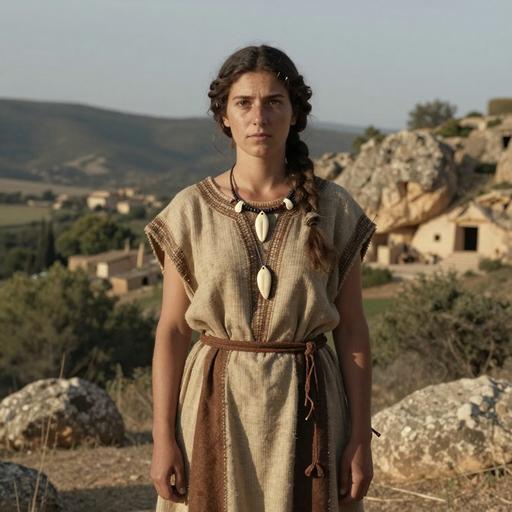
Portrait reconstruction of CB13
Ancient Individual

A woman buried in Spain in the Early Neolithic era

CB13
5474 BCE - 5318 BCE
Female
Early Neolithic Spain
Spain
Scroll to begin
Chapter I

Identity

The biological and cultural markers that define this ancient individual

Sample ID

CB13

Date Range

5474 BCE - 5318 BCE

Biological Sex

Female

mtDNA Haplogroup

K1a2a

Cultural Period

Early Neolithic Spain

Chapter II

Place

Where this individual was discovered

Country Spain
Locality Cova Bonica. Vallirana. Barcelona
Coordinates 41.3700, 1.8900
Chapter III

Time

When this individual lived in the broader context of human history

CB13 5474 BCE - 5318 BCE
Chapter IV

Story

The narrative of this ancient life

The Early Neolithic period in Spain marks a significant era in the prehistory of Western Europe, characterized by profound socio-economic changes brought about by the advent of agriculture and sedentism. This period, generally placed between 6000 and 4500 BCE, saw the transition from hunter-gatherer societies to more settled farming communities, fundamentally altering the landscape, societal structures, and cultural practices in the region.

Geography and Settlement

During the Early Neolithic, Spain's geography played a crucial role in shaping human settlement and development. The region is characterized by diverse landscapes, including coastal areas, mountainous zones, and rich river valleys, such as those of the Ebro, the Tagus, and the Guadalquivir. Early Neolithic communities often established themselves in fertile areas conducive to agriculture, which led to the development of permanent or semi-permanent villages. These villages typically consisted of small clusters of rectangular or oval-shaped dwellings made from perishable materials like wood, clay, and reeds.

Agriculture and Economy

The introduction of agriculture is one of the defining features of the Neolithic period in Spain. Early Neolithic communities cultivated a variety of crops, including einkorn and emmer wheat, barley, peas, lentils, and flax. This agricultural practice marked a departure from the Mesolithic reliance on hunting, gathering, and foraging, leading to increased food production and surplus storage.

Animal domestication was also pivotal, with cattle, sheep, goats, and pigs being integral to Neolithic life. These animals provided not only meat but also secondary products such as milk, wool, and labor for plowing fields. The shift to agricultural subsistence allowed communities to support larger populations and facilitated the accumulation of goods, setting the stage for economic diversification and complexity.

Tools and Technology

The Early Neolithic era saw advancements in tool technology, reflecting the changing needs of agricultural communities. Stone tools were predominant, with polished stone axes and adzes being essential for land clearance and woodworking. The development of pottery marked another technological leap, with Early Neolithic ceramics typically being simple, round-bottomed vessels used for storage and cooking.

Given the region's varied environment, communities developed specific tools tailored to their local resources and needs, demonstrating early technological innovation and adaptation.

Social Organization and Culture

The establishment of more permanent settlements led to more complex social organizations. Although kinship likely remained a fundamental organizing principle, evidence suggests increasing social differentiation during the Early Neolithic. This can be inferred from burial practices, where grave goods indicate varying levels of status and wealth among individuals.

Cultural expressions during this period include megalithic structures, such as dolmens and passage graves, which were used as communal burial sites. These structures demonstrate advanced architectural skills and may reflect emerging religious beliefs and social hierarchies.

Rock art provides insight into the symbolic and spiritual life of Early Neolithic communities. Notable examples include the Levantine rock art of eastern Spain, which often depicts human figures, animals, and abstract patterns, possibly related to ritualistic and ceremonial practices.

Trade and Interaction

The Early Neolithic period in Spain was also a time of increasing interaction and trade among different communities. Archaeological evidence points to the exchange of goods such as obsidian, flint, and certain types of pottery, indicating extensive trade networks that connected various parts of the Iberian Peninsula and beyond. This exchange facilitated not only the movement of goods but also ideas, technologies, and cultural practices.

Environmental Impact

The transition to agriculture had a profound environmental impact. Deforestation for fields and settlements led to soil erosion and changes in local ecosystems. However, Neolithic communities also managed and manipulated their landscapes, developing early forms of land management that would influence the agricultural practices of future generations.

Conclusion

The Early Neolithic era in Spain was a transformative period that laid the foundations for subsequent cultural and societal developments. It was characterized by the rise of agriculture, the development of new technologies, and the emergence of complex social structures. These changes had long-lasting impacts on the Iberian Peninsula and contributed significantly to the broader story of human civilization in Western Europe.

Chapter V

Genetics

The genetic ancestry of this ancient individual

Ancient Genetic Admixture

This analysis compares the DNA profile of CB13 with ancient reference populations, showing the genetic composition in terms of prehistoric ancestral groups.

Neolithic Farmers 74.9%
European Hunter-Gatherers 14.8%
Western Steppe Pastoralists 10.2%

Modern Genetic Admixture

This analysis compares the DNA profile with present-day reference populations, showing what percentage of genetic makeup resembles modern populations from different regions.

Europe 100.0%
Southern European 100.0%
Italian 37.7%
Sardinian 32.9%
Iberian 29.4%

Closest Modern Populations

These are the modern populations showing the closest statistical alignment to A woman buried in Spain in the Early Neolithic era, ranked by genetic distance. Lower distance values indicate closer statistical similarity.

1
Sardinian
2.0446
Chapter VI

Context

Other ancient individuals connected to this sample

Sources

References

Scientific publications and genetic data

Scientific Publication

A Common Genetic Origin for Early Farmers from Mediterranean Cardial and Central European LBK Cultures

Authors Olalde I, Schroeder H, Sandoval-Velasco M
Abstract

The spread of farming out of the Balkans and into the rest of Europe followed two distinct routes: An initial expansion represented by the Impressa and Cardial traditions, which followed the Northern Mediterranean coastline; and another expansion represented by the LBK (Linearbandkeramik) tradition, which followed the Danube River into Central Europe. Although genomic data now exist from samples representing the second migration, such data have yet to be successfully generated from the initial Mediterranean migration. To address this, we generated the complete genome of a 7,400-year-old Cardial individual (CB13) from Cova Bonica in Vallirana (Barcelona), as well as partial nuclear data from five others excavated from different sites in Spain and Portugal. CB13 clusters with all previously sequenced early European farmers and modern-day Sardinians. Furthermore, our analyses suggest that both Cardial and LBK peoples derived from a common ancient population located in or around the Balkan Peninsula. The Iberian Cardial genome also carries a discernible hunter-gatherer genetic signature that likely was not acquired by admixture with local Iberian foragers. Our results indicate that retrieving ancient genomes from similarly warm Mediterranean environments such as the Near East is technically feasible.

G25 Coordinates

The G25 coordinates for sample CB13 can be used for detailed admixture analysis in our G25 Studio tool.

CB13,0.11593874,0.16124658,0.0222075,-0.0463201,0.05749548,-0.02296556,-0.00289354,0.00560682,0.04045722,0.0718656,-0.00357322,0.01445804,-0.02563624,-0.01464754,-0.01154962,0.00481162,0.014242,-0.00043004,-0.0013309,-0.00392454,-0.00088006,0.00351708,-0.01167152,-0.01957444,0.00449034
Analyze in G25 Studio
Use code for 40% off Expires Feb 26