Menu
Store
Blog
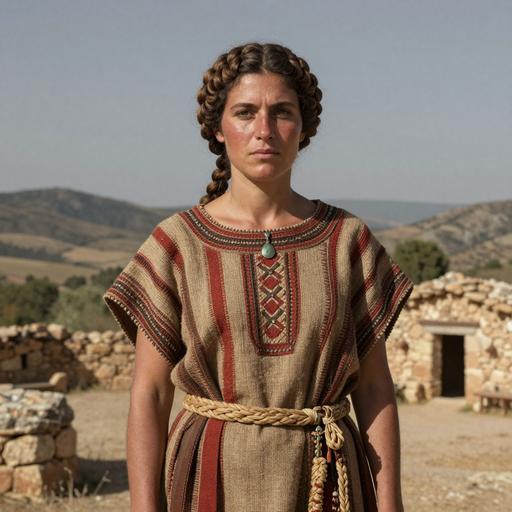
Portrait reconstruction of CBR004
Ancient Individual

A woman buried in Spain in the Bronze Age era

CBR004
1538 BCE - 1447 BCE
Female
Bronze Age Cabezo Redondo, Southeast Spain
Spain
Scroll to begin
Chapter I

Identity

The biological and cultural markers that define this ancient individual

Sample ID

CBR004

Date Range

1538 BCE - 1447 BCE

Biological Sex

Female

mtDNA Haplogroup

H4a1a

Cultural Period

Bronze Age Cabezo Redondo, Southeast Spain

Chapter II

Place

Where this individual was discovered

Country Spain
Locality Alicante. Villena. Cabezo Redondo
Coordinates 38.6433, -0.8960
Chapter III

Time

When this individual lived in the broader context of human history

CBR004 1538 BCE - 1447 BCE
Chapter IV

Story

The narrative of this ancient life

The Cabezo Redondo site represents a significant cultural phase during the Bronze Age in Southeast Spain, specifically within the Iberian Peninsula. This period, characterized by its unique archaeological findings, provides insight into the social, economic, and cultural dynamics of a prehistoric society.

Geographic and Environmental Context

Cabezo Redondo is located in the current province of Alicante, in Southeast Spain. This area, part of the broader Mediterranean climate zone, offered fertile land and a moderate climate, conducive to agricultural activities. The region's landscape, comprising coastal areas, valleys, and upland zones, played a crucial role in shaping the lifestyle and subsistence strategies of its inhabitants.

Chronology

The Bronze Age in the Iberian Peninsula is traditionally divided into Early, Middle, and Late phases, spanning approximately from 2200 BC to 800 BC. Cabezo Redondo falls within this period, specifically influential during the Middle to Late Bronze Age transition, dating roughly between 1800 and 1500 BC.

Socio-Political Organization

Cabezo Redondo was a significant settlement, suggesting a complex socio-political structure. It likely functioned as a regional center, connected with other contemporary sites through trade and cultural exchanges. The settlement pattern indicates a hierarchically organized society, possibly led by a chief or a group of elite individuals who maintained control over resources and trade routes.

Architecture and Settlement

Excavations at Cabezo Redondo reveal advanced architectural techniques for the period. Dwellings were typically constructed from mud-brick and stone, with some evidence of larger, possibly communal or ceremonial structures. The site layout indicates planned construction, with distinct residential and activity zones, highlighting a degree of urban planning and social organization.

Economy and Subsistence

The economy of Cabezo Redondo was diverse, incorporating agriculture, animal husbandry, and metallurgy. The community cultivated crops such as wheat, barley, and legumes, and raised livestock including sheep, goats, and cattle. The proximity to resources such as copper and tin allowed the inhabitants to develop bronze metallurgy, producing tools, weapons, and ornaments that were essential for daily life and trade.

Material Culture and Technology

The material culture of Cabezo Redondo includes pottery, tools, and ornaments that reflect both local traditions and external influences. Pottery from this site often features intricate decorations and was used for storage, cooking, and ritual purposes. The community excelled in metalworking, producing a variety of bronze objects, which indicates not only technical proficiency but also the community’s role in broader trade networks.

Trade and Interaction

Cabezo Redondo was strategically situated to facilitate trade and interaction with other regions across the Iberian Peninsula and possibly even the broader Mediterranean region. Artifacts such as exotic pottery and metal objects suggest contact with distant cultures, pointing to a vibrant exchange network. Such interactions would have introduced new ideas, goods, and technologies, enriching the local culture.

Burial Practices and Religion

Archaeological evidence from burial sites associated with Cabezo Redondo provides insights into the community's beliefs and social structure. Burials were often found with grave goods, including pottery, personal ornaments, and tools, indicating a belief in an afterlife where such items were deemed necessary. The variety and richness of grave goods suggest social stratification, with elite individuals receiving more elaborate burials.

Conclusion

The Bronze Age culture of Cabezo Redondo in Southeast Spain represents a complex and dynamic society characterized by advanced technological skills, economic diversity, and extensive trade networks. The archaeological remains provide a window into the socio-political and economic life of a prehistoric community that was both locally rooted and widely connected. As more research and excavations are conducted, our understanding of this significant site and its role within the broader Bronze Age Iberian context will continue to deepen.

Chapter V

Genetics

The genetic ancestry of this ancient individual

Ancient Genetic Admixture

This analysis compares the DNA profile of CBR004 with ancient reference populations, showing the genetic composition in terms of prehistoric ancestral groups.

Neolithic Farmers 42.4%
European Hunter-Gatherers 32.2%
Western Steppe Pastoralists 25.4%

Modern Genetic Admixture

This analysis compares the DNA profile with present-day reference populations, showing what percentage of genetic makeup resembles modern populations from different regions.

Europe 100.0%
Southern European 87.0%
Iberian 50.6%
Italian 20.2%
Sardinian 16.3%
Northwestern European 13.0%
English 6.5%
Northwestern European 6.5%

Closest Modern Populations

These are the modern populations showing the closest statistical alignment to A woman buried in Spain in the Bronze Age era, ranked by genetic distance. Lower distance values indicate closer statistical similarity.

1
Spanish La Rioja
2.8664
2
Spanish Burgos
3.2638
3
Spanish Pirineu
3.2905
4
Spanish Castilla La Mancha
3.2989
5
Spanish Aragon
3.3038
6
Spanish Castello
3.3263
7
Spanish Cantabria
3.3329
8
Spanish Navarra
3.3399
9
Spanish Terres De L'ebre
3.3861
10
Spanish Valencia
3.4243
Chapter VI

Context

Other ancient individuals connected to this sample

Sources

References

Scientific publications and genetic data

Scientific Publication

Genomic transformation and social organization during the Copper Age-Bronze Age transition in southern Iberia

Authors Villalba-Mouco V, Oliart C, Rihuete-Herrada C
Abstract

The emerging Bronze Age (BA) of southeastern Iberia saw marked social changes. Late Copper Age (CA) settlements were abandoned in favor of hilltop sites, and collective graves were largely replaced by single or double burials with often distinctive grave goods indirectly reflecting a hierarchical social organization, as exemplified by the BA El Argar group. We explored this transition from a genomic viewpoint by tripling the amount of data available for this period. Concomitant with the rise of El Argar starting ~2200 cal BCE, we observe a complete turnover of Y-chromosome lineages along with the arrival of steppe-related ancestry. This pattern is consistent with a founder effect in male lineages, supported by our finding that males shared more relatives at sites than females. However, simple two-source models do not find support in some El Argar groups, suggesting additional genetic contributions from the Mediterranean that could predate the BA.

G25 Coordinates

The G25 coordinates for sample CBR004 can be used for detailed admixture analysis in our G25 Studio tool.

CBR004,0.1211721,0.15491378,0.03882436,-0.01385444,0.05424882,-0.00872494,-0.00118142,0.0045256,0.03070738,0.05041792,-0.00659712,0.01353472,-0.02359912,-0.01188132,0.00157382,0.00037866,-0.00174778,-0.00086632,-0.00057346,-0.00292804,0.00343212,0.00461026,-0.01142534,-0.01196754,0.00240074
Analyze in G25 Studio
Use code for 40% off Expires Feb 27