


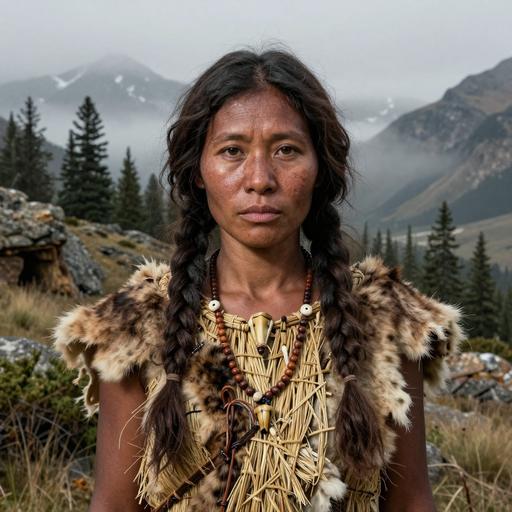
| Sample ID | Culture/Period | Date | Location | Action |
|---|---|---|---|---|
| Denisova11 | Denisovan-Neanderthal Admixture | 116150 BCE | Denisova Cave. Altai, Russia | View |
Chapter IV
Story
The narrative of this ancient life
The Denisovan-Neanderthal admixture refers to a significant period in human prehistory during which interbreeding occurred between two distinct groups of archaic humans: the Denisovans and the Neanderthals. Understanding this admixture provides insights into the complex web of human evolution, the migration patterns of ancient populations, and the genetic legacy that these interactions have left in modern humans.
The Denisovans
The Denisovans are an extinct species or subspecies of archaic humans that were first identified through DNA analysis of a fragmentary finger bone and tooth discovered in the Denisova Cave in the Altai Mountains of Siberia. Emerging evidence suggests that they were widespread across Asia and contributed genetic material to certain modern human populations, particularly Melanesians, Aboriginal Australians, and some Southeast Asians.
The Neanderthals
Neanderthals (Homo neanderthalensis) were a distinct group of archaic humans that inhabited Europe, the Middle East, and parts of Asia. They are known for their robust build, large cranial capacity, and a variety of cultural artifacts that indicate complex social structures and behaviors. Neanderthals became extinct approximately 40,000 years ago, but not before they had interbred with both modern humans and Denisovans.
Geographic and Temporal Context
The Denisovan-Neanderthal admixture likely occurred in regions where their populations overlapped, possibly in parts of Central and Southern Asia. This interbreeding took place during the Middle Paleolithic period, roughly between 50,000 to 100,000 years ago, though the precise timing and locations remain subjects of ongoing research. The interactions were facilitated by migration and environmental changes, such as glacial and interglacial cycles, which influenced human migration patterns and habitat availability.
Genetic Evidence
Genomic studies have unveiled a complex picture of interbreeding among archaic humans. Denisovan genetic material makes up to 6% of the genome in some Oceanian populations, suggesting significant admixture events. Neanderthal DNA is present on average about 1-2% in non-African modern human populations, indicating multiple waves of interbreeding as humans migrated out of Africa.
Implications on Modern Humans
The genetic contributions from Denisovans and Neanderthals have implications for understanding the biological and physiological variation in modern humans. These archaic genes are linked to a variety of traits, including immune response, skin pigmentation, and even altitude adaptation, as seen in Tibetan populations.
Cultural and Technological Aspects
While direct evidence of cultural exchange between Denisovans and Neanderthals is limited, the sharing of technological advancements cannot be ruled out. Neanderthals are known for their Mousterian tool technology, and while little is known of Denisovan technologies, potential influences and exchanges might have occurred. Artifacts found in Denisova Cave and other potential Denisovan sites suggest they might have shared or developed advanced skills independently.
Challenges and Future Research
Understanding the Denisovan-Neanderthal admixture presents several complexities due to the scant fossil record and the challenges in extracting ancient DNA. Future excavations, improved DNA extraction techniques, and cross-disciplinary approaches integrating archaeology, anthropology, and genetics will help clarify the extent and impact of this admixture.
In sum, the Denisovan-Neanderthal admixture is a testament to the intricacies of human evolution and the dynamic interactions among ancient groups that have shaped the genetic landscape of contemporary human populations. As research progresses, new findings will continue to refine our understanding of these ancient peoples and their lasting impact on human history.