Menu
Store
Blog
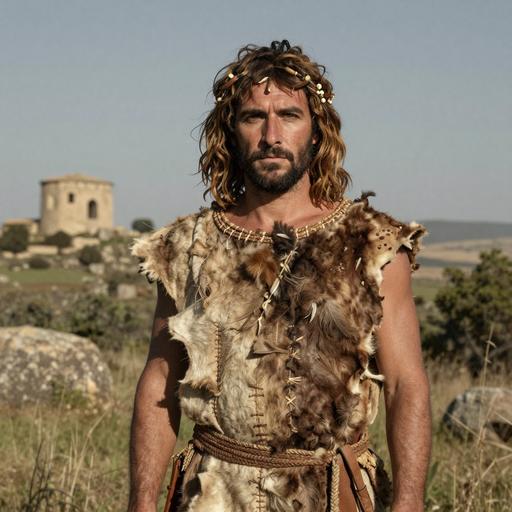
Portrait reconstruction of ELT002
Ancient Individual

A man buried in Spain in the Copper Age era

ELT002
3941 BCE - 3660 BCE
Male
Middle to Late Neolithic Spain
Spain
Scroll to begin
Chapter I

Identity

The biological and cultural markers that define this ancient individual

Sample ID

ELT002

Date Range

3941 BCE - 3660 BCE

Biological Sex

Male

mtDNA Haplogroup

J1c1b

Y-DNA Haplogroup

I2a1a1

Cultural Period

Middle to Late Neolithic Spain

Chapter II

Place

Where this individual was discovered

Country Spain
Locality Cova de Els Trocs
Coordinates 42.5000, 0.5000
Chapter III

Time

When this individual lived in the broader context of human history

ELT002 3941 BCE - 3660 BCE
Chapter IV

Story

The narrative of this ancient life

The Middle to Late Neolithic period in Iberia, particularly in what is now modern-day Spain, spans approximately from 4500 to 2000 BCE. This era marks significant transformations in the ways societies lived, organized themselves, and interacted with their environment and each other. Here’s an extensive look into the culture and characteristics of Neolithic Spain during this time:

Agricultural Advancements and Settlements:

  1. Agriculture and Domestication:

    • The Middle to Late Neolithic period saw significant advancements in agricultural practices. Communities were predominantly agrarian, growing cereals such as wheat and barley and legumes like lentils and peas, which they rotated to maintain soil fertility. They also domesticated animals like sheep, goats, pigs, and cattle, which provided meat, milk, hides, and labor.
    • The introduction of the plow and improved tools facilitated more efficient farming, which allowed communities to support larger populations.
  2. Permanent Settlements:

    • As agricultural practices improved, people began to establish more permanent settlements, often located in fertile river valleys or coastal regions. These settlements varied in size, with some forming small hamlets and others larger villages.
    • Structures in these communities typically included rectangular or circular houses made of wood, stone, and adobe, with thatched or mud roofs. Some settlements also featured defensive walls or ditches.
  3. Site Complexity:

    • Towards the later Neolithic, some settlements grew into more complex sites with communal buildings and evidence of social stratification. This suggests the beginnings of leadership roles and the organization of labor and resources.

Social and Cultural Developments:

  1. Social Organization:

    • The societal structures were likely kinship-based, but evidence suggests increasing social differentiation as settlements grew. The differentiation in burial practices and grave goods implies that some individuals or groups held higher status within the community.
  2. Ceremonial and Religious Practices:

    • Megalithic structures, such as dolmens, passage graves, and menhirs, became prominent during this period. These served both as burial sites and ceremonial structures, indicating ritual practices tied to death, ancestors, and possibly celestial events.
    • Artifacts such as figurines, pottery with symbolic motifs, and carvings imply the existence of religious or spiritual beliefs. These symbols often revolved around fertility, life cycles, and communal identity.
  3. Artistic Expression:

    • Pottery from this period exhibits more complexity in design, with decorative motifs and increasingly sophisticated techniques. Painted, impressed, and incised decorations became common.
    • Rock art, particularly in cave sites across the Iberian Peninsula, displays scenes of daily life, hunting, and possibly religious or ceremonial depictions. This art provides insight into the symbolic and communicative aspects of Neolithic culture.

Technological and Economic Exchange:

  1. Tool Production:

    • Flint and obsidian were commonly used for making tools such as blades, scrapers, and arrowheads. The late Neolithic saw the introduction of polished stone axes, which improved efficiency in agriculture and woodland clearance.
    • Bone and antler were also used to craft tools, alongside the development of textile production technologies using plant fibers and animal hides.
  2. Trade and Interaction:

    • The Middle to Late Neolithic period witnessed increased exchange of goods, ideas, and cultural practices between communities. This interaction was facilitated by trading networks that extended across the Iberian Peninsula and into the broader Mediterranean region.
    • Items like obsidian, seashells, pigments, and distinctive pottery styles circulated, suggesting a dynamic network of exchange and communication.

Environmental and Climatic Conditions:

  1. Adaptation to Environment:

    • Neolithic populations effectively adapted to diverse Iberian landscapes, from coastal areas and river valleys to upland regions. This adaptability is reflected in their architecture, resource use, and settlement patterns.
    • The era saw periods of climatic fluctuation, necessitating adjustments in agricultural practices and settlement locations to ensure the sustainability of their communities.
  2. Environmental Impact:

    • The expansion of agriculture and settlement led to deforestation and landscape modifications. The clearing of land for fields and pastures had lasting impacts on the Iberian environment, some of which are still evident today.

In conclusion, the Middle to Late Neolithic era in Spain was a period of profound transformation. The advancements in agriculture, the establishment of permanent settlements, and the development of complex social and ritual structures laid the foundations for the subsequent Bronze Age civilizations on the Iberian Peninsula. This era reflects a shifting focus from the transient lifestyle of earlier hunter-gatherers to more stable, organized, and interdependent communities.

Chapter V

Genetics

The genetic ancestry of this ancient individual

Ancient Genetic Admixture

This analysis compares the DNA profile of ELT002 with ancient reference populations, showing the genetic composition in terms of prehistoric ancestral groups.

Neolithic Farmers 59.1%
European Hunter-Gatherers 26.4%
Western Steppe Pastoralists 14.5%

Modern Genetic Admixture

This analysis compares the DNA profile with present-day reference populations, showing what percentage of genetic makeup resembles modern populations from different regions.

Europe 99.1%
Southern European 99.1%
Iberian 44.4%
Sardinian 34.0%
Italian 20.7%
Africa 0.9%
North African 0.9%
North African 0.9%

Closest Modern Populations

These are the modern populations showing the closest statistical alignment to A man buried in Spain in the Copper Age era, ranked by genetic distance. Lower distance values indicate closer statistical similarity.

1
Sardinian
3.2148
2
French Corsica
5.4583
3
Spanish La Rioja
5.6120
4
Spanish Castilla La Mancha
5.9089
5
Spanish Castello
5.9691
6
Spanish Pirineu
5.9936
7
Spanish Aragon
6.0248
8
Spanish Menorca
6.0277
9
Spanish Cantabria
6.0493
10
Spanish Navarra
6.0612
Chapter VI

Context

Other ancient individuals connected to this sample

Sources

References

Scientific publications and genetic data

Scientific Publication

Survival of Late Pleistocene Hunter-Gatherer Ancestry in the Iberian Peninsula

Authors Villalba-Mouco V, van de Loosdrecht MS, Posth C
Abstract

The Iberian Peninsula in southwestern Europe represents an important test case for the study of human population movements during prehistoric periods. During the Last Glacial Maximum (LGM), the peninsula formed a periglacial refugium [1] for hunter-gatherers (HGs) and thus served as a potential source for the re-peopling of northern latitudes [2]. The post-LGM genetic signature was previously described as a cline from Western HG (WHG) to Eastern HG (EHG), further shaped by later Holocene expansions from the Near East and the North Pontic steppes [3-9]. Western and central Europe were dominated by ancestry associated with the ∼14,000-year-old individual from Villabruna, Italy, which had largely replaced earlier genetic ancestry, represented by 19,000-15,000-year-old individuals associated with the Magdalenian culture [2]. However, little is known about the genetic diversity in southern European refugia, the presence of distinct genetic clusters, and correspondence with geography. Here, we report new genome-wide data from 11 HGs and Neolithic individuals that highlight the late survival of Paleolithic ancestry in Iberia, reported previously in Magdalenian-associated individuals. We show that all Iberian HGs, including the oldest, a ∼19,000-year-old individual from El Mirón in Spain, carry dual ancestry from both Villabruna and the Magdalenian-related individuals. Thus, our results suggest an early connection between two potential refugia, resulting in a genetic ancestry that survived in later Iberian HGs. Our new genomic data from Iberian Early and Middle Neolithic individuals show that the dual Iberian HG genomic legacy pertains in the peninsula, suggesting that expanding farmers mixed with local HGs. VIDEO ABSTRACT.

G25 Coordinates

The G25 coordinates for sample ELT002 can be used for detailed admixture analysis in our G25 Studio tool.

ELT002,0.12030796,0.16044796,0.03093402,-0.03146626,0.05736192,-0.0163768,-0.00187924,0.00612416,0.03723796,0.0644269,-0.00527142,0.0145316,-0.02569776,-0.0129642,-0.00553596,0.00386488,0.00586998,-0.00074714,-0.00091394,-0.00330846,0.0015991,0.00517826,-0.01205652,-0.01802482,0.00413033
Analyze in G25 Studio
Use code for 40% off Expires Feb 26