Menu
Store
Blog
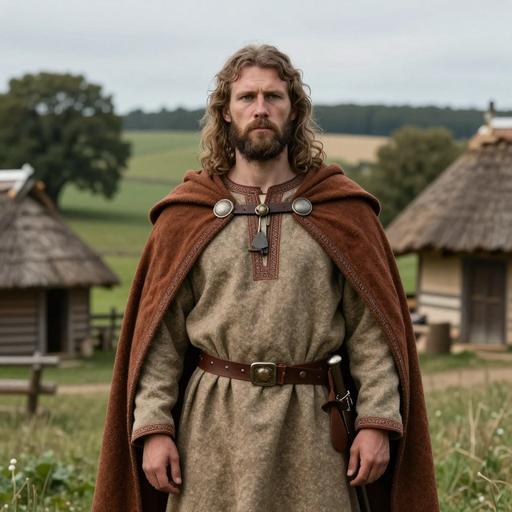
Portrait reconstruction of HID003
Ancient Individual

A man buried in Germany in the Late Antiquity era

HID003
300 CE - 500 CE
Male
Saxon Early Medieval Hiddestorf, Germany
Germany
Scroll to begin
Chapter I

Identity

The biological and cultural markers that define this ancient individual

Sample ID

HID003

Date Range

300 CE - 500 CE

Biological Sex

Male

mtDNA Haplogroup

T2b3+151

Y-DNA Haplogroup

R1b1a2a1a

Cultural Period

Saxon Early Medieval Hiddestorf, Germany

Chapter II

Place

Where this individual was discovered

Country Germany
Locality Lower Saxony. Hiddestorf
Coordinates 52.2804, 9.7125
Chapter III

Time

When this individual lived in the broader context of human history

HID003 300 CE - 500 CE
Chapter IV

Story

The narrative of this ancient life

The early medieval period in Hiddestorf, Germany, situated within the broader framework of Saxon culture, is a fascinating epoch characterized by a tapestry of social, political, and cultural evolution. During this time, roughly spanning from the 6th to the 11th centuries, the Saxons were a prominent Germanic tribe known for their resistance to external domination and their rich cultural traditions.

Geography and Settlement Patterns

Hiddestorf, located in the present-day Lower Saxony region of Germany, was characterized by its agrarian landscape, dominated by dense forests, fertile plains, and numerous waterways. The Saxons typically resided in small, scattered settlements or hamlets, comprising a few families. These settlements often centered around large wooden hall-houses, which served as living quarters and communal gathering spaces.

Society and Social Structure

The social organization of Saxon society was hierarchical but relatively egalitarian compared to other early medieval European cultures. At the top were the nobility, comprising chieftains and their families, who held sway over local territories and were responsible for leadership in times of war and peace. Below them were the free peasants or farmers, who made up the majority of the population. There were also slaves, typically war captives or indebted individuals, who performed labor-intensive tasks.

Economy and Agriculture

The economy in early medieval Hiddestorf was predominantly agrarian, with farming being the primary occupation. The Saxons cultivated crops such as barley, oats, rye, and wheat, employing techniques that included crop rotation to maintain soil fertility. Livestock, including cattle, pigs, sheep, and horses, played a significant role in their agricultural system, providing meat, hides, and labor.

Craftsmanship also flourished, with local artisans producing tools, weapons, and jewelry. Trade networks, both overland and along rivers, connected Hiddestorf to broader regional and continental markets, allowing for the exchange of goods and cultural influences.

Religion and Beliefs

Religiously, the Saxons in Hiddestorf were initially pagan, worshipping a pantheon of deities such as Woden (Odin), Thunor (Thor), and Tiw (Tyr). Their spiritual practices included rituals, sacrifices, and festivals aligned with the natural cycles of the year. Sacred groves and springs were often the focal points for religious observances.

The Christianization of the Saxons began in earnest during the 8th century, particularly under the influence of Charlemagne's campaigns and missionary efforts. The process was gradual and met with resistance, but over time, Christianity became more established, leading to the construction of churches and the integration of Christian traditions with local customs.

Politics and Warfare

Politically, the Saxons were organized into tribes and sub-tribes, which were often autonomous but could unite under a common leader during wartime. The Saxon leadership was fluid, based on a combination of hereditary right and demonstrated martial prowess. Warfare was a constant aspect of Saxon life, both among themselves and against external foes like the Franks.

The Saxons' military strategies were adapted to their homeland's terrain, emphasizing swift, agile raids rather than prolonged campaigns. Their resistance to external conquest, particularly during the Saxon Wars led by Charlemagne, is legendary, embodying a fiercely independent spirit.

Cultural Achievements

The cultural legacy of the Saxons in Hiddestorf is manifested in their art, poetry, and legal traditions. While much of their early legacy is oral, later Saxon literature such as the \Hêliand," an Old Saxon epic retelling of the Gospel, highlights a synthesis of Christian themes with traditional Germanic storytelling.

In arts and crafts, the Saxons were renowned for metalwork, particularly intricate jewelry and weaponry, reflecting both aesthetic value and technical skill. Their designs often featured interwoven patterns and motifs influenced by nature and mythology.

Conclusion

The Saxon early medieval period in Hiddestorf, Germany, represents an era of significant transformation and resilience. Despite external pressures and internal changes, the Saxons maintained a distinct cultural identity, blending their Germanic heritage with emerging Christian influences. This synthesis laid the groundwork for the socio-political structures and cultural norms that would shape medieval German history."

Chapter V

Genetics

The genetic ancestry of this ancient individual

Ancient Genetic Admixture

This analysis compares the DNA profile of HID003 with ancient reference populations, showing the genetic composition in terms of prehistoric ancestral groups.

European Hunter-Gatherers 40.9%
Western Steppe Pastoralists 37.4%
Neolithic Farmers 14.6%
Ancient Native Americans 4.0%
Ancient Africans 3.3%

Modern Genetic Admixture

This analysis compares the DNA profile with present-day reference populations, showing what percentage of genetic makeup resembles modern populations from different regions.

Europe 92.7%
Northwestern European 88.2%
English 53.1%
Scandinavian 17.2%
Northwestern European 12.5%
Finnish 5.5%
Eastern European 4.5%
America 3.5%
America 3.5%
Native American 3.5%
Asia 2.2%
Central Asian, Northern Indian & Pakistani 1.7%
Indian 1.7%
Northern West Asian 0.5%
Anatolian 0.5%
Africa 1.6%
West African 1.6%
Nigerian 1.6%

Closest Modern Populations

These are the modern populations showing the closest statistical alignment to A man buried in Germany in the Late Antiquity era, ranked by genetic distance. Lower distance values indicate closer statistical similarity.

1
Orcadian
2.0847
2
Scottish
2.2798
3
Irish
2.5286
4
English
2.5924
5
English Cornwall
2.6748
6
Shetlandic
2.7335
7
Dutch
2.8070
8
Welsh
2.8570
9
Icelandic
2.8809
10
Norwegian
2.8969
Chapter VI

Context

Other ancient individuals connected to this sample

Sources

References

Scientific publications and genetic data

Scientific Publication

The Anglo-Saxon migration and the formation of the early English gene pool

Authors Gretzinger J, Sayer D, Justeau P
Abstract

The history of the British Isles and Ireland is characterized by multiple periods of major cultural change, including the influential transformation after the end of Roman rule, which precipitated shifts in language, settlement patterns and material culture1. The extent to which migration from continental Europe mediated these transitions is a matter of long-standing debate2-4. Here we study genome-wide ancient DNA from 460 medieval northwestern Europeans-including 278 individuals from England-alongside archaeological data, to infer contemporary population dynamics. We identify a substantial increase of continental northern European ancestry in early medieval England, which is closely related to the early medieval and present-day inhabitants of Germany and Denmark, implying large-scale substantial migration across the North Sea into Britain during the Early Middle Ages. As a result, the individuals who we analysed from eastern England derived up to 76% of their ancestry from the continental North Sea zone, albeit with substantial regional variation and heterogeneity within sites. We show that women with immigrant ancestry were more often furnished with grave goods than women with local ancestry, whereas men with weapons were as likely not to be of immigrant ancestry. A comparison with present-day Britain indicates that subsequent demographic events reduced the fraction of continental northern European ancestry while introducing further ancestry components into the English gene pool, including substantial southwestern European ancestry most closely related to that seen in Iron Age France5,6.

G25 Coordinates

The G25 coordinates for sample HID003 can be used for detailed admixture analysis in our G25 Studio tool.

HID003,0.12580432,0.12727614,0.06284714,0.04700612,0.03989,0.01806638,-0.00061164,-0.00199918,0.0049184,-0.0018848,-0.00765678,0.0063594,-0.01328488,-0.00892552,0.0225152,-0.00964916,-0.02127098,0.00117792,0.00077592,-0.00298616,0.00574308,0.0015193,-0.0059927,0.01398564,-0.00273939
Analyze in G25 Studio
Use code for 40% off Expires Feb 27