Menu
Store
Blog
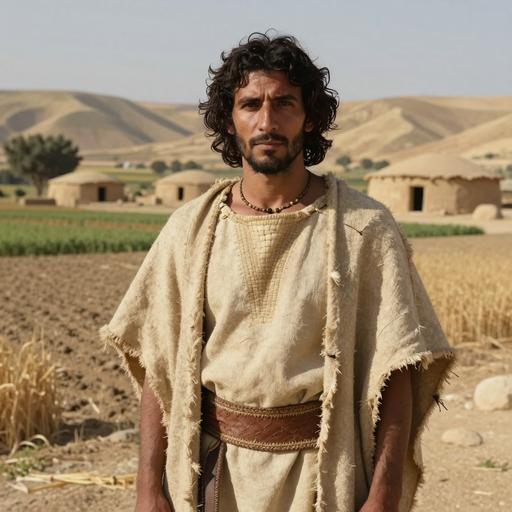
Portrait reconstruction of I0867
Ancient Individual

A man buried in Israel in the Neolithic era

I0867
7300 BCE - 6200 BCE
Male
Pre-Pottery Neolithic B Israel
Israel
Scroll to begin
Chapter I

Identity

The biological and cultural markers that define this ancient individual

Sample ID

I0867

Date Range

7300 BCE - 6200 BCE

Biological Sex

Male

mtDNA Haplogroup

K1a4b

Y-DNA Haplogroup

H-P96

Cultural Period

Pre-Pottery Neolithic B Israel

Chapter II

Place

Where this individual was discovered

Country Israel
Locality Motza
Coordinates 31.7900, 35.1680
Chapter III

Time

When this individual lived in the broader context of human history

I0867 7300 BCE - 6200 BCE
Chapter IV

Story

The narrative of this ancient life

The Pre-Pottery Neolithic B (PPNB) period marks a significant phase in the Neolithic era in the Levant, and particularly in what is now modern-day Israel. This cultural epoch is part of a broader Pre-Pottery Neolithic period that spans from roughly 8500 to 6200 BCE. The PPNB can be understood as a time of dramatic transformation, as societies shifted from hunting and gathering to more settled agricultural lifestyles. This period is known for its profound changes in social structures, technology, and art.

Chronological Context

The PPNB follows the Pre-Pottery Neolithic A (PPNA) period and is succeeded by the Pottery Neolithic stage. As such, it represents a pivotal transition in terms of technological innovation and cultural complexity. This era approximately spans from 8800 BCE to 6500 BCE, although there is some variation in dates given the ongoing adjustments in archaeological chronologies.

Settlement Patterns

During the PPNB, sedentism intensified with the establishment of larger and more permanent settlements compared to the previous PPNA period. These communities often featured complex architectural designs, including multi-roomed dwellings built with mud bricks or stone. The architecture sometimes indicated the presence of communal spiritual or ceremonial buildings, suggesting a societal inclination towards religion or communal gatherings.

Key archaeological sites from this period include Jericho, Beisamoun, and Ain Ghazal, which show evidence of considerable urban planning and organization.

Economy and Subsistence

The PPNB is characterized by significant advancements in agriculture. Communities began to cultivate a broader range of crops, including wheat, barley, peas, and lentils. Additionally, animal domestication became more prominent with evidence of sheep, goats, pigs, and cattle being bred and managed.

This agricultural base significantly transformed social organization. The surplus of food likely allowed for population growth and the development of new social structures, including emerging differences in social rank or wealth.

Technological Advancements

The PPNB saw remarkable advancements in technology and toolmaking. Lithi­c technology evolved radically, with the invention and refinement of pressure flaking techniques to create tools with greater precision, such as arrowheads, blades, and sickles—supporting both hunting and farming activities.

One of the hallmark innovations of the PPNB is the extensive use of plaster, particularly lime plaster. It was used for various purposes, from lining floors to creating artistic and ceremonial objects. Plaster statuary and decorated skulls are notable artifacts from this period, suggesting complex ritualistic beliefs and practices concerning death and ancestors.

Social Complexity and Cultural Practices

The size and density of PPNB villages suggest a complex social organization. There is evidence of trade networks extending long distances, with obsidian from Anatolia and shells from the Mediterranean used in the sites, indicating sophisticated systems of trade and exchange.

Ritual practices also developed significantly during this period, as evidenced by human burials beneath floors of households and possible ancestor veneration. The practice of plastering human skulls, as discovered at several sites, indicates some form of ritual reburial and possibly ancestor worship, reflecting an animistic or spiritual element in PPNB culture.

Artistic Expression

Art in the PPNB period is notably rich. There is evidence of symbolic and decorative art, including carvings and statuary. Artistic representations included human and animal figures, and the creation of figurines points to a complex symbolic understanding of the world and possibly religious beliefs.

Conclusion

In conclusion, the Pre-Pottery Neolithic B period in the Levant, specifically in present-day Israel, was one of profound transition and development. This era laid the foundation for future societal advancements including urbanization, economic organization, and artistic expression. It reflects a period where humanity made great strides in adapting to and manipulating their environment, setting the stage for the ensuing periods of technological and cultural evolution.

Chapter V

Genetics

The genetic ancestry of this ancient individual

Ancient Genetic Admixture

This analysis compares the DNA profile of I0867 with ancient reference populations, showing the genetic composition in terms of prehistoric ancestral groups.

Neolithic Farmers 100.0%

Modern Genetic Admixture

This analysis compares the DNA profile with present-day reference populations, showing what percentage of genetic makeup resembles modern populations from different regions.

Asia 62.9%
Arab, Egyptian & Levantine 58.4%
Levantine 47.1%
Arabian 11.3%
Northern West Asian 4.5%
Cypriot 4.5%
Europe 20.1%
Southern European 20.1%
Sardinian 19.4%
Italian 0.7%
Africa 17.0%
North African 17.0%
North African 13.8%
Egyptian 3.2%

Closest Modern Populations

These are the modern populations showing the closest statistical alignment to A man buried in Israel in the Neolithic era, ranked by genetic distance. Lower distance values indicate closer statistical similarity.

1
Yemenite Amran
5.9007
2
Saudia
5.9383
3
Yemenite Ma'rib
6.0260
4
Yemenite Jew
6.0911
5
Yemenite Dhamar
6.2061
6
Yemenite Al Bayda
6.2724
7
Egyptian Copt
6.2762
8
Yemenite Al Jawf
6.2988
9
Samaritan
6.8785
10
Saudib
6.9408
Chapter VI

Context

Other ancient individuals connected to this sample

Sources

References

Scientific publications and genetic data

Scientific Publication

Genomic insights into the origin of farming in the ancient Near East

Authors Lazaridis I, Nadel D, Rollefson G
Abstract

We report genome-wide ancient DNA from 44 ancient Near Easterners ranging in time between ~12,000 and 1,400 bc, from Natufian hunter-gatherers to Bronze Age farmers. We show that the earliest populations of the Near East derived around half their ancestry from a 'Basal Eurasian' lineage that had little if any Neanderthal admixture and that separated from other non-African lineages before their separation from each other. The first farmers of the southern Levant (Israel and Jordan) and Zagros Mountains (Iran) were strongly genetically differentiated, and each descended from local hunter-gatherers. By the time of the Bronze Age, these two populations and Anatolian-related farmers had mixed with each other and with the hunter-gatherers of Europe to greatly reduce genetic differentiation. The impact of the Near Eastern farmers extended beyond the Near East: farmers related to those of Anatolia spread westward into Europe; farmers related to those of the Levant spread southward into East Africa; farmers related to those of Iran spread northward into the Eurasian steppe; and people related to both the early farmers of Iran and to the pastoralists of the Eurasian steppe spread eastward into South Asia.

G25 Coordinates

The G25 coordinates for sample I0867 can be used for detailed admixture analysis in our G25 Studio tool.

I0867,0.06546316,0.14850584,-0.03411918,-0.09857244,0.0105563,-0.04694256,-0.00680872,-0.00201776,0.05433268,0.0172836,0.00912858,-0.01294744,0.03112084,-0.00113278,-0.0043759,0.0149686,-0.01994548,0.00381494,0.00814894,0.01224134,0.01700788,0.0172856,-0.01311132,-0.00828688,-0.00362269
Analyze in G25 Studio
Use code for 40% off Expires Feb 27