Menu
Store
Blog
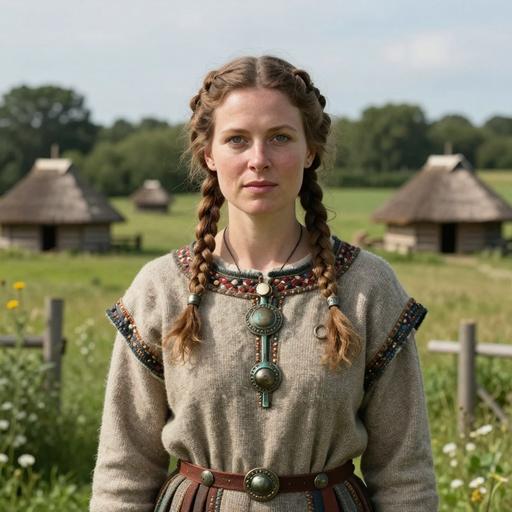
Portrait reconstruction of I11629
Ancient Individual

A woman buried in Netherlands in the Middle Bronze Age era

I11629
1500 BCE - 1000 BCE
Female
Middle to Late Bronze Age Netherlands
Netherlands
Scroll to begin
Chapter I

Identity

The biological and cultural markers that define this ancient individual

Sample ID

I11629

Date Range

1500 BCE - 1000 BCE

Biological Sex

Female

mtDNA Haplogroup

T2e1

Cultural Period

Middle to Late Bronze Age Netherlands

Chapter II

Place

Where this individual was discovered

Country Netherlands
Locality Noord-Holland. Hoogkarspel-Houterpolder-West
Coordinates 52.6960, 5.1520
Chapter III

Time

When this individual lived in the broader context of human history

I11629 1500 BCE - 1000 BCE
Chapter IV

Story

The narrative of this ancient life

The Middle to Late Bronze Age in the Netherlands marks a significant period within the broader Northwest European Bronze Age cultures, spanning from approximately 1600 to 800 BCE. This era is characterized by dynamic cultural, social, and technological developments that are part of a broader tapestry of interactions across Europe.

Geographic and Environmental Context

The Netherlands during this time was characterized by its diverse landscapes, ranging from coastal lowlands and marshes to river valleys and inland plains. The region's waterways, including the Rhine, Meuse, and IJssel rivers, played crucial roles in communication, trade, and the livelihoods of the people. The challenging environment, with its frequent flooding and marshlands, required adaptations that influenced settlement patterns, agricultural practices, and economic activities.

Cultural Dynamics

The Middle to Late Bronze Age in the Netherlands falls within the broader cultural framework of the Atlantic Bronze Age. This era saw extensive cultural exchanges across regions, facilitated by trade networks stretching from the British Isles to the Baltic and beyond. These interactions led to shared technological innovations and artistic expressions.

The local communities displayed unique traits while also absorbing influences from neighboring areas, such as the Urnfield culture from Central Europe. This was a time of gradual transition from the preceding Hilversum culture, which had connections to Britain, to more localized cultural expressions.

Settlements and Social Structure

Settlements during this period were typically small, dispersed hamlets located on elevated grounds to avoid flooding. The architecture primarily included wooden longhouses, sometimes accompanied by ancillary structures for storage and livestock. The communities were likely organized into clans or extended family groups, with social hierarchies possibly emerging due to increasing complexity in trade and resource control.

Economy and Technology

The economy was predominantly agrarian, with farming and animal husbandry as primary activities. However, the challenging landscape necessitated innovative agricultural practices, including drainage systems for cultivating crops such as barley, wheat, and flax. The rich natural resources, especially marshlands, also provided ample opportunities for hunting, fishing, and gathering.

Bronze metallurgy was a defining technological advancement. The region witnessed improvements in metalworking techniques, producing a variety of tools, weapons, and ornaments. The introduction of bronze, an alloy of copper and tin, led to significant changes in tool efficiency and daily life. The Dutch region was not a source of the metals but played a crucial role in the distribution networks, participating actively in trade to acquire raw materials.

Burial Practices and Religion

Burial practices from the Middle to Late Bronze Age reveal much about the spiritual life and social structure of these communities. The tradition of constructing barrows or burial mounds continued, reflecting a belief in ancestral reverence and possibly an emerging elite class with sufficient resources to commission such structures. Graves often included bronze tools, weapons, and ornaments, suggesting a belief in an afterlife where such items were necessary.

Religious practices are less clearly understood but likely involved nature worship, given the landscape's dominance in daily life. Ritual deposits of valuables in water bodies, also known as votive offerings, suggest a spiritual significance attached to these natural features.

Art and Symbolism

Artistic expression during this period is reflected in the intricacy of bronze artifacts, pottery styles, and personal ornaments. The craftsmanship of these items often bore symbolic motifs or designs that likely held cultural or religious significance. The aesthetic qualities of these items demonstrate significant skill and deep cultural meaning.

Conclusion

The Middle to Late Bronze Age in the Netherlands represents a time of significant cultural and technological development within a challenging yet resource-rich environment. The people of this era contributed to and were influenced by extensive trade networks and cultural exchanges across Northwest Europe. Their adaptive strategies to manage their landscape, socio-economic organization, and technological advancements in bronze metallurgy marked a pivotal chapter in the prehistoric cultural evolution of the Netherlands.

Chapter V

Genetics

The genetic ancestry of this ancient individual

Ancient Genetic Admixture

This analysis compares the DNA profile of I11629 with ancient reference populations, showing the genetic composition in terms of prehistoric ancestral groups.

Western Steppe Pastoralists 39.6%
European Hunter-Gatherers 39.0%
Neolithic Farmers 16.6%
Ancient Africans 2.7%
Ancient Native Americans 2.1%

Modern Genetic Admixture

This analysis compares the DNA profile with present-day reference populations, showing what percentage of genetic makeup resembles modern populations from different regions.

Europe 95.6%
Northwestern European 82.3%
English 63.1%
Finnish 12.6%
Northwestern European 3.3%
Scandinavian 3.3%
Eastern European 7.9%
Southern European 5.4%
Iberian 5.4%
Asia 4.4%
Central Asian, Northern Indian & Pakistani 4.4%
Indian 4.4%

Closest Modern Populations

These are the modern populations showing the closest statistical alignment to A woman buried in Netherlands in the Middle Bronze Age era, ranked by genetic distance. Lower distance values indicate closer statistical similarity.

1
Orcadian
2.1018
2
Scottish
2.2445
3
Norwegian
2.4337
4
Shetlandic
2.4368
5
Irish
2.4517
6
Icelandic
2.4852
7
Dutch
2.6332
8
Danish
2.6386
9
English
2.6493
10
English Cornwall
2.7839
Chapter VI

Context

Other ancient individuals connected to this sample

Sources

References

Scientific publications and genetic data

Scientific Publication

Large-scale migration into Britain during the Middle to Late Bronze Age

Authors Patterson N, Isakov M, Booth T
Abstract

Present-day people from England and Wales have more ancestry derived from early European farmers (EEF) than did people of the Early Bronze Age1. To understand this, here we generated genome-wide data from 793 individuals, increasing data from the Middle to the Late Bronze Age and Iron Age in Britain by 12-fold, and western and central Europe by 3.5-fold. Between 1000 and 875 BC, EEF ancestry increased in southern Britain (England and Wales) but not northern Britain (Scotland) due to incorporation of migrants who arrived at this time and over previous centuries, and who were genetically most similar to ancient individuals from France. These migrants contributed about half the ancestry of people of England and Wales from the Iron Age, thereby creating a plausible vector for the spread of early Celtic languages into Britain. These patterns are part of a broader trend of EEF ancestry becoming more similar across central and western Europe in the Middle to the Late Bronze Age, coincident with archaeological evidence of intensified cultural exchange2-6. There was comparatively less gene flow from continental Europe during the Iron Age, and the independent genetic trajectory in Britain is also reflected in the rise of the allele conferring lactase persistence to approximately 50% by this time compared to approximately 7% in central Europe where it rose rapidly in frequency only a millennium later. This suggests that dairy products were used in qualitatively different ways in Britain and in central Europe over this period.

G25 Coordinates

The G25 coordinates for sample I11629 can be used for detailed admixture analysis in our G25 Studio tool.

I11629,0.1276408,0.122448,0.05996212,0.05176254,0.0382837,0.0215686,-0.00064654,0.00505116,0.00640234,-0.00240868,-0.00477948,0.00152614,-0.01071218,-0.00552666,0.02048424,-0.00312422,-0.02109732,0.00342416,1.768E-05,-0.00384896,0.00211144,0.00368896,-0.00238252,0.01526998,0.00191204
Analyze in G25 Studio
Use code for 40% off Expires Feb 26