Menu
Store
Blog
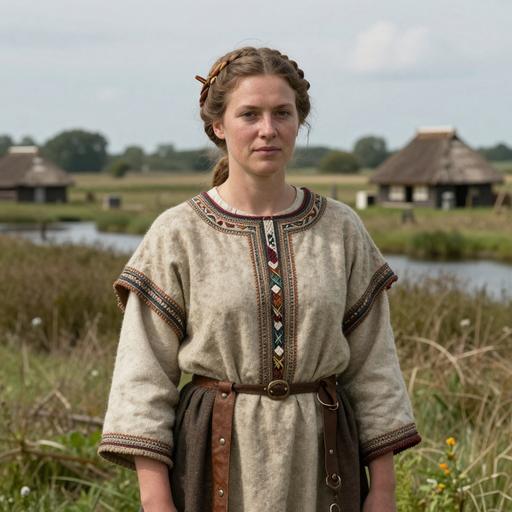
Portrait reconstruction of I11971
Ancient Individual

A woman buried in Netherlands in the Late Bronze Age era

I11971
1210 BCE - 1015 BCE
Female
Late Bronze Age Netherlands
Netherlands
Scroll to begin
Chapter I

Identity

The biological and cultural markers that define this ancient individual

Sample ID

I11971

Date Range

1210 BCE - 1015 BCE

Biological Sex

Female

mtDNA Haplogroup

H3

Cultural Period

Late Bronze Age Netherlands

Chapter II

Place

Where this individual was discovered

Country Netherlands
Locality Noord-Holland. Westwoud-Binnenwijzend
Coordinates 52.6960, 5.1520
Chapter III

Time

When this individual lived in the broader context of human history

I11971 1210 BCE - 1015 BCE
Chapter IV

Story

The narrative of this ancient life

The Late Bronze Age in the Netherlands, part of the broader Northwest European Bronze Age, approximately spans from 1200 to 800 BCE. This era was characterized by significant cultural, technological, and social developments. The region, like much of Europe, saw a continuation of the changes that began in the earlier Bronze Age, primarily influenced by advancements in metallurgy, trade expansion, and evolving social structures.

Geographical and Environmental Context

Located in the northwest of Europe, the Netherlands during the Late Bronze Age featured a mix of landscapes, including coastal areas, river valleys, and inland regions. The geography was heavily influenced by water, with the North Sea and major rivers like the Rhine playing crucial roles in the daily life and economic activities of its inhabitants. The environment was a combination of peat bogs, fens, forests, and fertile river plains, which together supported agriculture, animal husbandry, and fishing.

Metallurgical Advancements

The Late Bronze Age saw significant improvements in metalworking techniques. The inhabitants of the Netherlands were skilled in crafting bronze tools, weapons, and ornaments. Bronze, an alloy primarily of copper and tin, was the material of choice for axes, swords, spears, and jewelry. These items not only served utilitarian purposes but also held social and symbolic significance, often used in trade or as status symbols in burials.

Trade and Connections

Trade networks were extensive and crucial during this period. The Netherlands was part of a vast web of exchange that interconnected various regions across Europe. Goods such as amber from the Baltic, pottery, and metal objects circulated widely. The trade networks facilitated not only economic transactions but also cultural exchanges, leading to the dissemination of ideas and technologies.

Settlements and Architecture

Communities during the Late Bronze Age in the Netherlands were predominantly agrarian, although hunting, fishing, and gathering continued to contribute to the subsistence strategy. Settlements were typically small and dispersed, comprising roundhouses or longhouses made from timber, wattle, and daub, with thatched roofs. These structures were practical, serving the dual purpose of sheltering families and livestock.

Social Structure

Societies were organized into tribal or clan-based communities. Social stratification started to become more pronounced, as evidenced by the differentiation in burial practices. Wealth and status were often displayed through the accumulation of goods such as elaborately crafted bronze items and exotic trade goods.

Religious and Cultural Practices

The spiritual and religious life of the Late Bronze Age inhabitants involved rituals and ceremonies, often centered around natural elements like water and land. There is evidence of depositions of metal objects in rivers and bogs, which might have been offerings to deities or spirits. Such practices provide insights into their belief systems and the importance they placed on their natural surroundings.

Art and Symbolism

Artistic expression during this era was manifested primarily through the decoration of everyday objects, weaponry, and personal adornment. Spiral and geometric patterns were common, often embodying spiritual or symbolic meanings. Decorative motifs found on ceramics, ornaments, and textiles suggest an appreciation for aesthetics and identity.

Transition and Legacy

The Late Bronze Age in the Netherlands seamlessly transitioned into the Iron Age, marked by the introduction and increased use of iron. The technological and cultural foundations laid during the Bronze Age had lasting influences on the social and economic frameworks of subsequent periods. The advancements in metallurgy, trade, and social organization set the stage for future developments in the region.

In summary, the Late Bronze Age in the Netherlands was a period of dynamic cultural activity, marked by technological advancements, trade expansion, and evolving social hierarchies. The interplay between the environment, economy, and cultural practices contributed to the rich tapestry of life during this era, leaving a legacy that would shape the region’s history for centuries to come.

Chapter V

Genetics

The genetic ancestry of this ancient individual

Ancient Genetic Admixture

This analysis compares the DNA profile of I11971 with ancient reference populations, showing the genetic composition in terms of prehistoric ancestral groups.

Western Steppe Pastoralists 40.0%
European Hunter-Gatherers 37.9%
Neolithic Farmers 18.0%
Ancient Asians 4.1%

Modern Genetic Admixture

This analysis compares the DNA profile with present-day reference populations, showing what percentage of genetic makeup resembles modern populations from different regions.

Europe 96.3%
Northwestern European 79.0%
English 53.8%
Scandinavian 16.4%
Northwestern European 4.4%
Finnish 4.4%
Eastern European 12.7%
Southern European 4.7%
Iberian 3.6%
Balkan 1.0%
Asia 3.1%
Central Asian, Northern Indian & Pakistani 3.1%
Pakistan 1.6%
Indian 1.4%
Africa 0.6%

Closest Modern Populations

These are the modern populations showing the closest statistical alignment to A woman buried in Netherlands in the Late Bronze Age era, ranked by genetic distance. Lower distance values indicate closer statistical similarity.

1
Orcadian
1.9791
2
Icelandic
2.0848
3
Scottish
2.1193
4
Norwegian
2.2075
5
Irish
2.3020
6
Danish
2.4547
7
Shetlandic
2.5448
8
Dutch
2.5746
9
English
2.6107
10
Swedish
2.7548
Chapter VI

Context

Other ancient individuals connected to this sample

Sources

References

Scientific publications and genetic data

Scientific Publication

Large-scale migration into Britain during the Middle to Late Bronze Age

Authors Patterson N, Isakov M, Booth T
Abstract

Present-day people from England and Wales have more ancestry derived from early European farmers (EEF) than did people of the Early Bronze Age1. To understand this, here we generated genome-wide data from 793 individuals, increasing data from the Middle to the Late Bronze Age and Iron Age in Britain by 12-fold, and western and central Europe by 3.5-fold. Between 1000 and 875 BC, EEF ancestry increased in southern Britain (England and Wales) but not northern Britain (Scotland) due to incorporation of migrants who arrived at this time and over previous centuries, and who were genetically most similar to ancient individuals from France. These migrants contributed about half the ancestry of people of England and Wales from the Iron Age, thereby creating a plausible vector for the spread of early Celtic languages into Britain. These patterns are part of a broader trend of EEF ancestry becoming more similar across central and western Europe in the Middle to the Late Bronze Age, coincident with archaeological evidence of intensified cultural exchange2-6. There was comparatively less gene flow from continental Europe during the Iron Age, and the independent genetic trajectory in Britain is also reflected in the rise of the allele conferring lactase persistence to approximately 50% by this time compared to approximately 7% in central Europe where it rose rapidly in frequency only a millennium later. This suggests that dairy products were used in qualitatively different ways in Britain and in central Europe over this period.

G25 Coordinates

The G25 coordinates for sample I11971 can be used for detailed admixture analysis in our G25 Studio tool.

I11971,0.12885664,0.12326162,0.05969548,0.05623018,0.0368511,0.0192269,0.00373378,0.0079264,0.00487488,-0.00202948,-0.00466586,0.00657644,-0.00467896,-0.01012306,0.02463056,-0.00247922,-0.01742612,0.0004668,0.00062142,-0.0021645,0.00476096,0.00306462,-0.00412756,0.00924512,-0.00367122
Analyze in G25 Studio
Use code for 40% off Expires Feb 27