Menu
Store
Blog
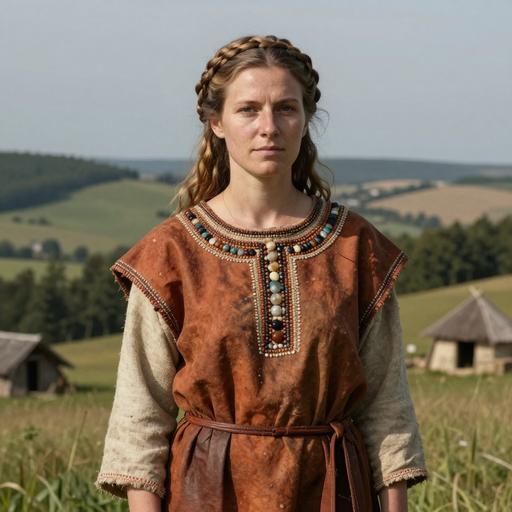
Portrait reconstruction of I16108
Ancient Individual

A woman buried in Czech Republic in the Late Neolithic era

I16108
3636 BCE - 3526 BCE
Female
Late Neolithic Czech Republic
Czech Republic
Scroll to begin
Chapter I

Identity

The biological and cultural markers that define this ancient individual

Sample ID

I16108

Date Range

3636 BCE - 3526 BCE

Biological Sex

Female

mtDNA Haplogroup

X2b4

Cultural Period

Late Neolithic Czech Republic

Chapter II

Place

Where this individual was discovered

Country Czech Republic
Locality Central Bohemia. Prague 5. Prague-Stodůlky (Malá Ohrada site)
Coordinates 50.0450, 14.3393
Chapter III

Time

When this individual lived in the broader context of human history

I16108 3636 BCE - 3526 BCE
Chapter IV

Story

The narrative of this ancient life

The Late Neolithic period in the region now known as the Czech Republic, part of the broader European Neolithic, was a transformative era marked by significant cultural, technological, and social evolution. This period, roughly spanning from 4500 to 2500 BCE, saw profound developments in agriculture, settlement patterns, and societal structures.

Cultural and Technological Developments

  1. Agriculture and Subsistence:

    • The Late Neolithic period was characterized by advanced agricultural practices. People cultivated a variety of crops such as emmer wheat, barley, peas, and lentils. The cultivation of these crops allowed for more stable food supplies and contributed to population growth.
    • Domesticated animals like cattle, sheep, goats, and pigs played a crucial role in the economy, providing meat, milk, and materials like leather and wool. The use of the plow and innovations in farming techniques led to more efficient land use.
  2. Tool and Pottery Production:

    • The era saw significant advancements in tool-making, particularly with the use of polished stone tools. Flint, obsidian, and other stones were precisely shaped into axes, knives, and other implements.
    • Pottery making flourished, with the development of more intricate designs and forms. Vessels were often adorned with decorations and motifs that may have had symbolic or cultural significance. Techniques such as the use of a potter’s wheel began to emerge.
  3. Trade and Exchange Networks:

    • The Late Neolithic period witnessed the expansion of trade networks. Raw materials like flint, copper, and amber were exchanged over long distances. This trade facilitated cultural interactions and the exchange of ideas, furthering technological and social innovations.

Settlement Patterns

  1. Village Life:

    • Settlements during the Late Neolithic were typically small, with populations living in simple villages comprised of longhouses and earthworks. These villages were often situated near fertile lands and water sources, providing optimal conditions for agriculture and daily living.
    • Longhouses, constructed from timber with thatched roofs, provided shelter for extended families and were central to community life.
  2. Emergence of Megalithic Structures:

    • While megalithic structures were more common in other parts of Europe, there is some evidence of their presence in the Czech region. These structures likely had ceremonial or religious significance, indicating complex belief systems and social stratification.

Social Structure and Beliefs

  1. Sociopolitical Organization:

    • There was an increasing complexity in societal organization, likely driven by surpluses in agriculture and the growth of trade. These developments may have led to stratification, with differences in wealth and social status becoming more pronounced.
    • Craft specialization, leadership, and possibly rudimentary forms of governance began to emerge, laying the foundation for more complex societies.
  2. Spiritual and Religious Beliefs:

    • The Late Neolithic people in this region likely practiced animism and ancestor worship. Burial practices, sometimes involving elaborate grave goods, suggest a belief in an afterlife and indicate social hierarchies.
    • Artistic expression through pottery, figurines, and carvings often had religious significance, representing deities, spirits, or natural elements.

Environmental Interaction

  1. Land Use and Environmental Impact:

    • The expansion of agriculture led to significant changes in the landscape. Forests were cleared to create fields, which in turn affected local ecosystems. This interaction illustrates early examples of human-induced environmental change.
  2. Adaptation to Climate Changes:

    • The inhabitants of the Late Neolithic Czech region had to adapt to varying climatic conditions, which influenced their agricultural practices and settlement choices. Their resilience and adaptability were crucial for their survival and development.

Conclusion

The Late Neolithic period in the present-day Czech Republic was a dynamic era characterized by significant advancements in agriculture, tool-making, social organization, and cultural expression. These developments not only laid the groundwork for the subsequent Bronze Age but also left a lasting legacy that highlights the region's importance in the broader tapestry of European prehistoric history. Through integration with trade networks and gradual social changes, the communities in this region made significant strides in creating more complex societies, setting the stage for future cultural and technological achievements.

Chapter V

Genetics

The genetic ancestry of this ancient individual

Ancient Genetic Admixture

This analysis compares the DNA profile of I16108 with ancient reference populations, showing the genetic composition in terms of prehistoric ancestral groups.

Neolithic Farmers 56.5%
European Hunter-Gatherers 24.4%
Western Steppe Pastoralists 19.2%

Modern Genetic Admixture

This analysis compares the DNA profile with present-day reference populations, showing what percentage of genetic makeup resembles modern populations from different regions.

Europe 99.7%
Southern European 91.8%
Italian 33.0%
Iberian 24.3%
Sardinian 23.3%
Balkan 11.3%
Northwestern European 7.9%
English 7.3%
Northwestern European 0.5%

Closest Modern Populations

These are the modern populations showing the closest statistical alignment to A woman buried in Czech Republic in the Late Neolithic era, ranked by genetic distance. Lower distance values indicate closer statistical similarity.

1
Sardinian
4.2539
2
French Corsica
4.4870
3
Spanish La Rioja
4.5346
4
Spanish Castello
4.8050
5
Spanish Pirineu
4.8392
6
Spanish Castilla La Mancha
4.8553
7
Spanish Menorca
4.9175
8
Spanish Cantabria
4.9416
9
Spanish Aragon
4.9558
10
Spanish Murcia
4.9802
Chapter VI

Context

Other ancient individuals connected to this sample

Sources

References

Scientific publications and genetic data

Scientific Publication

Large-scale migration into Britain during the Middle to Late Bronze Age

Authors Patterson N, Isakov M, Booth T
Abstract

Present-day people from England and Wales have more ancestry derived from early European farmers (EEF) than did people of the Early Bronze Age1. To understand this, here we generated genome-wide data from 793 individuals, increasing data from the Middle to the Late Bronze Age and Iron Age in Britain by 12-fold, and western and central Europe by 3.5-fold. Between 1000 and 875 BC, EEF ancestry increased in southern Britain (England and Wales) but not northern Britain (Scotland) due to incorporation of migrants who arrived at this time and over previous centuries, and who were genetically most similar to ancient individuals from France. These migrants contributed about half the ancestry of people of England and Wales from the Iron Age, thereby creating a plausible vector for the spread of early Celtic languages into Britain. These patterns are part of a broader trend of EEF ancestry becoming more similar across central and western Europe in the Middle to the Late Bronze Age, coincident with archaeological evidence of intensified cultural exchange2-6. There was comparatively less gene flow from continental Europe during the Iron Age, and the independent genetic trajectory in Britain is also reflected in the rise of the allele conferring lactase persistence to approximately 50% by this time compared to approximately 7% in central Europe where it rose rapidly in frequency only a millennium later. This suggests that dairy products were used in qualitatively different ways in Britain and in central Europe over this period.

G25 Coordinates

The G25 coordinates for sample I16108 can be used for detailed admixture analysis in our G25 Studio tool.

I16108,0.12226416,0.15545362,0.03112034,-0.02431264,0.05571512,-0.01399008,-0.00130426,0.00602938,0.03353102,0.05748356,-0.00507622,0.013534,-0.02224364,-0.0128845,-0.00569252,0.0039836,0.00749554,-0.00013284,-0.00068936,-0.00323784,0.00120156,0.00464736,-0.01036194,-0.0147136,0.00356709
Analyze in G25 Studio
Use code for 40% off Expires Feb 27