Menu
Store
Blog
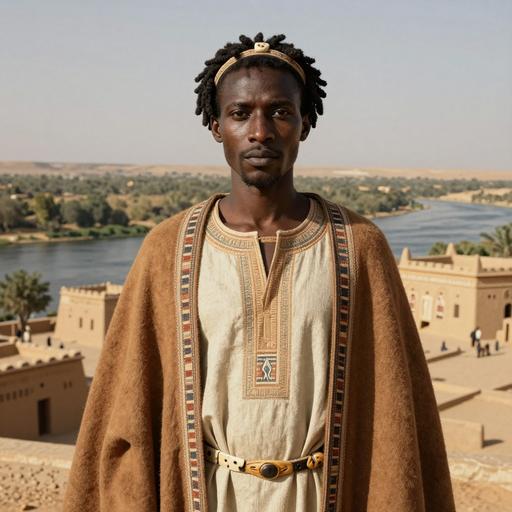
Portrait reconstruction of I17470
Ancient Individual

A man buried in Sudan in the Middle Ages era

I17470
500 CE - 1500 CE
Male
Early Christian Era in Sudan
Sudan
Scroll to begin
Chapter I

Identity

The biological and cultural markers that define this ancient individual

Sample ID

I17470

Date Range

500 CE - 1500 CE

Biological Sex

Male

mtDNA Haplogroup

L5a1a

Y-DNA Haplogroup

Not available

Cultural Period

Early Christian Era in Sudan

Chapter II

Place

Where this individual was discovered

Country Sudan
Locality 6-G-8
Coordinates 14.5523, 30.3589
Chapter III

Time

When this individual lived in the broader context of human history

I17470 500 CE - 1500 CE
Chapter IV

Story

The narrative of this ancient life

The Early Christian Era in Sudan, particularly within the context of the Nubian civilization, is a fascinating period characterized by cultural transformation, religious evolution, and architectural achievements. This era began around the 6th century AD and lasted until approximately the 14th century, a time when three Nubian kingdoms—Nobatia, Makuria, and Alodia—were prominent. The conversion to Christianity marked a significant shift from the previously dominant polytheistic and indigenous religious practices.

Conversion and Spread of Christianity

The conversion to Christianity in Nubia was primarily influenced by Byzantine missionaries. The earliest documented evidence of Nubian Christianity is the baptism of the Nobatian king in the mid-6th century, as reported by the Byzantine historian, John of Ephesus. The subsequent adoption by Makuria and Alodia followed within a few decades. These conversions were decidedly political as much as spiritual, providing a means of cultural and diplomatic alignment with the Byzantine Empire, a major Christian power of the time.

Church Architecture and Art

The architectural landscape of Nubia underwent significant changes with the introduction of Christianity. Churches became central elements of Nubian towns and cities, often built using mud bricks and later stone, exhibiting a blend of Byzantine and local architectural styles. The most famous of these is the Church of Faras, discovered in present-day northern Sudan. Notable for its beautiful wall paintings, the church offers rich insights into Nubian art and religious life. Frescoes depicted biblical scenes, saints, and Nubian bishops, reflecting the integration of Christianity with local artistic tradition.

Monasticism and Religious Life

Monasticism played a pivotal role in religious life during the Nubian Christian period. Monasteries spread throughout the region, serving as centers of learning, literacy, and spiritual practice. They facilitated the translation of Christian texts into Old Nubian, the local language, fostering a unique Nubian Christian literary tradition that includes sermons, biblical texts, and inscriptions.

Sociopolitical Structure

The integration of Christianity into the Nubian kingdoms also influenced their socio-political structures. The kings were seen as protectors of the Christian faith, and church leaders held significant sway in political affairs. The adoption of Christianity strengthened internal cohesion and helped to consolidate kingdom structures as it aligned Nubian political entities more closely with neighboring Christian states, enhancing both regional stability and external trade.

Artistic and Cultural Exchange

The Nubian Christian period was marked by rich artistic and cultural exchanges, not only with the Byzantine world but also with neighboring regions in Africa and beyond. The influx of ideas and techniques led to a distinctive Nubian Christian culture known for its vitality and creativity. Artisans produced religious icons, liturgical objects, and manuscripts illustrating a unique blend of Byzantine influences and local traditions.

Decline and Transformation

By the 14th century, the Nubian Christian kingdoms began to decline, facing internal strife and external pressures from Islamic expansion and other African states. Despite this decline, the legacy of the Christian period continued to influence Nubian culture, as seen in the preservation of Christian practices and artifacts in the region, reflecting a complex history of cultural synthesis and resilience.

Conclusion

The Early Christian Era in Sudan's Nubian civilization is a testament to the transformative power of religion as a force for cultural, political, and social change. It stands as a vibrant example of cultural hybridity, where indigenous traditions and external influences were melded into a unique and enduring legacy that continued to impact the region long after its political structures had changed. The remnants of this era, including churches, manuscripts, and art, serve as valuable historical records that provide insight into a remarkable period of Nubian history.

Chapter V

Genetics

The genetic ancestry of this ancient individual

Ancient Genetic Admixture

This analysis compares the DNA profile of I17470 with ancient reference populations, showing the genetic composition in terms of prehistoric ancestral groups.

Neolithic Farmers 70.3%
Ancient Africans 18.6%
Ancient Asians 11.0%

Modern Genetic Admixture

This analysis compares the DNA profile with present-day reference populations, showing what percentage of genetic makeup resembles modern populations from different regions.

Africa 62.9%
Congolese & Southern East African 23.2%
South East African 23.2%
North African 22.7%
North African 22.7%
Northern East African 10.4%
Ethiopian 10.4%
West African 6.6%
Senegambian & Guinean 6.6%
Asia 35.7%
Northern West Asian 35.7%
Cypriot 21.4%
Caucasian 14.4%
Europe 1.4%
Northwestern European 1.4%

Closest Modern Populations

These are the modern populations showing the closest statistical alignment to A man buried in Sudan in the Middle Ages era, ranked by genetic distance. Lower distance values indicate closer statistical similarity.

1
Baggara Arab Chad A
10.9469
2
Eritrean
11.5750
3
Saho Eritrean
11.6196
4
Ethiopian Afar
11.6417
5
Ethiopian Tigray
11.7162
6
Ethiopian Amhara
12.0640
7
Sudan Arab Kababish
12.1446
8
Ethiopian Agaw
12.2080
9
Ethiopian Jew
12.5008
10
Iranian Bandari Zanji
12.8613
Chapter VI

Context

Other ancient individuals connected to this sample

Sources

References

Scientific publications and genetic data

G25 Coordinates

The G25 coordinates for sample I17470 can be used for detailed admixture analysis in our G25 Studio tool.

I17470,-0.17517,0.0763747,0.00143316,-0.01655114,-0.00468544,-0.01139794,0.00499896,0.00312996,0.04983152,-0.05144872,-0.00407878,-8.408E-05,0.00172218,-0.00233026,0.0014811,-0.00851578,0.00072346,-0.00110966,0.00660924,-0.00597122,0.00352746,0.00771404,-0.00895844,0.0014135,-0.0007203
Analyze in G25 Studio
Use code for 40% off Expires Mar 01