Menu
Store
Blog
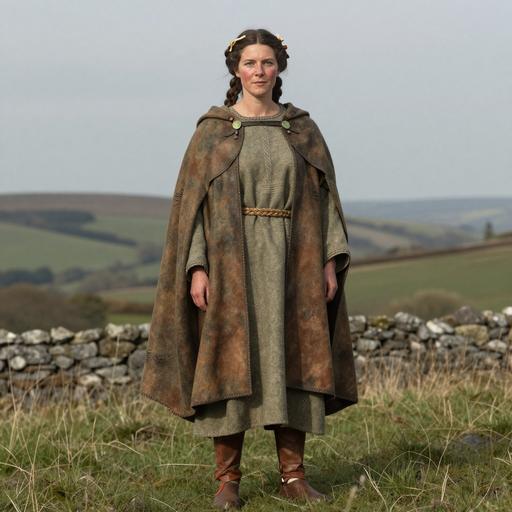
Portrait reconstruction of I19220
Ancient Individual

A woman buried in United Kingdom in the Early Bronze Age era

I19220
1894 BCE - 1695 BCE
Female
Early Bronze Age England
United Kingdom
Scroll to begin
Chapter I

Identity

The biological and cultural markers that define this ancient individual

Sample ID

I19220

Date Range

1894 BCE - 1695 BCE

Biological Sex

Female

mtDNA Haplogroup

H3g1

Cultural Period

Early Bronze Age England

Chapter II

Place

Where this individual was discovered

Country United Kingdom
Locality England. East Riding of Yorkshire. Thornholme. East Coast Pipeline (field 10)
Coordinates 54.0981, -0.2822
Chapter III

Time

When this individual lived in the broader context of human history

I19220 1894 BCE - 1695 BCE
Chapter IV

Story

The narrative of this ancient life

The Early Bronze Age in England, which spans approximately from 2500 to 1500 BCE, marks a transformative era in British prehistory. This period is characterized by significant developments in technology, social structure, and cultural practices. While the Celtic identity is more prominently associated with the Iron Age, some cultural underpinnings can trace back to this era. Here's an extensive description of the Early Bronze Age in England:

Geography and Settlement

During the Early Bronze Age, the landscape of England underwent changes due to climatic and environmental shifts. Much of the land was densely wooded, with settlements primarily found in river valleys and areas with lighter vegetation. People lived in small, scattered farming communities rather than large settlements. Dwellings typically consisted of roundhouses made from timber with wattle-and-daub walls and thatched roofs.

Tools and Technology

The introduction and development of metalworking, particularly bronze (an alloy of copper and tin), were defining features of this era. Bronze tools, weapons, and ornaments began to replace stone implements, marking a technological leap. Important artifacts include flat axes, daggers, and awls, which were more efficient than their stone counterparts and facilitated advances in agriculture and craftsmanship.

Social Structure

The Early Bronze Age saw the emergence of more complex social structures. While largely egalitarian, evidence suggests an increase in social stratification, likely driven by control of resources like metal and trade goods. The presence of richly adorned burials indicates a developing hierarchy, with individuals or families achieving higher social status and influence.

Burial Practices and Megalithic Monuments

Burial practices from this period are among the most informative aspects of Early Bronze Age culture. The construction of round barrows, which were earth mounds covering individual or small group burials, became common. These often contained grave goods such as pottery, personal ornaments, and weapons, indicating beliefs in an afterlife. Some barrow sites were used for multiple internments over time, suggesting ancestor worship and the importance of lineage.

Agriculture and Economy

Agriculture remained the primary mode of subsistence, with continued cultivation of crops like wheat and barley and the rearing of domesticated animals, including cattle, sheep, and pigs. The development and use of bronze tools enhanced farming efficiency, enabling more land to be cultivated. Trade networks expanded during this time, as evidenced by the wide distribution of bronze tools and the presence of exotic materials such as amber and faience beads.

Art and Symbolism

Artistic expression in the Early Bronze Age is often seen in the form of pottery and personal adornments. Beaker pottery, named for its distinctive shape and designs, is emblematic of this period. The intricate designs and patterns found on these objects suggest a rich symbolic and aesthetic tradition. Metalworking also introduced new artistic techniques, with craftsmen producing ornate items like axes and jewelry.

Cultural Identity

Though the concept of a unified 'Celtic' identity would not become prominent until the Iron Age, the Early Bronze Age laid important cultural foundations. The development of trade, social stratification, and widespread communal practices like monument building contributed to a shared cultural landscape across regions that would later adopt Celtic identities. The exchange networks established during this period facilitated cultural interconnections among different tribes and communities.

Megalithic Legacy and Religion

The continuation of megalithic monument building indicates a strong spiritual or religious dimension in Early Bronze Age society. While many of these structures predate the Bronze Age, their ongoing use and significance reflect a continuity of ceremonial practices, possibly related to solar or lunar alignments and communal gatherings. Stone circles, alignments, and henges, like Stonehenge, show sophisticated understanding of astronomy and geometry.

In summary, the Early Bronze Age in England represents a period of significant cultural and technological advancement. While not directly a Celtic era, it laid the groundwork for later cultural developments through technological innovations, evolving social structures, and intricate trade networks. This period's contributions to metalworking, monument construction, and social complexity would pave the way for subsequent eras in British prehistory.

Chapter V

Genetics

The genetic ancestry of this ancient individual

Ancient Genetic Admixture

This analysis compares the DNA profile of I19220 with ancient reference populations, showing the genetic composition in terms of prehistoric ancestral groups.

Western Steppe Pastoralists 45.2%
European Hunter-Gatherers 33.7%
Neolithic Farmers 17.2%
Ancient Asians 3.9%

Modern Genetic Admixture

This analysis compares the DNA profile with present-day reference populations, showing what percentage of genetic makeup resembles modern populations from different regions.

Europe 92.2%
Northwestern European 65.0%
English 36.4%
Northwestern European 26.4%
Scandinavian 2.1%
Eastern European 19.0%
Southern European 8.3%
Iberian 8.3%
Asia 6.5%
Northern West Asian 4.8%
Anatolian 4.8%
Arab, Egyptian & Levantine 1.8%
Levantine 1.8%
Oceania 0.8%
Melanesian 0.8%
Papuan 0.8%

Closest Modern Populations

These are the modern populations showing the closest statistical alignment to A woman buried in United Kingdom in the Early Bronze Age era, ranked by genetic distance. Lower distance values indicate closer statistical similarity.

1
Swedish
2.7457
2
German Hamburg
2.8897
3
Czech
3.0264
4
German East
3.2716
5
Norwegian
3.5821
6
Danish
3.5938
7
Polish
3.7431
8
Polish Kashubian
3.8208
9
Icelandic
3.8922
10
Hungarian
3.9499
Chapter VI

Context

Other ancient individuals connected to this sample

Sources

References

Scientific publications and genetic data

Scientific Publication

Large-scale migration into Britain during the Middle to Late Bronze Age

Authors Patterson N, Isakov M, Booth T
Abstract

Present-day people from England and Wales have more ancestry derived from early European farmers (EEF) than did people of the Early Bronze Age1. To understand this, here we generated genome-wide data from 793 individuals, increasing data from the Middle to the Late Bronze Age and Iron Age in Britain by 12-fold, and western and central Europe by 3.5-fold. Between 1000 and 875 BC, EEF ancestry increased in southern Britain (England and Wales) but not northern Britain (Scotland) due to incorporation of migrants who arrived at this time and over previous centuries, and who were genetically most similar to ancient individuals from France. These migrants contributed about half the ancestry of people of England and Wales from the Iron Age, thereby creating a plausible vector for the spread of early Celtic languages into Britain. These patterns are part of a broader trend of EEF ancestry becoming more similar across central and western Europe in the Middle to the Late Bronze Age, coincident with archaeological evidence of intensified cultural exchange2-6. There was comparatively less gene flow from continental Europe during the Iron Age, and the independent genetic trajectory in Britain is also reflected in the rise of the allele conferring lactase persistence to approximately 50% by this time compared to approximately 7% in central Europe where it rose rapidly in frequency only a millennium later. This suggests that dairy products were used in qualitatively different ways in Britain and in central Europe over this period.

G25 Coordinates

The G25 coordinates for sample I19220 can be used for detailed admixture analysis in our G25 Studio tool.

I19220,0.12181628,0.11703728,0.062355,0.06295264,0.0438306,0.01636592,0.00783712,0.00993512,0.00566486,-0.0126143,-0.00144286,-0.00238798,0.00210258,0.0043873,0.01191122,-0.00084716,-0.00913484,0.00571712,0.0024673,0.00101934,0.00020324,-0.00298986,0.00697184,0.00469302,0.00395018
Analyze in G25 Studio
Use code for 40% off Expires Feb 27