Menu
Store
Blog
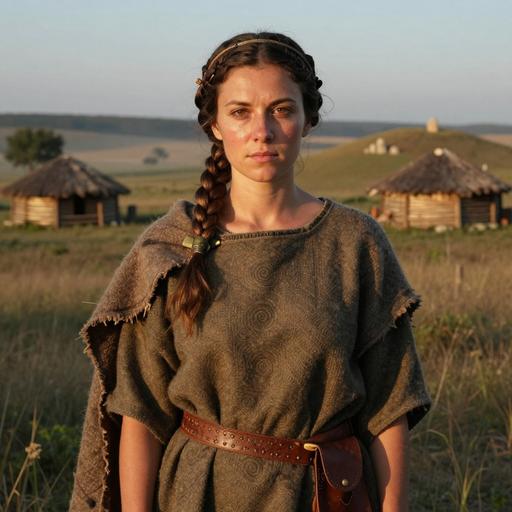
Portrait reconstruction of I20749
Ancient Individual

A woman buried in Hungary in the Late Bronze Age era

I20749
1700 BCE - 800 BCE
Female
Late Bronze Age Halomsíros (Tumulus) Culture, Hungary
Hungary
Scroll to begin
Chapter I

Identity

The biological and cultural markers that define this ancient individual

Sample ID

I20749

Date Range

1700 BCE - 800 BCE

Biological Sex

Female

mtDNA Haplogroup

Not available

Cultural Period

Late Bronze Age Halomsíros (Tumulus) Culture, Hungary

Chapter II

Place

Where this individual was discovered

Country Hungary
Locality Hajdudorog-Szallasfold
Coordinates 47.8864, 21.5024
Chapter III

Time

When this individual lived in the broader context of human history

I20749 1700 BCE - 800 BCE
Chapter IV

Story

The narrative of this ancient life

The Late Bronze Age Halomsíros (Tumulus) Culture in Hungary represents a fascinating chapter in the prehistory of Central Europe. Characterized by its distinctive burial practices and material culture, this era provides valuable insights into the life and society of the Indo-European communities that inhabited the Carpathian Basin.

Chronology and Geography

The Tumulus Culture in Hungary is situated within the broader context of the Late Bronze Age, approximately from 1600 to 1300 BCE. This culture is part of the larger Tumulus culture complex that spread across Central Europe, extending into regions such as modern-day Germany, Austria, the Czech Republic, and parts of the Balkans. The name \Tumulus" refers to the burial mounds that were a significant feature of this culture.

Burial Practices

The hallmark of the Halomsíros Culture is its tumuli—large earthen mounds constructed over graves. These mounds reflect a highly stratified society with a focus on commemorating the elite. Burials typically contain multiple grave goods, including pottery, bronze artifacts, and personal ornaments, suggesting a belief in an afterlife where such items might be needed. The inclusion of weapons and tools indicates the societal importance of warriors and craftsmen. Burial mounds were often reused, suggesting a location held communal or ancestral significance.

Social Structure

The presence of richly furnished graves points to a hierarchically organized society with clear distinctions between social classes. The elite were likely to have been warrior-leaders or chieftains, holding significant control over surrounding territories. The size and complexity of the tumuli also suggest that organizing labor for their construction required considerable social organization.

Economy and Subsistence

The Late Bronze Age Tumulus Culture had a mixed economy. Agriculture was the mainstay, with evidence of crop cultivation and animal husbandry, including cattle, sheep, and pigs. The communities were also involved in metallurgy, particularly bronze smelting and casting, which was central to their economy and trade.

Trade and Interaction

The Tumulus Culture had extensive trade networks, as evidenced by the distribution of bronze artifacts and raw materials like copper and tin. Items such as amber and Mediterranean goods found in graves indicate long-distance trade connections. These networks facilitated cultural exchange and influenced social and technological developments.

Settlements

Settlements of the Halomsíros Culture were typically small, fortified villages or hamlets, strategically located on elevated ground near water sources. Houses were likely constructed using timber, thatch, and wattle and daub techniques. The settlement patterns suggest a society concerned with defense, likely due to intergroup conflicts or raids.

Material Culture

The cultural material of the period shows a high level of craftsmanship. Pottery from the era is characterized by its geometric motifs and polished surfaces, with some pots being used for ritual purposes. The bronze artifacts, including weapons like swords, spears, as well as tools and ornaments, exhibit advanced metallurgical skills.

Religion and Beliefs

The construction of tumuli and the inclusion of grave goods indicate complex spiritual beliefs, possibly involving ancestor worship and a reverence for the deceased. The practice of placing items in graves suggests a belief in an afterlife where such objects would be required, highlighting the cultural significance placed on life after death.

Language and Legacy

As an Indo-European culture, the people of the Halomsíros Tumulus Culture spoke an early form of the Indo-European languages that would later evolve into the diverse language groups spread across Europe and Asia. Their cultural practices and innovations contributed significantly to the development of subsequent European Bronze Age cultures.

In summary, the Late Bronze Age Halomsíros (Tumulus) Culture of Hungary represents a dynamic and influential period marked by significant social, economic, and cultural development. Its legacy can be traced through the monumental tumuli that still dot the landscape, echoing the rich history and complex society of the Indo-European peoples of the Carpathian Basin."

Chapter V

Genetics

The genetic ancestry of this ancient individual

Ancient Genetic Admixture

This analysis compares the DNA profile of I20749 with ancient reference populations, showing the genetic composition in terms of prehistoric ancestral groups.

Western Steppe Pastoralists 37.4%
European Hunter-Gatherers 33.2%
Neolithic Farmers 29.4%

Modern Genetic Admixture

This analysis compares the DNA profile with present-day reference populations, showing what percentage of genetic makeup resembles modern populations from different regions.

Europe 99.7%
Southern European 44.3%
Balkan 24.6%
Italian 7.0%
Sardinian 6.4%
Iberian 6.3%
Northwestern European 31.9%
English 18.9%
Northwestern European 7.6%
Scandinavian 4.3%
Finnish 1.1%
Eastern European 23.5%

Closest Modern Populations

These are the modern populations showing the closest statistical alignment to A woman buried in Hungary in the Late Bronze Age era, ranked by genetic distance. Lower distance values indicate closer statistical similarity.

1
Austrian
1.3686
2
German Erlangen
1.3941
3
German
1.7394
4
Hungarian
1.9081
5
German East
2.2705
6
German Hamburg
2.3118
7
Croatian
2.3159
8
Czech
2.3272
9
Slovenian
2.3694
10
French Seine Maritime
2.7335
Chapter VI

Context

Other ancient individuals connected to this sample

Sources

References

Scientific publications and genetic data

Scientific Publication

A minimally destructive protocol for DNA extraction from ancient teeth

Authors Harney É, Cheronet O, Fernandes DM
Abstract

Ancient DNA sampling methods-although optimized for efficient DNA extraction-are destructive, relying on drilling or cutting and powdering (parts of) bones and teeth. As the field of ancient DNA has grown, so have concerns about the impact of destructive sampling of the skeletal remains from which ancient DNA is obtained. Due to a particularly high concentration of endogenous DNA, the cementum of tooth roots is often targeted for ancient DNA sampling, but destructive sampling methods of the cementum often result in the loss of at least one entire root. Here, we present a minimally destructive method for extracting ancient DNA from dental cementum present on the surface of tooth roots. This method does not require destructive drilling or grinding, and, following extraction, the tooth remains safe to handle and suitable for most morphological studies, as well as other biochemical studies, such as radiocarbon dating. We extracted and sequenced ancient DNA from 30 teeth (and nine corresponding petrous bones) using this minimally destructive extraction method in addition to a typical tooth sampling method. We find that the minimally destructive method can provide ancient DNA that is of comparable quality to extracts produced from teeth that have undergone destructive sampling processes. Further, we find that a rigorous cleaning of the tooth surface combining diluted bleach and UV light irradiation seems sufficient to minimize external contaminants usually removed through the physical removal of a superficial layer when sampling through regular powdering methods.

G25 Coordinates

The G25 coordinates for sample I20749 can be used for detailed admixture analysis in our G25 Studio tool.

I20749,0.1325519,0.13352574,0.05439264,0.03732414,0.04055462,0.01685442,0.0037335,0.00702156,0.00787496,0.00225174,-0.00708576,0.00369176,0.00200036,0.00334816,-0.00022004,0.00350822,-0.00048406,0.00020342,0.00146652,-0.00023938,0.00191116,0.00090118,0.00189044,0.0006848,-0.00116696
Analyze in G25 Studio
Use code for 40% off Expires Feb 26