Menu
Store
Blog
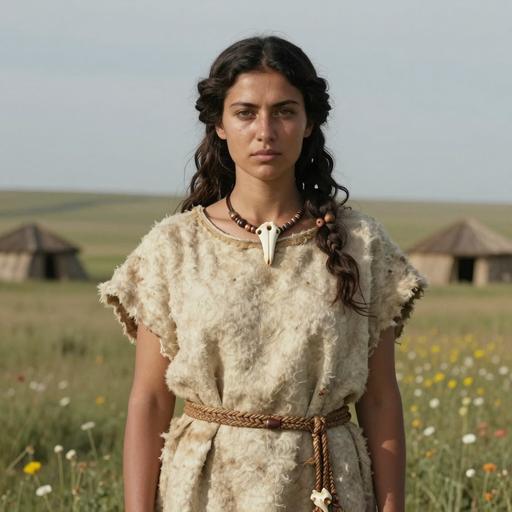
Portrait reconstruction of I2105
Ancient Individual

A woman buried in Ukraine in the Early Bronze Age era

I2105
3300 BCE - 2500 BCE
Female
Early Bronze Age Yamnaya Culture, Ukraine
Ukraine
Scroll to begin
Chapter I

Identity

The biological and cultural markers that define this ancient individual

Sample ID

I2105

Date Range

3300 BCE - 2500 BCE

Biological Sex

Female

mtDNA Haplogroup

T1a1*

Cultural Period

Early Bronze Age Yamnaya Culture, Ukraine

Chapter II

Place

Where this individual was discovered

Country Ukraine
Locality Shevchenko. OAE-2003
Coordinates 48.2204, 37.1461
Chapter III

Time

When this individual lived in the broader context of human history

I2105 3300 BCE - 2500 BCE
Chapter IV

Story

The narrative of this ancient life

The Yamnaya culture, often linked to the Proto-Indo-European (PIE) speakers, is a significant archaeological culture from the Early Bronze Age, approximately between 3300 BCE and 2600 BCE. It is primarily located in the Pontic-Caspian steppe region, covering parts of modern-day Ukraine, Russia, and into Eastern Europe. The Yamnaya culture is recognized as a major contributor to the genetic and cultural landscape of Europe and Asia, often associated with the spread of the Indo-European languages.

Geographical Context

The epicenter of the Yamnaya culture can be located in the vast steppes of what is now Ukraine and southern Russia. This area, characterized by its fertile soil and open plains, was ideally suited for pastoral nomadism, which played a significant role in the lifestyle of the Yamnaya people. The environment facilitated easy movement and allowed for an economy based on herding and some agriculture.

Cultural Characteristics

  1. Economy and Subsistence: The Yamnaya people were predominantly pastoralists, focusing on cattle, sheep, and goat herding. This lifestyle required mobility, and they likely engaged in a transhumant pastoralism practice, moving their herds seasonally to access new pastures. Supplementary to herding, they also practiced some agriculture and hunting to support their subsistence.

  2. Social Structure: The Yamnaya culture is characterized by a relatively flat social structure with emerging signs of social stratification. The appearance of differentiated burials and grave goods suggests the beginning of social roles and hierarchy, but higher ranks were mostly limited to the leaders or individuals distinguished by skill or experience.

  3. Burial Practices: One of the hallmarks of the Yamnaya culture is its burial practices. The dead were often interred in large burial mounds known as kurgans. Bodies were typically laid in a supine position (on their back) under a tumulus, accompanied by grave goods that suggest beliefs in an afterlife and the importance of social status even after death. These burials often included animal sacrifices, lithic tools, and pottery, which provide insights into their ritualistic and daily life.

  4. Material Culture: The material culture of the Yamnaya people included polished stone tools and minimal use of metal, primarily copper. Their pottery was rather simple and undecorated, mainly serving practical purposes. The Yamnaya utilized wool and other textiles, evidenced by textile tools found at various sites.

  5. Technological Innovations: The Yamnaya culture is credited with significant advancements, particularly in transportation. They are believed to have been among the first to domesticate the horse systematically, which revolutionized transport and trade across the vast Eurasian steppes. This mastery of horse-riding facilitated their expansion and could have played a crucial role in the dissemination of Indo-European languages.

  6. Language and Legacy: Linguistically, the Yamnaya culture is often connected to the Proto-Indo-European language family. The migration patterns and genetic studies indicate that they may have been influential in spreading Indo-European languages across Europe and Asia, contributing to the vast linguistic diversity seen in these regions today.

Genetic Contributions

Recent genetic studies have shown that individuals from the Yamnaya culture carried genetic markers that are widespread in modern Europe, particularly in northern and northeastern Europe. These studies have traced the movement of Yamnaya and their genetic influence, supporting theories of large-scale migrations that contributed to the formation of numerous ancient European populations.

Legacy and Influence

The legacy of the Yamnaya culture extends far beyond their immediate geographical region. Their innovations in transportation and their genetic and linguistic contributions have had lasting impacts on subsequent European cultures. Many modern European languages can trace their roots back to the movements and influences of Yamnaya speakers. Moreover, aspects of Yamnaya culture, such as kurgan burial mounds, influenced succeeding cultures across Eurasia, showcasing an enduring cultural heritage.

In conclusion, the Yamnaya culture represents an essential period in early European history, marked by significant technological, cultural, and linguistic developments that helped shape the future of the continent. Their ability to adapt and thrive in the expansive steppes of the Bronze Age set the foundations for future Indo-European expansions.

Chapter V

Genetics

The genetic ancestry of this ancient individual

Ancient Genetic Admixture

This analysis compares the DNA profile of I2105 with ancient reference populations, showing the genetic composition in terms of prehistoric ancestral groups.

Western Steppe Pastoralists 49.6%
European Hunter-Gatherers 31.5%
Neolithic Farmers 13.2%
Ancient Asians 5.7%

Modern Genetic Admixture

This analysis compares the DNA profile with present-day reference populations, showing what percentage of genetic makeup resembles modern populations from different regions.

Europe 66.7%
Northwestern European 34.2%
English 14.1%
Scandinavian 13.1%
Finnish 7.1%
Eastern European 32.5%
Asia 32.7%
Northern West Asian 21.4%
Caucasian 21.4%
Central Asian, Northern Indian & Pakistani 11.3%
Pakistan 11.3%
America 0.6%
America 0.6%
Native American 0.6%

Closest Modern Populations

These are the modern populations showing the closest statistical alignment to A woman buried in Ukraine in the Early Bronze Age era, ranked by genetic distance. Lower distance values indicate closer statistical similarity.

1
Turkish Deliorman
6.6331
2
Tajik Yaghnobi
6.9962
3
Lezgin
7.0979
4
Kaitag
7.1058
5
Turkish Rumeli
7.1247
6
Andian B
7.2116
7
Pamiri Rushan
7.2754
8
Tabasaran
7.4047
9
Darginian
7.4647
10
Lak
7.4701
Chapter VI

Context

Other ancient individuals connected to this sample

Sources

References

Scientific publications and genetic data

Scientific Publication

The genomic history of southeastern Europe

Authors Mathieson I, Alpaslan-Roodenberg S, Posth C
Abstract

Farming was first introduced to Europe in the mid-seventh millennium bc, and was associated with migrants from Anatolia who settled in the southeast before spreading throughout Europe. Here, to understand the dynamics of this process, we analysed genome-wide ancient DNA data from 225 individuals who lived in southeastern Europe and surrounding regions between 12000 and 500 bc. We document a west-east cline of ancestry in indigenous hunter-gatherers and, in eastern Europe, the early stages in the formation of Bronze Age steppe ancestry. We show that the first farmers of northern and western Europe dispersed through southeastern Europe with limited hunter-gatherer admixture, but that some early groups in the southeast mixed extensively with hunter-gatherers without the sex-biased admixture that prevailed later in the north and west. We also show that southeastern Europe continued to be a nexus between east and west after the arrival of farmers, with intermittent genetic contact with steppe populations occurring up to 2,000 years earlier than the migrations from the steppe that ultimately replaced much of the population of northern Europe.

G25 Coordinates

The G25 coordinates for sample I2105 can be used for detailed admixture analysis in our G25 Studio tool.

I2105,0.11241704,0.07797736,0.01892804,0.03406958,-0.0121776,0.0147981,3.348E-05,-0.00722172,-0.02655348,-0.02627188,-0.0005598,0.00053038,-0.00237266,-0.00165474,0.00702176,-0.0011109,-0.00771894,0.00180746,-0.00102848,-0.00405278,-0.00024102,0.0018694,0.0021099,0.01008994,0.00053327
Analyze in G25 Studio
Use code for 40% off Expires Feb 26