Menu
Store
Blog
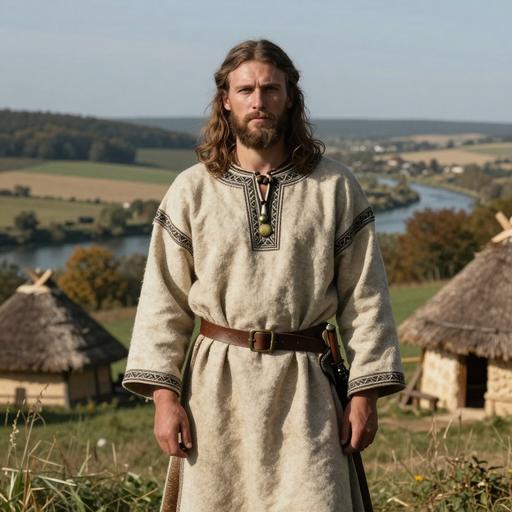
Portrait reconstruction of I25507
Ancient Individual

A man buried in Hungary in the Early Iron Age era

I25507
978 BCE - 831 BCE
Male
Early Iron Age Hungary
Hungary
Scroll to begin
Chapter I

Identity

The biological and cultural markers that define this ancient individual

Sample ID

I25507

Date Range

978 BCE - 831 BCE

Biological Sex

Male

mtDNA Haplogroup

T1a5

Y-DNA Haplogroup

Not available

Cultural Period

Early Iron Age Hungary

Chapter II

Place

Where this individual was discovered

Country Hungary
Locality Vas county. Kápolnadomb. Gór
Coordinates 47.3537, 16.7947
Chapter III

Time

When this individual lived in the broader context of human history

I25507 978 BCE - 831 BCE
Chapter IV

Story

The narrative of this ancient life

The Early Iron Age in Hungary, typically spanning from around the 8th century BCE to the early centuries BCE, marks a transformative period characterized by significant cultural, technological, and societal changes. This era saw the culmination of the Bronze Age and the emergence of new cultural influences, most notably the Celts who began to exert their presence in the region. Below is a detailed exploration of the Early Iron Age in Hungary, with an emphasis on the Celtic influence.

Geography and Settlement

Early Iron Age Hungary was characterized by varied geography which included the Carpathian Basin, featuring fertile plains, rolling hills, rivers, and a moderate climate. These geographical factors greatly influenced settlement patterns. Communities were often established near water sources and on elevated areas that provided natural defense mechanisms and fertile lands for agriculture.

Cultural and Technological Developments

  1. Metallurgy: The hallmark of the Iron Age was the introduction and widespread use of iron for tools and weapons, which replaced the less efficient bronze. Iron smelting technology allowed for improved agricultural implements, which enhanced farming productivity. However, bronze continued to be used, especially for decorative and ceremonial items.

  2. Pottery and Artifacts: The period is noted for distinctive pottery styles, including the use of intricate designs and the introduction of wheel-thrown pottery. Artifacts from this era also include weapons, personal ornaments, and various utilitarian objects, revealing a society that was becoming increasingly sophisticated in craftsmanship.

  3. Social Structure and Trade: The rise of hierarchical societies was evident, with the emergence of elite classes likely supported by increased agricultural surplus and trade. Hungarian communities were integrated into extensive trade networks, facilitating the exchange of goods, culture, and technology with neighboring regions.

Celtic Influence

By the latter part of the Early Iron Age, Celtic tribes began to migrate into Hungary. The Hallstatt culture, and later the La Tène culture, are prominent Celtic cultures that influenced this region.

  1. Hallstatt Culture: Originating in Central Europe, this culture was defined by a significant reliance on agriculture and metallurgy. It introduced advanced burial customs, including tumulus graves and burial mounds, which indicated the presence of a distinct social hierarchy.

  2. La Tène Culture: Known for artistic sophistication and dynamic social structures, the La Tène culture marked a high point of Celtic influence in Europe and in Hungary. Artifacts from this period exhibit intricate metalwork and expansive artistry in weapons, jewelry, and tools, illustrating complex societal structures and far-reaching trade connections.

  3. Celtic Settlements and Society: Celtic tribes introduced new settlement patterns, often fortified, that could provide resilience against external threats. Society was organized in clan-based structures with warrior elites holding significant power.

Religion and Spirituality

The religious beliefs and practices of the Early Iron Age in Hungary were diverse, reflecting both indigenous traditions and Celtic influences. Spirituality was deeply tied to nature, agriculture, and the cycles of life and death.

  1. Ritualistic Practices: The Celts are known to have practiced a form of polytheism, with numerous deities associated with natural elements and societal roles. Worship often occurred in natural settings such as groves and springs.

  2. Burial Customs: Burial practices during this period varied, with cremation and inhumation being common. Grave goods frequently accompanied the dead, signifying beliefs in an afterlife where such items might be needed or admired.

Conclusion

The Early Iron Age in Hungary represents a period of profound transformation and cultural synthesis. The infusion of Celtic cultural elements enriched the local traditions, promoting technological advancements, architectural innovations, and a vibrant artistic culture. As a crossroads of cultural exchange, Early Iron Age Hungary set the stage for the dynamic socio-political landscapes that would eventually emerge in later historical periods, influencing the development of Central Europe profoundly.

Chapter V

Genetics

The genetic ancestry of this ancient individual

Ancient Genetic Admixture

This analysis compares the DNA profile of I25507 with ancient reference populations, showing the genetic composition in terms of prehistoric ancestral groups.

Neolithic Farmers 44.3%
European Hunter-Gatherers 33.4%
Western Steppe Pastoralists 18.5%
Ancient Asians 3.8%

Modern Genetic Admixture

This analysis compares the DNA profile with present-day reference populations, showing what percentage of genetic makeup resembles modern populations from different regions.

Europe 95.4%
Southern European 80.6%
Italian 33.5%
Iberian 21.0%
Balkan 14.4%
Sardinian 11.7%
Northwestern European 14.8%
Northwestern European 9.5%
English 4.2%
Scandinavian 1.1%
Asia 3.8%
Northern West Asian 3.8%
Cypriot 2.7%
Anatolian 1.0%
Oceania 0.6%
Melanesian 0.6%
Papuan 0.6%

Closest Modern Populations

These are the modern populations showing the closest statistical alignment to A man buried in Hungary in the Early Iron Age era, ranked by genetic distance. Lower distance values indicate closer statistical similarity.

1
French Corsica
2.6289
2
Spanish Murcia
2.6290
3
Spanish Andalucia
2.7206
4
Spanish Menorca
2.7629
5
Spanish Castilla La Mancha
2.8699
6
Portuguese
2.9103
7
Spanish Eivissa
2.9213
8
Spanish Alacant
3.0148
9
Spanish Baleares
3.0584
10
Spanish Extremadura
3.0963
Chapter VI

Context

Other ancient individuals connected to this sample

Sources

References

Scientific publications and genetic data

Scientific Publication

Large-scale migration into Britain during the Middle to Late Bronze Age

Authors Patterson N, Isakov M, Booth T
Abstract

Present-day people from England and Wales have more ancestry derived from early European farmers (EEF) than did people of the Early Bronze Age1. To understand this, here we generated genome-wide data from 793 individuals, increasing data from the Middle to the Late Bronze Age and Iron Age in Britain by 12-fold, and western and central Europe by 3.5-fold. Between 1000 and 875 BC, EEF ancestry increased in southern Britain (England and Wales) but not northern Britain (Scotland) due to incorporation of migrants who arrived at this time and over previous centuries, and who were genetically most similar to ancient individuals from France. These migrants contributed about half the ancestry of people of England and Wales from the Iron Age, thereby creating a plausible vector for the spread of early Celtic languages into Britain. These patterns are part of a broader trend of EEF ancestry becoming more similar across central and western Europe in the Middle to the Late Bronze Age, coincident with archaeological evidence of intensified cultural exchange2-6. There was comparatively less gene flow from continental Europe during the Iron Age, and the independent genetic trajectory in Britain is also reflected in the rise of the allele conferring lactase persistence to approximately 50% by this time compared to approximately 7% in central Europe where it rose rapidly in frequency only a millennium later. This suggests that dairy products were used in qualitatively different ways in Britain and in central Europe over this period.

G25 Coordinates

The G25 coordinates for sample I25507 can be used for detailed admixture analysis in our G25 Studio tool.

I25507,0.10998848,0.14093046,0.02968274,-0.02067322,0.0413763,-0.0103149,-0.00116226,0.00262334,0.02553984,0.04130874,-0.00358836,0.0100404,-0.0161334,-0.01094986,0.00132484,0.00052436,0.00237464,-0.0001903,0.00058798,-0.00465208,0.0019973,-0.00043222,-0.0056592,-0.00849658,0.00069226
Analyze in G25 Studio
Use code for 40% off Expires Feb 27