Menu
Store
Blog
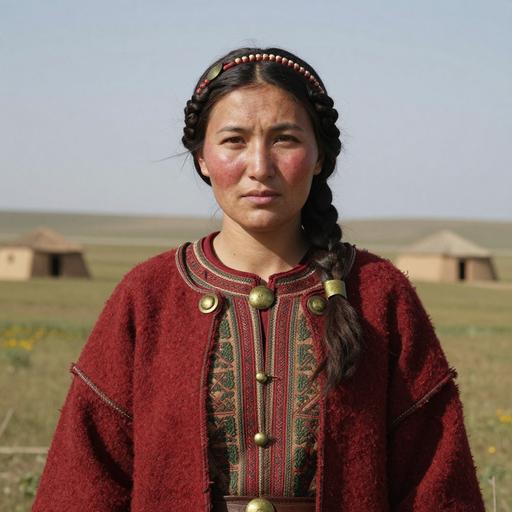
Portrait reconstruction of I3867
Ancient Individual

A woman buried in Kazakhstan in the Early Iron Age era

I3867
750 BCE - 417 BCE
Female
Early Iron Age Kazakhstan
Kazakhstan
Scroll to begin
Chapter I

Identity

The biological and cultural markers that define this ancient individual

Sample ID

I3867

Date Range

750 BCE - 417 BCE

Biological Sex

Female

mtDNA Haplogroup

F2

Cultural Period

Early Iron Age Kazakhstan

Chapter II

Place

Where this individual was discovered

Country Kazakhstan
Locality Almaty. Talgar. Birlik
Coordinates 51.1387, 75.7152
Chapter III

Time

When this individual lived in the broader context of human history

I3867 750 BCE - 417 BCE
Chapter IV

Story

The narrative of this ancient life

The Early Iron Age in Kazakhstan, characterized by the development and flourishing of steppe cultures, represents a pivotal period in the region’s historical and cultural evolution. This era, roughly spanning the first millennium BCE, is marked by the emergence of advanced metalworking, complex social structures, and vibrant cultural exchanges.

Geographic and Environmental Context

Kazakhstan’s vast steppe landscapes, interspersed with mountains, deserts, and river systems, provided both challenges and opportunities for early societies. The region's geography facilitated the movement of nomadic peoples and the exchange of goods and ideas across vast distances, from the Altai Mountains in the east to the Caspian Sea in the west.

Cultural Groups and Societies

The Early Iron Age in this region is defined by several prominent steppe cultures, including the Saka and Wusun, who were part of the larger Scythian cultural complex known for their skilled horsemanship and distinct art styles. These cultures were primarily nomadic or semi-nomadic, relying on pastoralism as their main economic activity. They bred horses, sheep, cattle, and goats, which were vital for transport, food, and trade.

Metalworking and Technological Advancements

One of the distinguishing features of this era is the advancement in metalworking technology. The transition from the Bronze Age to the Iron Age brought about significant changes in tools and weaponry. The communities in early Iron Age Kazakhstan became adept at producing iron implements, which were stronger and more durable than their bronze counterparts. This innovation facilitated agricultural activities and warfare, providing these cultures with a technological edge.

Art and Symbolism

Art played a crucial role in steppe cultures, with the early Iron Age being particularly noted for its \animal style" art. This style is characterized by dynamic depictions of animals, often in combat or mythical contexts, crafted into jewelry, weapons, and horse gear. Such artistic expressions were not merely decorative but held symbolic meanings, reflecting the spiritual life and beliefs of these peoples, often related to notions of power, protection, and the afterlife.

Burial Practices and Social Structures

Burial mounds, or kurgans, dotted across the steppe serve as enduring monuments of these cultures. These structures, ranging from modest to monumental, provide archaeologists with insights into the social hierarchies and wealth distribution within these societies. Elite burials often included elaborate grave goods, such as finely crafted weapons, gold ornaments, and personal items, highlighting the existence of a warrior aristocracy.

Trade and Interaction

The steppe cultures of early Iron Age Kazakhstan were part of extensive trade networks that spanned across Eurasia. These connections facilitated the exchange of goods such as metals, textiles, and livestock, as well as ideas and technologies. The cultural interactions along these routes contributed to the dynamic and hybrid nature of steppe societies, influencing everything from their art to their social organization.

Political and Military Organization

The political structure of these societies was typically tribal, dominated by powerful clan leaders or chieftains. The horse played a central role in their lifestyle, not just as a means of transport, but as a crucial element in their military tactics, enabling rapid movements and the effective execution of raids. This mobility was a significant factor in their ability to exert influence over large areas.

Legacy and Influence

The legacy of early Iron Age steppe cultures in Kazakhstan is profound, influencing the evolution of later societies in the region. Their advancements in metallurgy and horsemanship set the stage for subsequent cultural developments, including those of the Huns and other nomadic empires that emerged in Central Asia. These early cultures laid the groundwork for a tradition of mobility and adaptability that has characterized the region throughout history.

In summary, the early Iron Age in Kazakhstan was a transformative period marked by technological innovation, rich cultural expressions, and substantial socio-economic changes. The steppe cultures of this era were not only remarkable for their resilience and adaptability in a challenging environment but also for their contributions to the cultural and technological fabric of the Eurasian region."

Chapter V

Genetics

The genetic ancestry of this ancient individual

Ancient Genetic Admixture

This analysis compares the DNA profile of I3867 with ancient reference populations, showing the genetic composition in terms of prehistoric ancestral groups.

European Hunter-Gatherers 51.5%
Western Steppe Pastoralists 35.7%
Ancient Asians 12.8%

Modern Genetic Admixture

This analysis compares the DNA profile with present-day reference populations, showing what percentage of genetic makeup resembles modern populations from different regions.

Europe 68.2%
Northwestern European 42.6%
English 27.4%
Northwestern European 13.3%
Scandinavian 1.9%
Southern European 25.7%
Iberian 25.7%
Asia 24.4%
Japanese & Korean 9.9%
Japanese 9.9%
Northern Asian 7.8%
Siberian 7.8%
Central Asian, Northern Indian & Pakistani 6.1%
Indian 6.1%
Northern West Asian 0.7%
Caucasian 0.7%
Africa 7.4%
North African 7.4%
Egyptian 7.4%

Closest Modern Populations

These are the modern populations showing the closest statistical alignment to A woman buried in Kazakhstan in the Early Iron Age era, ranked by genetic distance. Lower distance values indicate closer statistical similarity.

1
Tatar Kazan
3.3700
2
Tatar Mishar
3.6791
3
Komi A
5.6057
4
Besermyan
5.7850
5
Tatar Lipka
6.6470
6
Russian Leshukonsky
6.7765
7
Chuvash
7.3351
8
Saami Kola
7.4442
9
Udmurt
7.6591
10
Russian Pinezhsky
8.1757
Chapter VI

Context

Other ancient individuals connected to this sample

Sources

References

Scientific publications and genetic data

Scientific Publication

Shifts in the Genetic Landscape of the Western Eurasian Steppe Associated with the Beginning and End of the Scythian Dominance

Authors Järve M, Saag L, Scheib CL
Abstract

The Early Iron Age nomadic Scythians have been described as a confederation of tribes of different origins, based on ancient DNA evidence [1-3]. It is still unclear how much of the Scythian dominance in the Eurasian Steppe was due to movements of people and how much reflected cultural diffusion and elite dominance. We present new whole-genome sequences of 31 ancient Western and Eastern Steppe individuals, including Scythians as well as samples pre- and postdating them, allowing us to set the Scythians in a temporal context (in the Western, i.e., Ponto-Caspian Steppe). We detect an increase of eastern (Altaian) affinity along with a decrease in eastern hunter-gatherer (EHG) ancestry in the Early Iron Age Ponto-Caspian gene pool at the start of the Scythian dominance. On the other hand, samples of the Chernyakhiv culture postdating the Scythians in Ukraine have a significantly higher proportion of Near Eastern ancestry than other samples of this study. Our results agree with the Gothic source of the Chernyakhiv culture and support the hypothesis that the Scythian dominance did involve a demic component.

G25 Coordinates

The G25 coordinates for sample I3867 can be used for detailed admixture analysis in our G25 Studio tool.

I3867,0.11098832,0.01999784,0.05468508,0.04376906,0.0133733,0.01517364,0.00883994,0.01082184,-0.00876368,-0.02316106,0.00826594,-0.00525148,0.00693328,-0.00969402,-0.00371474,-0.0111366,-0.01418228,-0.00119984,-0.00950106,-0.01136738,-0.0003173,0.006978,-0.01178774,0.00848546,-0.00252528
Analyze in G25 Studio
Use code for 40% off Expires Feb 26