Menu
Store
Blog
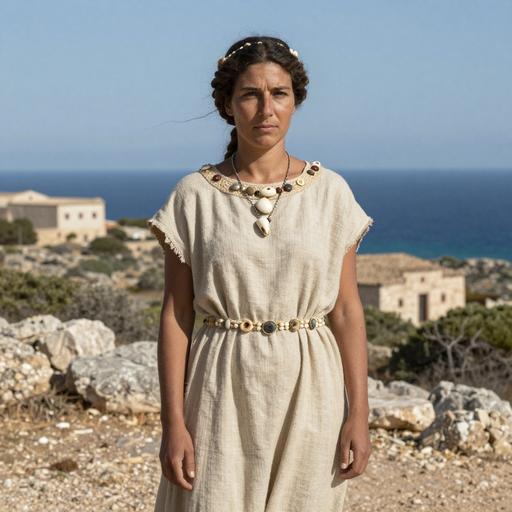
Portrait reconstruction of I4420
Ancient Individual

A woman buried in Spain in the Middle Bronze Age era

I4420
1879 BCE - 1697 BCE
Female
Middle Bronze Age Formentera, Spain
Spain
Scroll to begin
Chapter I

Identity

The biological and cultural markers that define this ancient individual

Sample ID

I4420

Date Range

1879 BCE - 1697 BCE

Biological Sex

Female

mtDNA Haplogroup

H5-c

Cultural Period

Middle Bronze Age Formentera, Spain

Chapter II

Place

Where this individual was discovered

Country Spain
Locality Balearic Islands. Formentera. Cova 127
Coordinates 38.6866, 1.4212
Chapter III

Time

When this individual lived in the broader context of human history

I4420 1879 BCE - 1697 BCE
Chapter IV

Story

The narrative of this ancient life

The Middle Bronze Age in Formentera, Spain, is a fascinating period that provides insight into the culture and lifestyles of the inhabitants of the western Mediterranean. Formentera, the smallest of the Balearic Islands, holds unique archaeological and cultural significance, with the Middle Bronze Age marking a transformative era in its development.

Geographical Context

Formentera is located in the Balearic archipelago, near the larger island of Ibiza. Its geographical position in the western Mediterranean has always been significant for maritime routes, enabling interactions with various cultures. The island’s landscape, characterized by its flat terrain, sandy beaches, and rocky outcrops, influenced settlement patterns and resource availability.

Settlement and Architecture

During the Middle Bronze Age, settlements in Formentera were typically small, with communities composed of closely-knit family groups. The population likely lived in circular or oval-shaped huts constructed from local materials, such as stone, mud, and plant matter. The architecture reflected practical concerns of stability against the island’s winds and heat management.

Archaeological evidence suggests that settlement locations were strategically chosen to provide access to fresh water sources, arable land, and fishing areas. Some sites might have been fortified, reflecting the presence of social tensions or the need for defense against external threats.

Economy and Subsistence

The economy of Middle Bronze Age Formentera was primarily subsistence-based. Agriculture formed the backbone of the economy, with the cultivation of cereals like barley and wheat, as well as legumes. The island's soil and climate also supported the growth of olives and grapes, which might have been used for oil and wine production.

Animal husbandry was a significant aspect of daily life, with evidence of domesticated animals such as sheep, goats, and pigs. These animals provided meat, milk, and wool. Fishing and shellfish gathering were also crucial, given the island's rich maritime resources.

Trade played a role in the island’s economy, facilitated by Formentera's strategic position. The exchange of goods with neighboring islands and mainland cultures included metal objects, pottery, and textiles.

Sociopolitical Structure

Though specific details about the sociopolitical organization in Formentera during the Middle Bronze Age are limited, it is likely that communities were organized in a hierarchical fashion. Leadership roles may have emerged based on control over resources, trade connections, or spiritual status.

Hierarchy could have been reflected in burial practices, with more elaborate grave goods being associated with individuals of higher status. Communal decision-making would have been vital, given the need for coordinated agricultural activities and defense.

Religion and Rituals

Religious beliefs during the Middle Bronze Age in Formentera were likely animistic, with a focus on natural elements like the sea, sun, and land. Evidence of ritual practices might include ceremonial structures or artifacts, although specific archaeological evidence is limited.

Burial sites can provide crucial insights into the ritualistic aspects of the culture. Grave goods and burial orientations reveal beliefs in an afterlife and the community's reverence for their ancestors. Funerary practices might have included cremation or inhumation, with the dead being buried along with items meant to accompany them in the afterlife.

Art and Artifacts

Artifacts from this period in Formentera include pottery, tools, and personal adornments. Pottery styles can reveal influences from other Mediterranean cultures, indicating trade and cultural exchange. Tools made of stone, bone, and metal were used for agricultural pursuits, domestic tasks, and possibly in warfare or hunting.

Personal adornments such as beads, pendants, and decorated pottery suggest a culture that valued aesthetic expression and possibly social status indicators.

Conclusion

The Middle Bronze Age in Formentera reflects a period of complex social, economic, and cultural development. Its unique location in the western Mediterranean facilitated cultural exchanges and shaped a distinct island culture. Through the analysis of settlement patterns, economy, social structures, and artifacts, we gain a deep understanding of the resilient communities that inhabited Formentera during this dynamic era.

Chapter V

Genetics

The genetic ancestry of this ancient individual

Ancient Genetic Admixture

This analysis compares the DNA profile of I4420 with ancient reference populations, showing the genetic composition in terms of prehistoric ancestral groups.

Neolithic Farmers 47.3%
Western Steppe Pastoralists 26.6%
European Hunter-Gatherers 26.0%

Modern Genetic Admixture

This analysis compares the DNA profile with present-day reference populations, showing what percentage of genetic makeup resembles modern populations from different regions.

Europe 91.5%
Southern European 57.4%
Iberian 37.4%
Sardinian 18.7%
Italian 1.4%
Northwestern European 34.1%
English 24.5%
Northwestern European 9.6%
Africa 7.8%
North African 7.8%
North African 7.8%

Closest Modern Populations

These are the modern populations showing the closest statistical alignment to A woman buried in Spain in the Middle Bronze Age era, ranked by genetic distance. Lower distance values indicate closer statistical similarity.

1
Basque Soule
2.1488
2
Spanish Burgos
2.2209
3
Spanish La Rioja
2.2381
4
Basque French
2.3089
5
French Bearn
2.3471
6
Spanish Biscay
2.3929
7
French South
2.4280
8
Basque Lower Navarre
2.4518
9
Basque Spanish
2.4643
10
French Bigorre
2.4670
Chapter VI

Context

Other ancient individuals connected to this sample

Sources

References

Scientific publications and genetic data

Scientific Publication

The spread of steppe and Iranian-related ancestry in the islands of the western Mediterranean

Authors Fernandes DM, Mittnik A, Olalde I
Abstract

Steppe-pastoralist-related ancestry reached Central Europe by at least 2500 BC, whereas Iranian farmer-related ancestry was present in Aegean Europe by at least 1900 BC. However, the spread of these ancestries into the western Mediterranean, where they have contributed to many populations that live today, remains poorly understood. Here, we generated genome-wide ancient-DNA data from the Balearic Islands, Sicily and Sardinia, increasing the number of individuals with reported data from 5 to 66. The oldest individual from the Balearic Islands (~2400 BC) carried ancestry from steppe pastoralists that probably derived from west-to-east migration from Iberia, although two later Balearic individuals had less ancestry from steppe pastoralists. In Sicily, steppe pastoralist ancestry arrived by ~2200 BC, in part from Iberia; Iranian-related ancestry arrived by the mid-second millennium BC, contemporary to its previously documented spread to the Aegean; and there was large-scale population replacement after the Bronze Age. In Sardinia, nearly all ancestry derived from the island's early farmers until the first millennium BC, with the exception of an outlier from the third millennium BC, who had primarily North African ancestry and who-along with an approximately contemporary Iberian-documents widespread Africa-to-Europe gene flow in the Chalcolithic. Major immigration into Sardinia began in the first millennium BC and, at present, no more than 56-62% of Sardinian ancestry is from its first farmers. This value is lower than previous estimates, highlighting that Sardinia, similar to every other region in Europe, has been a stage for major movement and mixtures of people.

G25 Coordinates

The G25 coordinates for sample I4420 can be used for detailed admixture analysis in our G25 Studio tool.

I4420,0.12089506,0.153829,0.04568492,0.00018272,0.05498506,-0.00505532,-0.00084524,0.0060408,0.0293989,0.04432776,-0.00841084,0.01330466,-0.02297524,-0.00937616,0.00790772,0.00021998,-0.01139994,-0.00182808,-0.00137202,-0.00187548,0.00599026,0.00613056,-0.01125268,-0.01186948,0.00275436
Analyze in G25 Studio
Use code for 40% off Expires Feb 26