Menu
Store
Blog
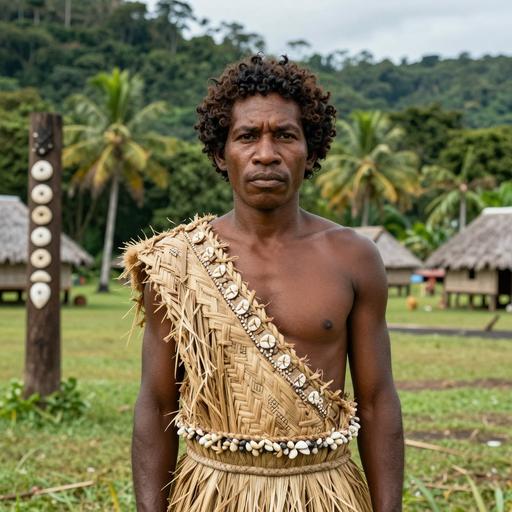
Portrait reconstruction of I5268
Ancient Individual

A man buried in Vanuatu in the Initial Settlement era

I5268
1060 BCE - 810 BCE
Male
Vanuatu 3,000 Years Ago
Vanuatu
Scroll to begin
Chapter I

Identity

The biological and cultural markers that define this ancient individual

Sample ID

I5268

Date Range

1060 BCE - 810 BCE

Biological Sex

Male

mtDNA Haplogroup

Not available

Y-DNA Haplogroup

Not available

Cultural Period

Vanuatu 3,000 Years Ago

Chapter II

Place

Where this individual was discovered

Country Vanuatu
Locality Efate. Teouma
Chapter III

Time

When this individual lived in the broader context of human history

I5268 1060 BCE - 810 BCE
Chapter IV

Story

The narrative of this ancient life

Around 3,000 years ago, the archipelago now known as Vanuatu was in the midst of significant cultural and societal transformations. During this period, Vanuatu was influenced by the Lapita people, who are well-known for their navigational skills, pottery-making, and Austronesian language roots.

Settlement and Society

  1. Migration and Settlements:

    • The Lapita culture, known for its distinctive pottery, migrated into the Vanuatu region around 3,000 years ago. This movement was part of a larger Austronesian expansion across the Pacific.
    • These people arrived from the Bismarck Archipelago, near present-day Papua New Guinea, and settled on the islands, establishing villages typically along coastlines.
  2. Village Structure:

    • Villages were usually composed of small family units or extended clans, settled in communal arrangements.
    • Housing was likely constructed from readily available materials like wood, bamboo, and palm leaves, designed for the tropical climate.
  3. Social Organization:

    • The society was likely organized hierarchically, with social structures revolving around kinship and clan affiliations.
    • Leadership might have been exerted by elders or chiefs who had significant influence over communal decisions and resource distribution.

Culture and Technology

  1. Pottery and Artifacts:

    • The Lapita people are renowned for their pottery, characterized by intricate geometric designs stamped into the clay. This pottery serves as a crucial archaeological indicator of their presence and cultural reach.
    • Other notable artifacts include shell ornaments, stone tools, and evidence of early agricultural implements.
  2. Agriculture and Subsistence:

    • Subsistence was largely based on a combination of horticulture, fishing, and gathering.
    • Crops like yam, taro, and coconut were cultivated, alongside other introduced Pacific staples.
    • Fishing and the collecting of shellfish were vital, providing a rich protein source. The use of nets, lines, and spears would have been common.
  3. Navigation and Trade:

    • As skilled navigators and seafarers, the Lapita people established trade routes across vast ocean distances, exchanging goods such as obsidian, pottery, and shell ornaments.
    • This network fostered not only economic exchange but also cultural and genetic interchange between distant island communities.

Beliefs and Rituals

  1. Spiritual Beliefs:

    • Although direct evidence from this period is scarce, it is likely that belief systems revolved around ancestor worship and the veneration of natural elements and spirits.
    • Ritual sites and certain aspects of the pottery designs may have held religious or ceremonial significance.
  2. Mortuary Practices:

    • Burial customs from later periods suggest a complex set of beliefs regarding death and the afterlife, with some indications of secondary burial practices.
    • Grave goods and burial positioning might have reflected social status and belief in the continuity of the dead in an afterlife.

Environmental Interaction

  1. Ecological Adaptation:

    • The Lapita settlers had to adapt to the diverse ecological zones of the Vanuatu archipelago, which ranged from volcanic islands to coral atolls.
    • This adaptability would have involved understanding local flora and fauna, as well as coping with periodic natural disasters such as cyclones and volcanic eruptions.
  2. Environmental Impact:

    • Evidence suggests that the arrival of humans led to some ecological changes, including the introduction of new plant species and possible impacts on native animal populations.
    • The management of resources was critical to sustaining life on the islands, given their isolation and limited land area.

Overall, the era of Vanuatu around 3,000 years ago was marked by the gradual establishment of a unique cultural identity, influenced by both the legacy of the Lapita culture and the archipelago's geographic isolation. This period laid the groundwork for the diverse and vibrant cultures that would develop in the islands over subsequent centuries.

Chapter V

Genetics

The genetic ancestry of this ancient individual

Ancient Genetic Admixture

This analysis compares the DNA profile of I5268 with ancient reference populations, showing the genetic composition in terms of prehistoric ancestral groups.

Ancient Asians 69.8%
Western Steppe Pastoralists 17.4%
Ancient Oceanians 12.8%

Modern Genetic Admixture

This analysis compares the DNA profile with present-day reference populations, showing what percentage of genetic makeup resembles modern populations from different regions.

Asia 82.9%
Chinese & Southeast Asian 82.9%
Chinese 74.3%
Vietnamese 8.6%
Oceania 9.9%
Melanesian 9.9%
Papuan 9.9%
Africa 7.2%
North African 7.2%
Egyptian 7.2%

Closest Modern Populations

These are the modern populations showing the closest statistical alignment to A man buried in Vanuatu in the Initial Settlement era, ranked by genetic distance. Lower distance values indicate closer statistical similarity.

1
Thai
4.4969
2
Mon
5.3829
3
Cambodian
6.5203
4
Lao
7.2191
5
Kinh Vietnam
7.3134
6
Tai Lue
7.6533
7
Lahu
7.7047
8
Wa
7.7421
9
Dai
7.8682
10
Lawa
8.0759
Chapter VI

Context

Other ancient individuals connected to this sample

Sources

References

Scientific publications and genetic data

Scientific Publication

Three Phases of Ancient Migration Shaped the Ancestry of Human Populations in Vanuatu

Authors Lipson M, Spriggs M, Valentin F
Abstract

The archipelago of Vanuatu has been at the crossroads of human population movements in the Pacific for the past three millennia. To help address several open questions regarding the history of these movements, we generated genome-wide data for 11 ancient individuals from the island of Efate dating from its earliest settlement to the recent past, including five associated with the Chief Roi Mata's Domain World Heritage Area, and analyzed them in conjunction with 34 published ancient individuals from Vanuatu and elsewhere in Oceania, as well as present-day populations. Our results outline three distinct periods of population transformations. First, the four earliest individuals, from the Lapita-period site of Teouma, are concordant with eight previously described Lapita-associated individuals from Vanuatu and Tonga in having almost all of their ancestry from a "First Remote Oceanian" source related to East and Southeast Asians. Second, both the Papuan ancestry predominating in Vanuatu for the past 2,500 years and the smaller component of Papuan ancestry found in Polynesians can be modeled as deriving from a single source most likely originating in New Britain, suggesting that the movement of people carrying this ancestry to Remote Oceania closely followed that of the First Remote Oceanians in time and space. Third, the Chief Roi Mata's Domain individuals descend from a mixture of Vanuatu- and Polynesian-derived ancestry and are related to Polynesian-influenced communities today in central, but not southern, Vanuatu, demonstrating Polynesian genetic input in multiple groups with independent histories.

G25 Coordinates

The G25 coordinates for sample I5268 can be used for detailed admixture analysis in our G25 Studio tool.

I5268,0.02704146,-0.3654345,-0.04036984,-0.04706688,0.1098934,0.04818056,-0.00068744,-0.00343668,-0.01312468,-0.00575588,0.00848378,0.00299228,0.00130452,-0.00817102,0.00344508,0.0019341,0.0055533,-0.00392482,-0.00239972,-0.01032116,0.01116086,0.0105879,0.01307182,0.00278984,0.00593457
Analyze in G25 Studio
Use code for 40% off Expires Feb 27