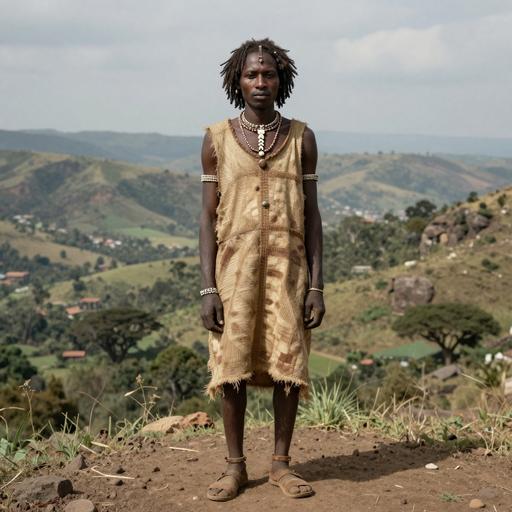
The era 4500 years before present in Ethiopia falls around 2500 BCE, a time when ancient Cushitic-speaking people likely inhabited parts of the Horn of Africa, including modern-day Ethiopia. This period is crucial for understanding the development of early societies in the region, as it predates the rise of well-documented ancient civilizations like Axum but showcases the cultural and technological foundations that would influence later developments. The detailed description of this era/culture involves archaeological findings, environmental context, social organization, economy, and cultural practices.
Environmental and Geographical Context
Ethiopia's landscape is diverse, ranging from highland plateaus to lowland savannahs. Around 2500 BCE, the climate was generally more humid than today, supporting a variety of flora and fauna. The Ethiopian highlands, with their rich volcanic soils, could support agriculture, while the surrounding lowlands provided grazing for pastoral communities. Major rivers like the Blue Nile offered water resources that were crucial for sustenance and possibly early irrigation practices.
Archaeological Findings
Archaeology provides key insights into the people of this time, although evidence is sparse compared to more extensively studied regions like Egypt or Mesopotamia. Excavations in parts of Ethiopia and the broader Horn of Africa show signs of early settled communities and the use of stone tools. Megalithic structures, such as large stone stelae, suggest complex social practices including burial or ceremonial functions. These structures hint at a sense of community organization and possibly emerging hierarchies or leadership roles.
Social and Political Organization
Social structure during this period likely consisted of a network of tribal or clan-based communities. Given the archaeological evidence of megalithic sites, there may have been a form of proto-chiefdom with influential leaders or spiritual figures. Social organization would have been flexible, responding to the needs of pastoral and agrarian living. Kinship ties and clan affiliation probably played a central role in the social cohesion and the transfer of knowledge, culture, and traditions.
Economy and Subsistence
The people of ancient Cushitic Ethiopia practiced a mixed economy of agriculture, pastoralism, and hunting-gathering. They grew crops like barley, millet, and possibly teff, which remains a staple in Ethiopian cuisine today. Cattle, sheep, and goats were significant, not only as food sources but as measures of wealth and social status. The movement of pastoral groups facilitated trade and cultural interactions both within the Cushitic-speaking regions and with neighboring cultures, potentially exchanging goods like obsidian, pottery, and perhaps early forms of metallurgy.
Language and Culture
The Cushitic language family, part of the larger Afroasiatic phylum, would have been prevalent. While specific linguistic characteristics of the period remain speculative, the diverse Cushitic languages today suggest a rich oral tradition that likely existed even then. Cultural practices involved intricate social rituals, as evidenced by the megalithic structures, which may have served religious or funerary purposes.
Artistic expression might have included rock art, body adornment, and the creation of functional yet aesthetically pleasing tools and pottery. The spiritual or religious belief systems remain largely unknown; however, the emphasis on burials and memory through stelae and other structures points to a belief in an afterlife or the importance of ancestral reverence.
Technological Development
The technological prowess of the period can be gleaned from tool-making and agricultural practices. Stone tools were refined, reflecting sophisticated techniques in crafting implements for farming, hunting, and domestic purposes. The possible domestication and selective breeding of local plant and animal species reflect an advanced understanding of agronomy and animal husbandry principles.
Conclusion
Ethiopia 4500 years before present was a region of dynamic cultural and environmental interactions. The early Cushitic-speaking people laid down the social, economic, and cultural foundations upon which later Ethiopian civilizations would build. The archaeological record, though still developing, offers glimpses into a complex society adept at navigating the challenges of their environment and forming lasting cultural legacies. Understanding this era provides insight into the resilience and adaptability that characterize Ethiopian history and identity.