Menu
Store
Blog
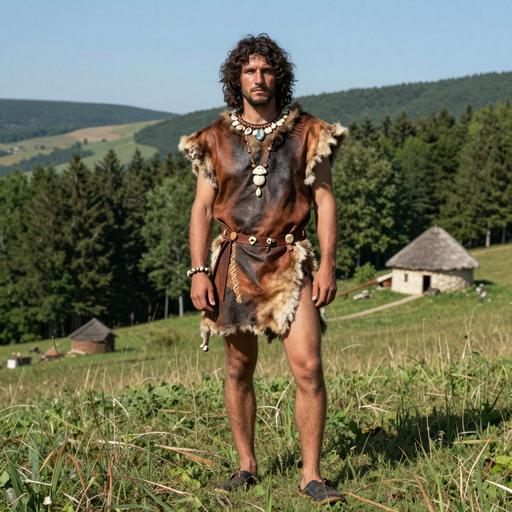
Portrait reconstruction of I6184
Ancient Individual

A man buried in Romania in the Mesolithic era

I6184
6000 BCE - 5300 BCE
Male
Mesolithic to Neolithic Romania
Romania
Scroll to begin
Chapter I

Identity

The biological and cultural markers that define this ancient individual

Sample ID

I6184

Date Range

6000 BCE - 5300 BCE

Biological Sex

Male

mtDNA Haplogroup

H15a1a1

Y-DNA Haplogroup

Not available

Cultural Period

Mesolithic to Neolithic Romania

Chapter II

Place

Where this individual was discovered

Country Romania
Locality Trestiana
Coordinates 46.1896, 27.6695
Chapter III

Time

When this individual lived in the broader context of human history

I6184 6000 BCE - 5300 BCE
Chapter IV

Story

The narrative of this ancient life

The transitional period from the Mesolithic to the Neolithic in Romania represents a fascinating era in the region's history, marked by significant cultural, technological, and social changes. This period signifies the shift from hunter-gatherer societies to more settled agricultural communities, a transformation that dramatically altered the lifestyle, economy, and landscape of Europe, including what is now modern-day Romania.

Mesolithic Era in Romania

1. Temporal Framework:

  • The Mesolithic period in Romania roughly spanned from around 10,000 to 6,000 BCE, following the end of the last Ice Age. This era was characterized by relatively stable climatic conditions that allowed for increased human habitation.

2. Lifestyle and Subsistence:

  • Mesolithic communities in Romania were largely composed of nomadic or semi-nomadic hunters and gatherers. These groups subsisted on a diet composed of wild game, fish, and gathered plant materials.
  • Advances in tool technology were significant during this time. Microliths, small flint tools that could be fitted into handles to create various implements, were prevalent. These tools facilitated more efficient hunting and processing of food.

3. Settlements:

  • Archaeological findings suggest that Mesolithic people lived in temporary settlements, often situated near rivers and lakes which provided abundant resources. The Danube Delta region, for instance, was a rich ecological zone that likely supported sizable populations.

4. Social Structure:

  • The social organization of Mesolithic communities was likely egalitarian, with small kin-based groups. There is little direct evidence of social stratification or complex political structures in this period.

Transition to the Neolithic Era

1. Catalysts for Change:

  • The transition to the Neolithic period in Romania, occurring around 6,000 BCE, was driven by several factors including climatic stability, population pressures, and the diffusion of agricultural practices from the Near East.
  • Contact with neighboring regions facilitated the spread of farming techniques and domesticated plants and animals.

2. Neolithic Settlements:

  • Unlike their Mesolithic predecessors, Neolithic communities were largely sedentary. Settlements became more permanent as agriculture became the primary mode of subsistence.
  • Villages were typically situated in fertile areas, particularly along rivers like the Danube and its tributaries, exploiting rich soils for crop cultivation.

3. Economy and Agriculture:

  • The introduction of agriculture brought about the cultivation of wheat, barley, lentils, and peas, alongside the domestication of animals such as cattle, sheep, and goats.
  • This shift enabled the production of surpluses, which led to more complex social structures and the development of trade networks.

4. Technological Advancements:

  • Pottery began to appear in the archaeological record during this time, serving as vital tools for storing surplus food and preserving it against seasonal shortages.
  • The Neolithic also saw the innovation of polished stone tools, enhancing the efficiency of agricultural work and construction.

5. Social and Cultural Impacts:

  • With settled life and surplus production, societies became more stratified. Evidence of differentiation in burial practices and settlement sizes suggests emerging social hierarchies.
  • Cultural developments, including art and architecture, flourished. Ceramics often featured intricate designs and are considered significant markers of Neolithic culture.
  • Rituals and belief systems likely grew more complex, though concrete evidence from this period in Romania is limited.

6. Key Archaeological Cultures:

  • The Criș, Boian, and Gumelnița cultures are among the prominent Neolithic cultural groups identified in Romania. These cultures are noted for their specific pottery styles, settlement patterns, and cultural artefacts.
  • These groups contributed to the diffusion of the Neolithic lifestyle across the region and played a crucial role in shaping the cultural landscape of prehistoric Europe.

Conclusion

The transition from the Mesolithic to the Neolithic era in Romania marks a fundamental transformation in human society. This period laid the groundwork for modern civilization by introducing agricultural practices, permanent settlements, and increasingly complex societal structures. The archaeological record in Romania provides valuable insights into these transformative processes, offering a window into the lives of early Europeans as they navigated and adapted to a changing world.

Chapter V

Genetics

The genetic ancestry of this ancient individual

Ancient Genetic Admixture

This analysis compares the DNA profile of I6184 with ancient reference populations, showing the genetic composition in terms of prehistoric ancestral groups.

Western Steppe Pastoralists 50.1%
European Hunter-Gatherers 31.0%
Neolithic Farmers 14.0%
Ancient Asians 4.9%

Modern Genetic Admixture

This analysis compares the DNA profile with present-day reference populations, showing what percentage of genetic makeup resembles modern populations from different regions.

Europe 80.9%
Northwestern European 60.6%
English 26.2%
Northwestern European 15.7%
Finnish 13.3%
Scandinavian 5.4%
Eastern European 20.3%
Asia 19.1%
Northern West Asian 15.1%
Caucasian 15.1%
Central Asian, Northern Indian & Pakistani 4.1%
Pakistan 4.1%

Closest Modern Populations

These are the modern populations showing the closest statistical alignment to A man buried in Romania in the Mesolithic era, ranked by genetic distance. Lower distance values indicate closer statistical similarity.

1
Moldovan O
5.1897
2
German Hamburg
5.1997
3
Swedish
5.2047
4
Afrikaner
5.2488
5
Hungarian
5.2920
6
Czech
5.3347
7
Moksha
5.3451
8
Norwegian
5.4828
9
Ukrainian Zakarpattia
5.4915
10
German Erlangen
5.5408
Chapter VI

Context

Other ancient individuals connected to this sample

Sources

References

Scientific publications and genetic data

Scientific Publication

The genetic history of the Southern Arc: A bridge between West Asia and Europe | Science

Authors Lazaridis I, Alpaslan-Roodenberg S, Acar A
Abstract

The period from the Copper Age to the Bronze Age marked major social and economic transformations in West Eurasia. To better understand these changes and their genetic impacts, we generated genome-wide data from 727 individuals who lived between 5000 and 1000 BCE in southeastern Europe and southwestern Asia.

G25 Coordinates

The G25 coordinates for sample I6184 can be used for detailed admixture analysis in our G25 Studio tool.

I6184,0.12590422,0.09951122,0.0434442,0.0534829,0.01623624,0.023833,0.0045232,0.00519506,-0.0062315,-0.01692658,-0.00408288,0.00309472,0.00298556,-0.0065529,0.00857198,-0.00042858,-0.00861312,-9.756E-05,-0.0028349,-0.00315486,0.00327666,0.00304968,-0.00156418,0.00823536,-0.00193472
Analyze in G25 Studio
Use code for 40% off Expires Feb 27