Menu
Store
Blog
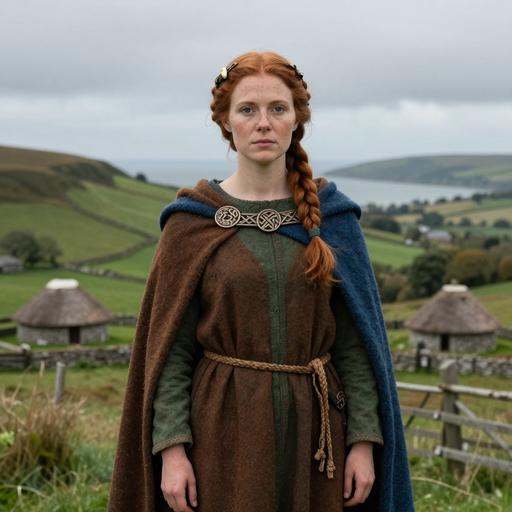
Portrait reconstruction of I6771
Ancient Individual

A woman buried in United Kingdom in the Iron Age era

I6771
169 BCE - 2 BCE
Female
Iron Age Wales
United Kingdom
Scroll to begin
Chapter I

Identity

The biological and cultural markers that define this ancient individual

Sample ID

I6771

Date Range

169 BCE - 2 BCE

Biological Sex

Female

mtDNA Haplogroup

U4b1a

Cultural Period

Iron Age Wales

Chapter II

Place

Where this individual was discovered

Country United Kingdom
Locality Wales. Glamorgan. Llantwit Major. Llanmaes
Coordinates 51.4167, -3.4667
Chapter III

Time

When this individual lived in the broader context of human history

I6771 169 BCE - 2 BCE
Chapter IV

Story

The narrative of this ancient life

The Iron Age in Wales, generally spanning from around 800 BCE to the Roman conquest in 43 CE, is characterized by a thriving Celtic culture that left a significant imprint on the social, economic, and environmental landscape of the region. This era witnessed the rise of complex societies, marked by increased fortification, enhanced agricultural techniques, sophisticated artistry, and a rich spiritual tapestry.

Geographic and Environmental Context

Iron Age Wales was shaped significantly by its varied topography, ranging from mountainous regions like Snowdonia to fertile plains in South Wales. The diverse environments influenced settlement patterns, with communities often settling in defensible locations such as hilltops or near rivers, which provided fertile land and transportation routes. Natural resources like iron ore were abundant, playing crucial roles in tool-making and trade.

Settlement and Fortification

One of the most striking features of Iron Age Wales is the proliferation of hillforts, which served as both defensive structures and social centers. Examples include Tre'r Ceiri, Dinorwig, and Pen Dinas, each strategically located to oversee key routes and resources. These forts typically feature complex earthworks, such as ditches and ramparts, and were often formidable, indicating a society prepared for conflict and organized around tribal defense.

Aside from hillforts, evidence of roundhouse villages reflects the communal lifestyle. These roundhouses, made of timber and thatch, were organized around central hearths and were key to the social and economic life of Iron Age communities. The density and size of these settlements varied, with larger ones potentially housing craftspersons and acting as trade hubs.

Economy and Society

The Iron Age economy in Wales was primarily agrarian, but with significant advancements over previous eras. Agricultural techniques grew more sophisticated, with the introduction of iron tools allowing for more efficient land management. Crops like barley and wheat were staples, complemented by cattle, sheep, and pig farming.

Trade and exchange networks during this period expanded, as evidenced by the distribution of goods such as querns (grinding stones), pottery, and metalwork. Wales's iron and other resources facilitated trade with neighboring regions, including other Celtic tribes and, eventually, Romans.

Social hierarchy became more pronounced, with tribes and clan leaders exerting control and influence. This organization was particularly evident in the political use of hillforts as power centers. These tribes were part of a broader Celtic culture, sharing linguistic and cultural ties with groups in Ireland, Scotland, and continental Europe.

Art and Culture

Celtic art during the Iron Age in Wales is renowned for its intricate designs and symbolism, typically seen in metalwork, stone carvings, and pottery. Artifacts like the intricate torcs (neck ornaments) and decorated shields highlight both the aesthetic values and skilled craftsmanship of the period. These items often served as markers of status and identity within tribes.

Spiritual beliefs and practices were integral, centered around a polytheistic system where natural elements and deities played critical roles. Sacred sites, often in remote and dramatic landscapes, served as venues for rituals. Druids, as religious leaders, wielded substantial influence within society, acting as intermediaries between the people and the gods.

End of the Iron Age

The Iron Age in Wales began to conclude as Roman influence spread across Britain. The Roman conquest introduced new technologies, ideas, and administrative systems that gradually replaced or assimilated Iron Age traditions. Yet, many aspects of Celtic culture, especially in rural and less accessible areas, persisted well into the Roman occupation and beyond.

Overall, Iron Age Wales was a dynamic period marked by significant cultural, technological, and social advancements. Its legacy is evident in the archaeological remains that dot the Welsh landscape, offering tantalizing glimpses into a vibrant and intricately organized Celtic society.

Chapter V

Genetics

The genetic ancestry of this ancient individual

Ancient Genetic Admixture

This analysis compares the DNA profile of I6771 with ancient reference populations, showing the genetic composition in terms of prehistoric ancestral groups.

Western Steppe Pastoralists 39.9%
European Hunter-Gatherers 35.7%
Neolithic Farmers 24.4%

Modern Genetic Admixture

This analysis compares the DNA profile with present-day reference populations, showing what percentage of genetic makeup resembles modern populations from different regions.

Europe 95.2%
Northwestern European 67.2%
English 33.1%
Scandinavian 19.7%
Northwestern European 14.4%
Southern European 28.0%
Italian 14.6%
Iberian 13.4%
Asia 3.9%
Central Asian, Northern Indian & Pakistani 2.8%
Indian 2.8%
Northern West Asian 0.6%
Caucasian 0.6%
Chinese & Southeast Asian 0.5%
Vietnamese 0.5%
America 0.8%
America 0.8%
Native American 0.8%

Closest Modern Populations

These are the modern populations showing the closest statistical alignment to A woman buried in United Kingdom in the Iron Age era, ranked by genetic distance. Lower distance values indicate closer statistical similarity.

1
Orcadian
2.3404
2
Scottish
2.4815
3
Afrikaner
2.5988
4
English
2.6190
5
Belgiana
2.6937
6
French Brittany
2.7013
7
Dutch
2.7078
8
English Cornwall
2.7342
9
Welsh
2.7938
10
Irish
2.8101
Chapter VI

Context

Other ancient individuals connected to this sample

Sources

References

Scientific publications and genetic data

Scientific Publication

Large-scale migration into Britain during the Middle to Late Bronze Age

Authors Patterson N, Isakov M, Booth T
Abstract

Present-day people from England and Wales have more ancestry derived from early European farmers (EEF) than did people of the Early Bronze Age1. To understand this, here we generated genome-wide data from 793 individuals, increasing data from the Middle to the Late Bronze Age and Iron Age in Britain by 12-fold, and western and central Europe by 3.5-fold. Between 1000 and 875 BC, EEF ancestry increased in southern Britain (England and Wales) but not northern Britain (Scotland) due to incorporation of migrants who arrived at this time and over previous centuries, and who were genetically most similar to ancient individuals from France. These migrants contributed about half the ancestry of people of England and Wales from the Iron Age, thereby creating a plausible vector for the spread of early Celtic languages into Britain. These patterns are part of a broader trend of EEF ancestry becoming more similar across central and western Europe in the Middle to the Late Bronze Age, coincident with archaeological evidence of intensified cultural exchange2-6. There was comparatively less gene flow from continental Europe during the Iron Age, and the independent genetic trajectory in Britain is also reflected in the rise of the allele conferring lactase persistence to approximately 50% by this time compared to approximately 7% in central Europe where it rose rapidly in frequency only a millennium later. This suggests that dairy products were used in qualitatively different ways in Britain and in central Europe over this period.

G25 Coordinates

The G25 coordinates for sample I6771 can be used for detailed admixture analysis in our G25 Studio tool.

I6771,0.12422162,0.12335694,0.0580685,0.03925646,0.0370582,0.01398948,-0.00189122,-0.00331558,0.0057403,0.0024729,-0.00619926,0.0061798,-0.0132283,-0.00932042,0.0182772,-0.00768674,-0.01676686,0.00112398,0.00065928,-0.00272488,0.0045205,0.00185974,-0.0062077,0.01120354,-0.0022257
Analyze in G25 Studio
Use code for 40% off Expires Feb 27