Menu
Store
Blog
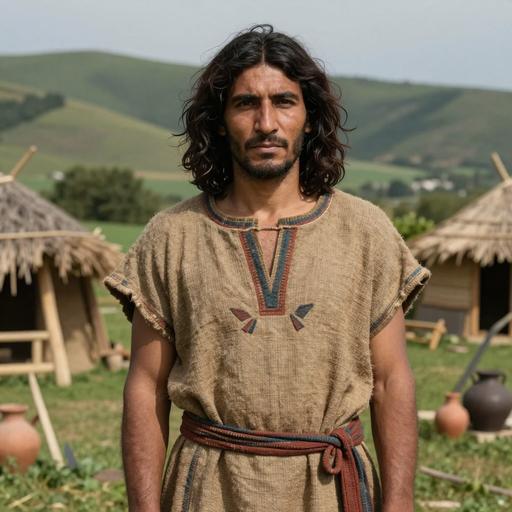
Portrait reconstruction of IKI019
Ancient Individual

A man buried in Turkey in the Late Copper Age era

IKI019
3500 BCE - 3100 BCE
Male
Ikiztepe Culture
Turkey
Scroll to begin
Chapter I

Identity

The biological and cultural markers that define this ancient individual

Sample ID

IKI019

Date Range

3500 BCE - 3100 BCE

Biological Sex

Male

mtDNA Haplogroup

Not available

Y-DNA Haplogroup

G-L30

Cultural Period

Ikiztepe Culture

Chapter II

Place

Where this individual was discovered

Country Turkey
Locality Samsun Province. İkiztepe
Coordinates 41.6137, 35.8711
Chapter III

Time

When this individual lived in the broader context of human history

IKI019 3500 BCE - 3100 BCE
Chapter IV

Story

The narrative of this ancient life

The İkiztepe Culture is a significant archaeological culture from the Anatolian Chalcolithic period, located in the region of present-day Turkey. This culture is primarily associated with the settlement of İkiztepe, situated near the Black Sea coast, which became a key site for understanding the transition from the Neolithic to the Chalcolithic (Copper Age) in Anatolia. The archaeological findings from İkiztepe reveal rich insights into the technological, social, and cultural developments of this era, typically dated to the 4th and early 3rd millennium BCE.

Settlement and Architecture

İkiztepe was strategically located, offering access to fertile lands and proximity to natural resources such as metals and clay, facilitating both agriculture and craft production. The settlement pattern at İkiztepe displays advanced urban planning for its time, characterized by mudbrick and stone structures. The houses at the site were usually rectangular with one or two rooms, equipped with hearths and storage facilities, reflecting a settled lifestyle with a focus on family-based units.

The architecture suggests a community that had developed significant construction skills, with consistent building styles indicating a coherent societal structure. Fortifications like defensive walls were also found, pointing towards the need for protection, possibly due to inter-community conflicts or threats from outside the region.

Economy and Subsistence

The İkiztepe Culture demonstrated a mixed economy that included agriculture, animal husbandry, fishing, and gathering. The fertile grounds around the settlement supported the cultivation of cereals such as wheat and barley, as well as legumes, which formed the staple diet. Animal husbandry was equally significant, with evidence of cattle, sheep, goats, and pigs being raised for food, labor, and materials such as wool and leather.

Trade played an essential role in the İkiztepe economy, with the settlement serving as a hub for exchanging goods between the Black Sea coastal regions and the interior of Anatolia. This is evidenced by various artifacts, such as obsidian and flint tools, not local to the immediate area.

Metallurgy and Craft Production

The Chalcolithic period marks the beginning of metallurgy, and İkiztepe is notable for its early use of copper. The presence of metalworking tools and slag suggests that the community had developed techniques for smelting and crafting copper items. These include tools, weapons, and decorative objects, exemplifying the technological advancements of the time.

Apart from metallurgy, the culture was known for its pottery, characterized by dark, burnished surfaces with incised and sometimes painted decorations. İkiztepe pottery exhibits both utilitarian and ceremonial uses, indicating a complex society with varied needs.

Social Structure and Symbolism

The social structure of İkiztepe is inferred from burial practices and the distribution of goods. Burial sites found at the settlement often contain grave goods such as pottery, jewelry, and weapons, which suggest a hierarchy or distinction of status within the community. The presence of what seem to be ceremonial objects indicates a spiritual or religious component to their society, though specific beliefs remain speculative.

Artifacts such as figurines and decorated pottery reveal symbolic and possibly religious aspects of the İkiztepe Culture. These items suggest a society concerned with identity, spirituality, and possibly mythology, though the exact nature of their beliefs is not fully understood.

Conclusion

The İkiztepe Culture forms a crucial part of the Anatolian Chalcolithic landscape, representing a bridge between the Neolithic way of life and the more complex societal structures of the Bronze Age. Its advancements in metallurgy, sophisticated settlement structures, and a dynamic economy indicate a progressive society that made significant contributions to the cultural and technological landscapes of ancient Anatolia. The study of İkiztepe not only sheds light on early human civilization in this region but also enriches our understanding of prehistoric developments across Eurasia.

Chapter V

Genetics

The genetic ancestry of this ancient individual

Ancient Genetic Admixture

This analysis compares the DNA profile of IKI019 with ancient reference populations, showing the genetic composition in terms of prehistoric ancestral groups.

Neolithic Farmers 57.4%
European Hunter-Gatherers 34.9%
Ancient Asians 5.0%
Western Steppe Pastoralists 2.6%

Modern Genetic Admixture

This analysis compares the DNA profile with present-day reference populations, showing what percentage of genetic makeup resembles modern populations from different regions.

Asia 61.1%
Northern West Asian 34.9%
Anatolian 15.2%
Mesopotamian 10.3%
Caucasian 9.4%
Arab, Egyptian & Levantine 23.8%
Levantine 23.8%
Chinese & Southeast Asian 2.3%
Indonesian Khmer Thai Myanma 2.3%
Europe 33.3%
Southern European 33.3%
Italian 18.9%
Sardinian 14.4%
Africa 5.6%
North African 5.6%
Egyptian 5.6%

Closest Modern Populations

These are the modern populations showing the closest statistical alignment to A man buried in Turkey in the Late Copper Age era, ranked by genetic distance. Lower distance values indicate closer statistical similarity.

1
Greek Dodecanese Rhodes
2.5774
2
Greek Kos
2.6050
3
Greek Dodecanese
2.6752
4
Cypriot
3.0086
5
Greek Central Anatolia
3.0484
6
Greek Crete
3.4257
7
Romaniote Jew
3.5151
8
Greek Crete Lasithi
3.5619
9
Greek Crete Heraklion
3.5682
10
Turkish Jew
3.7305
Chapter VI

Context

Other ancient individuals connected to this sample

Sources

References

Scientific publications and genetic data

Scientific Publication

Genomic History of Neolithic to Bronze Age Anatolia, Northern Levant, and Southern Caucasus

Authors Skourtanioti E, Erdal YS, Frangipane M
Abstract

Here, we report genome-wide data analyses from 110 ancient Near Eastern individuals spanning the Late Neolithic to Late Bronze Age, a period characterized by intense interregional interactions for the Near East. We find that 6th millennium BCE populations of North/Central Anatolia and the Southern Caucasus shared mixed ancestry on a genetic cline that formed during the Neolithic between Western Anatolia and regions in today's Southern Caucasus/Zagros. During the Late Chalcolithic and/or the Early Bronze Age, more than half of the Northern Levantine gene pool was replaced, while in the rest of Anatolia and the Southern Caucasus, we document genetic continuity with only transient gene flow. Additionally, we reveal a genetically distinct individual within the Late Bronze Age Northern Levant. Overall, our study uncovers multiple scales of population dynamics through time, from extensive admixture during the Neolithic period to long-distance mobility within the globalized societies of the Late Bronze Age. VIDEO ABSTRACT.

G25 Coordinates

The G25 coordinates for sample IKI019 can be used for detailed admixture analysis in our G25 Studio tool.

IKI019,0.10584144,0.13308154,-0.03301286,-0.0551548,7.828E-05,-0.02222872,0.00199272,-0.00355186,-0.00768436,0.0176101,-0.00126448,0.00632314,-0.01191436,-0.00166686,-0.00674086,-0.00238024,0.0044244,-0.00106908,-0.000623,-0.00035504,0.00347868,0.00314698,-0.00055108,-0.00878734,0.00263695
Analyze in G25 Studio
Use code for 40% off Expires Feb 27