Menu
Store
Blog
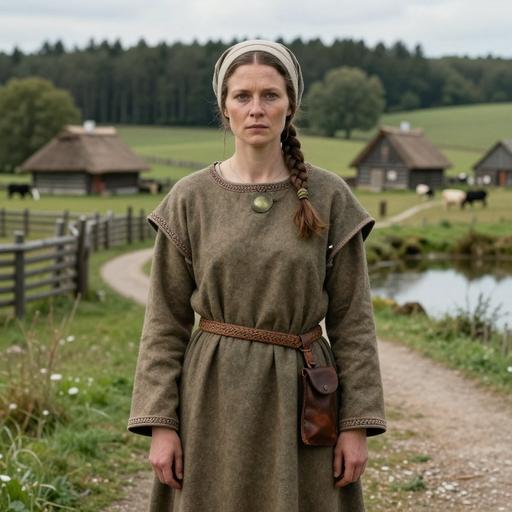
Portrait reconstruction of ISS001
Ancient Individual

A woman buried in Germany in the Late Antiquity era

ISS001
300 CE - 500 CE
Female
Saxon Early Medieval Issendorf, Germany
Germany
Scroll to begin
Chapter I

Identity

The biological and cultural markers that define this ancient individual

Sample ID

ISS001

Date Range

300 CE - 500 CE

Biological Sex

Female

mtDNA Haplogroup

Not available

Cultural Period

Saxon Early Medieval Issendorf, Germany

Chapter II

Place

Where this individual was discovered

Country Germany
Locality Lower Saxony. Issendorf
Coordinates 53.4876, 9.5132
Chapter III

Time

When this individual lived in the broader context of human history

ISS001 300 CE - 500 CE
Chapter IV

Story

The narrative of this ancient life

The Saxon Early Medieval period in Issendorf, Germany, represents a fascinating chapter in the history of the Germanic tribes during the transitional era following the collapse of the Western Roman Empire. The time frame generally spans from the 5th to the 11th centuries, a dynamic period characterized by the transformation of old tribal societies into more complex feudal structures. The Saxons, part of a larger group of Germanic tribes, played a significant role during this era, influencing the cultural, political, and geographical landscape of Northwestern Europe.

Historical Context

The Early Medieval period in Issendorf, located in Lower Saxony, Germany, sees the Saxons emerging as a dominant force. The Saxons were originally a confederation of tribes residing in what is today Northern Germany and the Netherlands. As the Roman Empire weakened, the Saxons, like many other Germanic tribes, began to spread into territories previously dominated by Roman influence. This migration and expansion led to confrontations and eventual settlements in various parts of Europe, including parts of Britain (notably leading to the formation of Anglo-Saxon England).

Settlement and Society

Issendorf would have been a small but significant settlement within Saxon territories, reflecting typical Germanic village structures. The society was predominantly rural, with communities organized into small kinship groups, often centered around extended families. These kin groups, or \kindreds," were the fundamental social units, overseeing agricultural production, communal defense, and social events.

The settlements featured timber longhouses, which were multipurpose buildings housing both people and livestock, a testament to the pragmatic approach to living comfort and economic necessity. The Saxon houses in this area were typically spacious, with a central hearth that served as a focal point for cooking and community gatherings.

Economy and Agriculture

The economy during this period was primarily agrarian. However, trade routes, both overland and along rivers, began expanding, facilitating limited but significant trade in goods such as pottery, metalwork, and textiles. Farms produced staple crops like barley, rye, oats, and various legumes, alongside raising cattle, sheep, and pigs. The Saxons were competent in utilizing the available resources, practicing crop rotation, and employing early forms of ploughing to maximize agricultural yields.

Religion and Culture

Religion during this era was a syncretic mix of paganism and, increasingly, Christianity. The Saxons initially practiced Germanic paganism, worshiping a pantheon of gods—most notably Woden (Odin), Thunor (Thor), and Tiw (Tyr). Religious sites, possibly including sacred groves or pagan temples, would have been integral parts of the landscape.

Christianity began to gain influence, especially by the 8th century, as missions, such as those led by St. Boniface, worked to convert the Saxon elite and the broader population. This religious shift is observed in the gradual replacement of pagan sites with Christian churches and the integration of Christian practices into everyday life.

Law and Governance

The Saxon society was governed by a combination of tribal customs and emerging royal authority. Law was administered through assemblies known as "moots," which were responsible for maintaining order and resolving disputes. These gatherings were influential in decision-making and represented one of the earliest forms of participatory governance among the Germanic peoples.

By the mid-8th century, the expansionist policies of Frankish leaders like Charlemagne began to incorporate Saxon lands into the Carolingian Empire. The incorporation process involved military conquest, forced Christianization, and the establishment of a feudal system that replaced many of the traditional Germanic social structures.

Military and Warfare

Militarily, the Saxons were known for their prowess and resilience. They utilized a combination of locally levied warriors and elite noble-recruited soldiers in defense and during raids. Their weaponry included spears, axes, and swords, whereas famous battle tactics often revolved around regional knowledge and guerrilla strategies.

Conclusion

The Saxon Early Medieval period in Issendorf is emblematic of the broader transformations occurring across Europe during this time. It encapsulates the shift from tribal societies to feudal states, the gradual Christianization of pagan peoples, and the complex interplay of warfare, trade, and cultural exchange. These elements laid the groundwork for the later development of medieval Europe, influencing everything from local governance structures to continental political boundaries."

Chapter V

Genetics

The genetic ancestry of this ancient individual

Ancient Genetic Admixture

This analysis compares the DNA profile of ISS001 with ancient reference populations, showing the genetic composition in terms of prehistoric ancestral groups.

Western Steppe Pastoralists 38.6%
Neolithic Farmers 33.6%
European Hunter-Gatherers 27.9%

Modern Genetic Admixture

This analysis compares the DNA profile with present-day reference populations, showing what percentage of genetic makeup resembles modern populations from different regions.

Europe 92.5%
Northwestern European 77.3%
English 29.9%
Finnish 23.8%
Scandinavian 17.2%
Northwestern European 6.5%
Southern European 8.4%
Balkan 6.0%
Iberian 2.4%
Eastern European 6.8%
Africa 4.8%
Northern East African 4.8%
Ethiopian 4.8%
Asia 1.7%
Central Asian, Northern Indian & Pakistani 0.8%
Indian 0.8%
Northern West Asian 0.6%
Anatolian 0.6%
America 1.1%
America 1.1%
Native American 1.1%

Closest Modern Populations

These are the modern populations showing the closest statistical alignment to A woman buried in Germany in the Late Antiquity era, ranked by genetic distance. Lower distance values indicate closer statistical similarity.

1
Orcadian
2.5623
2
Scottish
2.7303
3
English
2.9241
4
English Cornwall
2.9462
5
Dutch
2.9480
6
Afrikaner
2.9574
7
Irish
3.0322
8
Welsh
3.1175
9
Belgiana
3.1824
10
Shetlandic
3.2046
Chapter VI

Context

Other ancient individuals connected to this sample

Sources

References

Scientific publications and genetic data

Scientific Publication

The Anglo-Saxon migration and the formation of the early English gene pool

Authors Gretzinger J, Sayer D, Justeau P
Abstract

The history of the British Isles and Ireland is characterized by multiple periods of major cultural change, including the influential transformation after the end of Roman rule, which precipitated shifts in language, settlement patterns and material culture1. The extent to which migration from continental Europe mediated these transitions is a matter of long-standing debate2-4. Here we study genome-wide ancient DNA from 460 medieval northwestern Europeans-including 278 individuals from England-alongside archaeological data, to infer contemporary population dynamics. We identify a substantial increase of continental northern European ancestry in early medieval England, which is closely related to the early medieval and present-day inhabitants of Germany and Denmark, implying large-scale substantial migration across the North Sea into Britain during the Early Middle Ages. As a result, the individuals who we analysed from eastern England derived up to 76% of their ancestry from the continental North Sea zone, albeit with substantial regional variation and heterogeneity within sites. We show that women with immigrant ancestry were more often furnished with grave goods than women with local ancestry, whereas men with weapons were as likely not to be of immigrant ancestry. A comparison with present-day Britain indicates that subsequent demographic events reduced the fraction of continental northern European ancestry while introducing further ancestry components into the English gene pool, including substantial southwestern European ancestry most closely related to that seen in Iron Age France5,6.

G25 Coordinates

The G25 coordinates for sample ISS001 can be used for detailed admixture analysis in our G25 Studio tool.

ISS001,0.11701768,0.12964226,0.05914566,0.04273246,0.03963832,0.01660268,0.00130444,-0.00202244,0.00728154,-0.00369798,-0.00895868,0.00807162,-0.01168754,-0.0102261,0.02216418,-0.01116072,-0.0188229,1.616E-05,0.0009476,-0.00195092,0.00743538,0.00104924,-0.0064901,0.01264996,-0.00476082
Analyze in G25 Studio
Use code for 40% off Expires Feb 27