Menu
Store
Blog
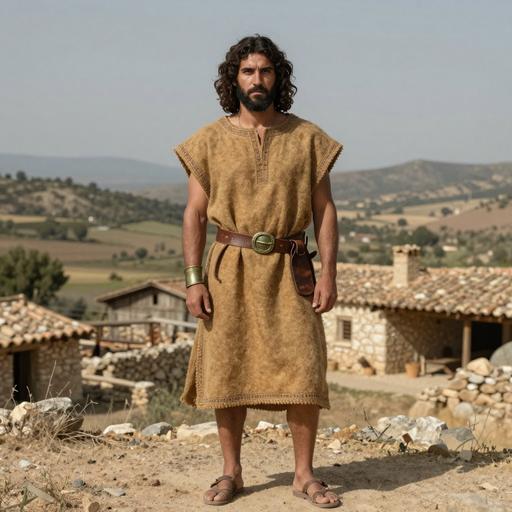
Portrait reconstruction of LHO002
Ancient Individual

A man buried in Spain in the Bronze Age era

LHO002
1620 BCE - 1462 BCE
Male
Bronze Age La Horna, Spain
Spain
Scroll to begin
Chapter I

Identity

The biological and cultural markers that define this ancient individual

Sample ID

LHO002

Date Range

1620 BCE - 1462 BCE

Biological Sex

Male

mtDNA Haplogroup

K1a+195

Y-DNA Haplogroup

R1b1a1b1a1a2a1

Cultural Period

Bronze Age La Horna, Spain

Chapter II

Place

Where this individual was discovered

Country Spain
Locality Alicante. Aspe. La Horna
Coordinates 38.3440, -0.7700
Chapter III

Time

When this individual lived in the broader context of human history

LHO002 1620 BCE - 1462 BCE
Chapter IV

Story

The narrative of this ancient life

The Bronze Age in the region of La Horna, Spain, located in the Western Mediterranean, marks a fascinating era characterized by significant advancements in metallurgy, social organization, and cultural development. This period, roughly spanning from 2200 BCE to 800 BCE, showcases the transformation of societies from relatively simple agrarian communities to more complex and hierarchical social structures.

Geographical and Environmental Context

La Horna is situated in a part of Spain that benefits from a Mediterranean climate, characterized by hot, dry summers and mild, wet winters. This climate would have influenced the agriculture and settlement patterns of its Bronze Age inhabitants. The natural environment included a mix of coastal and inland territories, with access to plains, rivers, and mountainous regions ideal for agriculture, hunting, and gathering.

Metallurgical Advancements

One of the defining features of the Bronze Age in La Horna is the advent of metalworking technology. The use of bronze, an alloy primarily of copper and tin, allowed for the creation of more durable tools and weapons than those available during the preceding Neolithic period. This technical innovation revolutionized many aspects of daily life, including agriculture, warfare, and trade.

Agricultural and Economic Practices

Agriculture at La Horna would have been supported by the region’s fertile soil and favorable climate. The cultivation of crops such as wheat, barley, olives, and grapes was likely complemented by the herding of domesticated animals like sheep, goats, and cattle. These practices not only sustained the local populations but also facilitated trade with neighboring cultures.

Trade networks were crucial during this era, allowing for the exchange of goods, ideas, and technological innovations. La Horna's strategic location in the Western Mediterranean enabled contact and trade with other cultures across the sea, contributing to economic and cultural enrichment.

Social Organization and Settlement Patterns

Bronze Age societies in La Horna were becoming increasingly stratified. Social hierarchy was often reflected in burial practices, with elite members of society receiving more elaborate grave goods. Settlements began to feature greater complexity, with structures such as fortified hilltop settlements, indicating concerns over security and territorial control.

Cultural and Religious Practices

Religious and ritualistic practices during this period were likely polytheistic, with a belief system that involved worshiping natural elements and celestial bodies. Megalithic structures and burial mounds may serve as evidence of ritualistic activities, though specific details about religious practices remain speculative due to the limited archaeological record.

Cultural artifacts from this era include pottery, which evolved in style and technique over the centuries, reflecting both aesthetic preferences and functional requirements. Decorative motifs and artistic expressions in pottery and metalwork provide insight into the symbolic and artistic endeavors of the time.

Interaction with Other Cultures

The Western Mediterranean was a dynamic region during the Bronze Age, characterized by interactions between various cultural groups. La Horna's inhabitants participated in these intercultural exchanges, which were facilitated by maritime routes that connected them to other prominent Bronze Age civilizations. These interactions led to cultural syncretism, evidenced by the diffusion of artistic styles and technological innovations across regions.

Legacy and Influence

The legacy of the Bronze Age in La Horna can be observed in the cultural and technological foundations it laid for subsequent developments in the Iron Age and beyond. The era's achievements in metallurgy, agriculture, and social organization set the stage for more complex societies that would emerge in later periods.

In conclusion, the Bronze Age culture of La Horna, Spain, represents a vibrant and transformative period in the Western Mediterranean characterized by technological innovation, societal complexity, and cultural development. Through the lens of archaeological findings and the broader Mediterranean context, we gain valuable insights into the lives and legacies of the people who inhabited this region over three millennia ago.

Chapter V

Genetics

The genetic ancestry of this ancient individual

Ancient Genetic Admixture

This analysis compares the DNA profile of LHO002 with ancient reference populations, showing the genetic composition in terms of prehistoric ancestral groups.

Neolithic Farmers 44.6%
European Hunter-Gatherers 29.4%
Western Steppe Pastoralists 26.0%

Modern Genetic Admixture

This analysis compares the DNA profile with present-day reference populations, showing what percentage of genetic makeup resembles modern populations from different regions.

Europe 100.0%
Southern European 67.1%
Iberian 38.5%
Sardinian 19.1%
Italian 9.5%
Northwestern European 32.9%
English 23.9%
Northwestern European 4.9%
Scandinavian 4.1%

Closest Modern Populations

These are the modern populations showing the closest statistical alignment to A man buried in Spain in the Bronze Age era, ranked by genetic distance. Lower distance values indicate closer statistical similarity.

1
Spanish La Rioja
1.7445
2
Spanish Burgos
2.0874
3
Spanish Cantabria
2.0923
4
Spanish Aragon
2.0982
5
Spanish Pirineu
2.1122
6
Spanish Castello
2.1192
7
Spanish Terres De L'ebre
2.1198
8
Spanish Castilla La Mancha
2.1929
9
Spanish Valencia
2.2153
10
Spanish Navarra
2.2492
Chapter VI

Context

Other ancient individuals connected to this sample

Sources

References

Scientific publications and genetic data

Scientific Publication

Genomic transformation and social organization during the Copper Age-Bronze Age transition in southern Iberia

Authors Villalba-Mouco V, Oliart C, Rihuete-Herrada C
Abstract

The emerging Bronze Age (BA) of southeastern Iberia saw marked social changes. Late Copper Age (CA) settlements were abandoned in favor of hilltop sites, and collective graves were largely replaced by single or double burials with often distinctive grave goods indirectly reflecting a hierarchical social organization, as exemplified by the BA El Argar group. We explored this transition from a genomic viewpoint by tripling the amount of data available for this period. Concomitant with the rise of El Argar starting ~2200 cal BCE, we observe a complete turnover of Y-chromosome lineages along with the arrival of steppe-related ancestry. This pattern is consistent with a founder effect in male lineages, supported by our finding that males shared more relatives at sites than females. However, simple two-source models do not find support in some El Argar groups, suggesting additional genetic contributions from the Mediterranean that could predate the BA.

G25 Coordinates

The G25 coordinates for sample LHO002 can be used for detailed admixture analysis in our G25 Studio tool.

LHO002,0.12157568,0.15003808,0.04055646,-0.00684866,0.05152252,-0.00575004,-0.0007984,0.00234516,0.02592112,0.04232462,-0.00654994,0.012776,-0.02210536,-0.01259128,0.0037474,-0.00239112,-0.00232766,-0.0004287,3.982E-05,-0.00322906,0.00346802,0.00319798,-0.01085528,-0.00704802,0.00069708
Analyze in G25 Studio
Use code for 40% off Expires Feb 27