
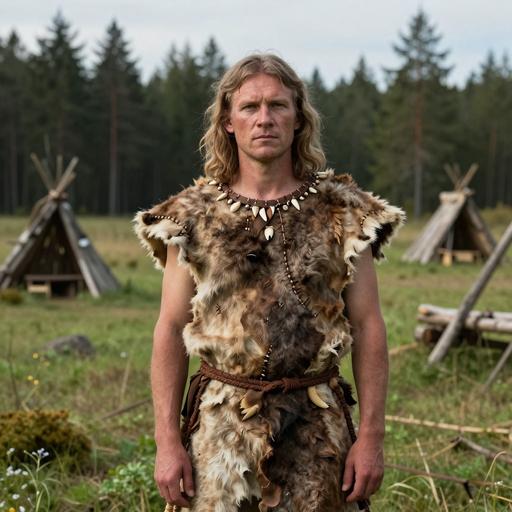
Latvia_HG3 - A man buried in Latvia in the Mesolithic era

Download PDF creates a visual, rasterized copy. Use Print for selectable text and better assistive-technology support.

Menu
Currency
Main
Store
Blog

Loading Report

Preparing your ancestry journey

Connecting to ancient matches...

Preparing your report

Skip to main content
Portrait reconstruction of A man buried in Latvia in the Mesolithic era
Ancient Individual

A man buried in Latvia in the Mesolithic era

A man buried in Latvia during the Latvian Mesolithic Culture

A fragment of the ancient world, preserved across millennia in strands of DNA.

Latvia_HG3
5304 BCE - 4848 BCE
Male
Latvia
Scroll to begin
Chapter I

Identity

The biological and cultural markers that define this ancient individual

Sample ID

Latvia_HG3

Date Range

5304 BCE - 4848 BCE

Cultural Period

Latvian Mesolithic Culture

Biological Sex

Male

mtDNA Haplogroup

U5a2d

Y-DNA Haplogroup

R-P297

Social Role

Hunter (AI estimate, era-typical)

Chapter II

Place

Where this individual was discovered

Country Latvia
Locality Zvejnieki (Zemgale, Neretas District)
Coordinates 56.2833, 25.1333
Chapter III

Time

When this individual lived in the broader context of human history

Latvia_HG3 5304 BCE - 4848 BCE
Chapter IV

Story

The narrative of this ancient life

Region & Environment

The Latvia Mesolithic refers to human presence in northern Europe, within the lands of present-day Latvia. The period falls within the Holocene after major climatic shifts of the late glacial era. Landscapes included forested zones, wetlands, and extensive river and lake systems, creating varied ecological niches for exploiting fish, game, and plant resources.

Historical Context

Around 8000–5000 BCE, communities in the Baltic region lived before widespread agricultural settlement. The Mesolithic was a time of adaptation: mobility and resource scheduling responded to local environmental change and seasonal cycles. Archaeological patterns across the region are typically interpreted as hunter-gatherer economies emphasizing foraging, fishing, and short-term or recurrent use of places.

Populations & Lifeways

Mesolithic populations in Latvia were likely small, mobile groups rather than settled farmers. Lifeways centered on hunting and fishing, with toolkits supporting tasks such as woodworking, processing plant foods, and producing durable implements for daily work. Seasonal movements would have linked communities to predictable resources—fish runs, game migrations, and edible plant availability.

Archaeology & Material Culture

Archaeological evidence for the Latvian Mesolithic commonly relies on stone tool industries (lithics), including projectile point types, scrapers, and other implements used in cutting and processing materials. Sites may include traces of repeated occupation such as hearths or cultural layers, with toolmaking debris reflecting local use of nearby stone sources. Organic materials rarely survive in all contexts, so the lithic record often plays a central role in reconstruction.

Culture & Society

Social life likely involved collaboration in hunting, fishing, and processing activities, supported by shared technical knowledge in making and maintaining tools. While Mesolithic communities varied locally, the broader Baltic Mesolithic pattern suggests networks of interaction through movement, exchange of materials, and shared traditions in lithic technology.

Legacy & Transition

The Mesolithic in Latvia ended as parts of the region became increasingly affected by later cultural developments associated with the spread of farming and new tool traditions. The transition away from predominantly hunter-gatherer lifeways is visible in changing archaeological assemblages over time, marking a shift in how people exploited landscapes and organized community life.

Chapter V

Genetics

These comparisons show genetic similarity, not identity or origin. The populations listed are those whose genomes show statistical alignment to this ancient individual.

Similarity reflects shared history, not shared identity. These are analytical comparisons, not claims about who this person was.

Modern Genetic Admixture

This analysis compares the DNA profile with present-day reference populations, showing statistical similarity to modern reference populations from different regions. The excavation site records where this individual was found, not a fixed modern genetic identity.

Europe 98.0%
Northwestern European 84.5%
Scandinavian 39.9%
Finnish 36.3%
Northwestern European 8.3%
Eastern European 13.5%
Oceania 2.0%
Melanesian 2.0%
Papuan 2.0%
Context

Related Samples

This individual exists within a broader network of ancient samples. No ancient genome stands alone.

Sample ID Culture/Period Date Location Action
I1378 Neolithic Ukraine 5400 BCE Vovnigi, Ukraine View
I4626 Hunter-Gatherer Latvia 5838 BCE Zvejnieki, Latvia View
I4631 Middle Neolithic Comb Ware Culture, Latvia 4236 BCE Zvejnieki, Latvia View
Ukraine_HG1 Mesolithic Ukraine 9107 BCE Vasylivka-3 (Zaporizhia Oblast, Vasylivka District, Vasylivska municipality), Ukraine View
Ukraine_N1 Neolithic Ukraine 5400 BCE Vovnihy-2 (Dnipropetrovsk Oblast, Dnipro District, Solone municipality), Ukraine View
Latvia_MN1 Middle Neolithic Latvia 4311 BCE Zvejnieki (Zemgale, Neretas District), Latvia View
Latvia_HG3 Latvian Mesolithic Culture 5304 BCE Zvejnieki (Zemgale, Neretas District), Latvia View
Latvia_MN2 Middle Neolithic Comb Ware Culture, Latvia 4236 BCE Zvejnieki (Zemgale, Neretas District), Latvia View
Latvia_HG1 Latvian Mesolithic Culture 6465 BCE Zvejnieki (Zemgale, Neretas District), Latvia View
I1819 9107 BCE Vasil'evka, Ukraine View
I1378 5400 BCE Vovnigi, Ukraine View
I4626 5838 BCE Zvejnieki, Latvia View
I4627 4311 BCE Zvejnieki, Latvia View
I4628 5304 BCE Zvejnieki, Latvia View
I4629 3091 BCE Zvejnieki, Latvia View
I4631 4236 BCE Zvejnieki, Latvia View
I4632 6465 BCE Zvejnieki, Latvia View
I1819 9107 BCE Vasil'evka, Ukraine View
I4632 6465 BCE Zvejnieki, Latvia View
I4628 5304 BCE Zvejnieki, Latvia View
I4629 3091 BCE Zvejnieki, Latvia View
I4627 4311 BCE Zvejnieki, Latvia View
Sample ID Culture/Period Date Location Action
Latvia_HG3 Latvian Mesolithic Culture 5304 BCE Zvejnieki (Zemgale, Neretas District), Latvia View
Latvia_HG1 Latvian Mesolithic Culture 6465 BCE Zvejnieki (Zemgale, Neretas District), Latvia View
Sources

References

Scientific publications and genetic data that inform this profile.

Scientific Publication

The Neolithic Transition in the Baltic Was Not Driven by Admixture with Early European Farmers

Authors Jones ER, Zarina G, Moiseyev V, Lightfoot E, Nigst PR et al.
Abstract

The Neolithic transition was a dynamic time in European prehistory of cultural, social, and technological change. Although this period has been well explored in central Europe using ancient nuclear DNA [1, 2], its genetic impact on northern and eastern parts of this continent has not been as extensively studied. To broaden our understanding of the Neolithic transition across Europe, we analyzed eight ancient genomes: six samples (four to ∼1- to 4-fold coverage) from a 3,500 year temporal transect (∼8,300-4,800 calibrated years before present) through the Baltic region dating from the Mesolithic to the Late Neolithic and two samples spanning the Mesolithic-Neolithic boundary from the Dnieper Rapids region of Ukraine. We find evidence that some hunter-gatherer ancestry persisted across the Neolithic transition in both regions. However, we also find signals consistent with influxes of non-local people, most likely from northern Eurasia and the Pontic Steppe. During the Late Neolithic, this Steppe-related impact coincides with the proposed emergence of Indo-European languages in the Baltic region [3, 4]. These influences are distinct from the early farmer admixture that transformed the genetic landscape of central Europe, suggesting that changes associated with the Neolithic package in the Baltic were not driven by the same Anatolian-sourced genetic exchange.

G25 Coordinates

These coordinates represent a position in genetic space, a tool for comparison, not a conclusion. You can use these to perform custom admixture analysis in G25 Studio.

Latvia_HG3,0.12864544,0.10393964,0.08919644,0.07566596,0.03418612,0.0299946,0.00951468,0.01772216,-0.00250976,-0.03325804,0.00384788,-0.0081746,0.01443996,0.01116672,-0.002325,-0.00224656,-3.456E-05,-0.00330796,0.00236068,-0.00119332,0.00232932,-0.00363412,-0.00816956,0.00827572,0.00076412
Continue in G25 Studio
Use code for 25% off Expires Jul 29