Menu
Store
Blog
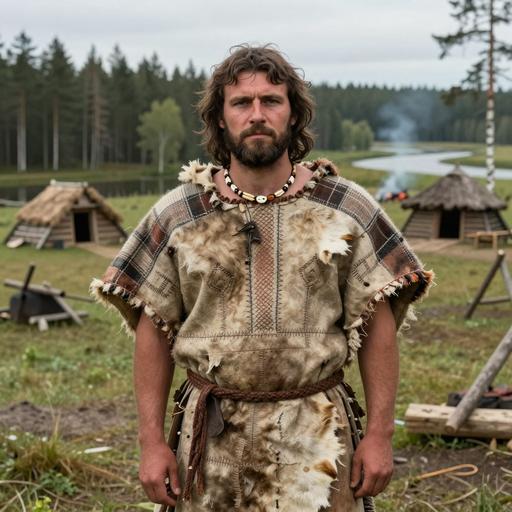
Portrait reconstruction of MA975
Ancient Individual

A man buried in Estonia in the Neolithic era

MA975
3646 BCE - 3376 BCE
Male
Neolithic Comb Ceramic Culture, Estonia
Estonia
Scroll to begin
Chapter I

Identity

The biological and cultural markers that define this ancient individual

Sample ID

MA975

Date Range

3646 BCE - 3376 BCE

Biological Sex

Male

mtDNA Haplogroup

U2e1

Y-DNA Haplogroup

R-M459

Cultural Period

Neolithic Comb Ceramic Culture, Estonia

Chapter II

Place

Where this individual was discovered

Country Estonia
Locality Kudruküla (Ida-Viru County, Narva-Jõesuu Municipality, Narva-Jõesuu Town)
Coordinates 59.4500, 28.0800
Chapter III

Time

When this individual lived in the broader context of human history

MA975 3646 BCE - 3376 BCE
Chapter IV

Story

The narrative of this ancient life

The Neolithic Comb Ceramic Culture of Estonia is a fascinating era characterized by the development of a distinctive material culture and societal structure among the Baltic hunter-gatherers. This culture flourished during the Mesolithic to Neolithic transition, approximately between 4200 BCE to 2000 BCE, and played a crucial role in the prehistoric development of the region that is now known as Estonia and its surroundings.

Geographic and Environmental Context

Estonia, located on the eastern shores of the Baltic Sea, presents a unique environment with its forests, rivers, and extensive coastline. During the Neolithic period, this landscape was primarily covered by dense forests and numerous bodies of water, providing ample resources for hunter-gatherer communities. The region's rich natural resources, including wild game, fish, berries, and nuts, supported the sustenance of these communities.

Material Culture and Technology

The Comb Ceramic Culture is named after its characteristic pottery, which featured distinctive comb-patterned decorations. This style of pottery is not only aesthetically striking but also offers insight into the technological advancements of the time. The ceramics were typically made from clay sourced from local materials and tempered with crushed stone or organic materials. The comb-like impressions were made using tools or even fingers, showcasing an early skill in decorative arts and symbolic expression.

Aside from pottery, the material culture included a range of stone tools such as axes, arrowheads, and chisels, which were crafted using locally sourced flint and other stones. These implements were crucial for hunting, fishing, and woodworking, highlighting the community's reliance on the natural environment.

Subsistence and Economy

The Comb Ceramic Culture of Estonia was predominantly one of hunter-gatherers, although there is some evidence suggesting gradual shifts towards more settled communities and the beginnings of agriculture. The people practiced a subsistence economy that was tightly linked to their environment. They hunted game such as deer, elk, and wild boar, and engaged in extensive fishing in the numerous lakes, rivers, and coastal areas.

There is also evidence of plant gathering, which included picking wild berries, nuts, and other edible plants. As the Neolithic period progressed, signs of early agriculture appeared, including the cultivation of primitive grains. This indicates a slow but significant transition in subsistence practices, possibly influenced by interactions with neighboring farming communities.

Social Organization and Settlement Patterns

The social organization of the Comb Ceramic people is thought to have been relatively egalitarian, characteristic of many hunter-gatherer societies. Communities were likely organized into small bands or tribes, with social structures that emphasized kinship and collaborative living. The settlement patterns were diverse, including both temporary camps and more permanent villages, often located near water sources to facilitate fishing and transportation.

Burial practices provide additional insights into the social and spiritual lives of these communities. Burial sites from this era have revealed grave goods such as pottery, ornaments, and tools, suggesting a belief in an afterlife or a cultural emphasis on honoring the deceased.

Interaction and Exchange

The Comb Ceramic Culture was not isolated but part of a broader network of interaction and exchange in the Baltic region. There is evidence of trade links with neighboring cultures, especially those to the south and east. This is inferred from the distribution of similar pottery styles and the movement of stone resources and other goods across considerable distances. Such interactions likely facilitated the exchange of ideas, technologies, and cultural practices.

Legacy and Significance

The Comb Ceramic Culture represents a critical period in the prehistory of Estonia and the Baltic region. It marks a time of significant cultural transformation, as communities adapted to new environmental conditions and began to adopt elements of agricultural life. The rich archaeological record left by these people provides invaluable insights into the early human occupation of northern Europe, the development of prehistoric technology, and the complex interplay between hunter-gatherer and emerging agrarian societies.

In summary, the Neolithic Comb Ceramic Culture of Estonia is a testament to the resilience and adaptability of early human communities in the face of changing climates and landscapes. Its legacy is evident not only in the archaeological record but also in the ongoing cultural and historical studies that continue to uncover the intricacies of this fascinating era.

Chapter V

Context

Other ancient individuals connected to this sample

Sources

References

Scientific publications and genetic data

Scientific Publication

Extensive Farming in Estonia Started through a Sex-Biased Migration from the Steppe

Authors Saag L, Varul L, Scheib CL
Abstract

The transition from hunting and gathering to farming in Europe was brought upon by arrival of new people carrying novel material culture and genetic ancestry. The exact nature and scale of the transition-both material and genetic-varied in different parts of Europe [1-7]. Farming-based economies appear relatively late in Northeast Europe, and the extent to which they involve change in genetic ancestry is not fully understood due to the lack of relevant ancient DNA data. Here we present the results from new low-coverage whole-genome shotgun sequence data from five hunter-gatherers and five first farmers of Estonia whose remains date to 4,500 to 6,300 years before present. We find evidence of significant differences between the two groups in the composition of autosomal as well as mtDNA, X chromosome, and Y chromosome ancestries. We find that Estonian hunter-gatherers of Comb Ceramic culture are closest to Eastern hunter-gatherers, which is in contrast to earlier hunter-gatherers from the Baltics, who are close to Western hunter-gatherers [8, 9]. The Estonian first farmers of Corded Ware culture show high similarity in their autosomes with European hunter-gatherers, Steppe Eneolithic and Bronze Age populations, and European Late Neolithic/Bronze Age populations, while their X chromosomes are in addition equally closely related to European and Anatolian and Levantine early farmers. These findings suggest that the shift to intensive cultivation and animal husbandry in Estonia was triggered by the arrival of new people with predominantly Steppe ancestry but whose ancestors had undergone sex-specific admixture with early farmers with Anatolian ancestry.

Use code for 40% off Expires Feb 27