Menu
Store
Blog
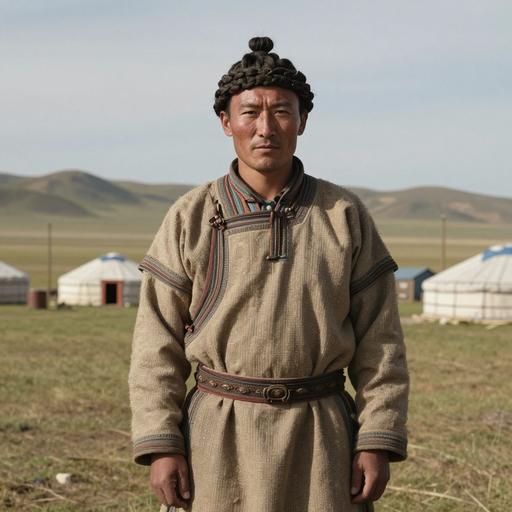
Portrait reconstruction of MIT001
Ancient Individual

A man buried in Mongolia in the Early Iron Age era

MIT001
1192 BCE - 936 BCE
Male
Early Iron Age Tuv, Mongolia
Mongolia
Scroll to begin
Chapter I

Identity

The biological and cultural markers that define this ancient individual

Sample ID

MIT001

Date Range

1192 BCE - 936 BCE

Biological Sex

Male

mtDNA Haplogroup

D1j

Y-DNA Haplogroup

Q-M120

Cultural Period

Early Iron Age Tuv, Mongolia

Chapter II

Place

Where this individual was discovered

Country Mongolia
Locality Tuv. Morin Tolgoi
Chapter III

Time

When this individual lived in the broader context of human history

MIT001 1192 BCE - 936 BCE
Chapter IV

Story

The narrative of this ancient life

The Early Iron Age in the Tuv region of Mongolia, particularly during the era of the Xiongnu Empire, is a fascinating period characterized by significant socio-political developments, economic transformation, and cultural diversity. The Xiongnu were a confederation of nomadic tribes that established a powerful empire in Central Asia, with their influence peaking between the 3rd century BCE and the 1st century CE. This epoch is notable for its advancements in metallurgy, changes in settlement patterns, and the interplay between nomadic and sedentary lifestyles.

Geography and Environment

The Tuv region, located in the central part of modern-day Mongolia, is predominantly composed of steppes, plains, and rolling hills. Its landscapes provided a conducive environment for pastoral nomadism, which was the primary mode of subsistence for the Xiongnu people. The region's climate, marked by harsh winters and moderate summers, significantly shaped the lifestyle and economic strategies of its inhabitants.

Social and Political Structure

The Xiongnu society was organized as a loose confederation of tribes under the leadership of a chanyu, the supreme ruler. The central government was somewhat hierarchical, with various nobles, chiefs, and tribal leaders exerting influence over their respective clans. Loyalty to the chanyu was paramount, and internal strife was not uncommon as powerful leaders vied for control.

One of the Xiongnu's most notable accomplishments was the establishment of a sophisticated administrative system that facilitated the management of their extensive empire. This system included an elaborate network of alliances and vassal states that helped maintain stability and order across their territories.

Economic Activities

Economic activities in Tuv during the Early Iron Age were diverse and adapted to the region's predominantly nomadic lifestyle. The Xiongnu were skilled horsemen and are credited with pioneering advanced horseback riding techniques. Horses were not only crucial for transportation and warfare but also played a central role in trade and as indicators of wealth and status.

In addition to pastoralism, the Xiongnu engaged in hunting and gathering, which supplemented their diet and provided essential materials for clothing and tools. The development and mastery of iron-working technologies allowed them to produce superior weaponry and tools, enhancing their effectiveness in both daily life and military pursuits.

Trade was an essential component of Xiongnu economic life. The Silk Road, which connected China to the West, passed through Xiongnu territory, allowing them to become key intermediaries in the exchange of goods, ideas, and cultures. This strategic position enabled the Xiongnu to acquire luxury items, including silk, spices, and precious metals, which they used to consolidate power and influence.

Cultural and Religious Aspects

Xiongnu culture was a blend of indigenous traditions and influences from neighboring civilizations, including Chinese, Scythian, and other Central Asian cultures. Their art and artifacts reflect a combination of these diverse elements, showcasing intricate metalwork, carvings, and textiles.

Religious beliefs among the Xiongnu were animistic and shamanistic, centered around the worship of natural elements and ancestor spirits. Shamans held significant spiritual authority, performing rituals to ensure the prosperity and protection of the tribe. The Xiongnu also practiced burial rites that included elaborate tombs for their elite, often accompanied by sacrificed animals and grave goods intended to aid the deceased in the afterlife.

Interaction with China

The Xiongnu had a complex relationship with the Han Dynasty of China. This relationship was characterized by periods of war, trade, and diplomacy. The Great Wall of China was partly built to protect against Xiongnu incursions. However, when relations were peaceful, the Xiongnu engaged in extensive trade with China, exchanging horses and other goods for Chinese silk and metal products.

Decline and Legacy

The decline of the Xiongnu Empire began in the late 1st century CE due to internal strife, economic troubles, and pressure from external forces such as the Han Chinese and emerging Turkic tribes. Despite their eventual decline, the Xiongnu left a lasting legacy in the region. They laid the groundwork for future nomadic empires like the Mongols and influenced neighboring cultures through their military prowess, trade networks, and cultural exchanges.

In summary, the Early Iron Age in the Tuv region during the Xiongnu Empire era was a dynamic period marked by the development of a powerful confederation of nomadic warriors who significantly impacted the cultural and economic landscapes of Central Asia. Their legacy endured through their contributions to trade, warfare, and cultural synthesis, shaping the historical trajectory of the region for centuries to come.

Chapter V

Genetics

The genetic ancestry of this ancient individual

Ancient Genetic Admixture

This analysis compares the DNA profile of MIT001 with ancient reference populations, showing the genetic composition in terms of prehistoric ancestral groups.

Ancient Asians 96.5%
Western Steppe Pastoralists 3.5%

Modern Genetic Admixture

This analysis compares the DNA profile with present-day reference populations, showing what percentage of genetic makeup resembles modern populations from different regions.

Asia 100.0%
Northern Asian 77.7%
Siberian 46.8%
Mongolian 30.9%
Chinese & Southeast Asian 21.1%
Chinese 19.0%
Tibetan 2.1%
Central Asian, Northern Indian & Pakistani 1.3%
Central Asian 1.3%

Closest Modern Populations

These are the modern populations showing the closest statistical alignment to A man buried in Mongolia in the Early Iron Age era, ranked by genetic distance. Lower distance values indicate closer statistical similarity.

1
Negidal
3.9957
2
Nanai
4.1211
Chapter VI

Context

Other ancient individuals connected to this sample

Sources

References

Scientific publications and genetic data

Scientific Publication

A Dynamic 6,000-Year Genetic History of Eurasia's Eastern Steppe

Authors Jeong C, Wang K, Wilkin S
Abstract

The Eastern Eurasian Steppe was home to historic empires of nomadic pastoralists, including the Xiongnu and the Mongols. However, little is known about the region's population history. Here, we reveal its dynamic genetic history by analyzing new genome-wide data for 214 ancient individuals spanning 6,000 years. We identify a pastoralist expansion into Mongolia ca. 3000 BCE, and by the Late Bronze Age, Mongolian populations were biogeographically structured into three distinct groups, all practicing dairy pastoralism regardless of ancestry. The Xiongnu emerged from the mixing of these populations and those from surrounding regions. By comparison, the Mongols exhibit much higher eastern Eurasian ancestry, resembling present-day Mongolic-speaking populations. Our results illuminate the complex interplay between genetic, sociopolitical, and cultural changes on the Eastern Steppe.

G25 Coordinates

The G25 coordinates for sample MIT001 can be used for detailed admixture analysis in our G25 Studio tool.

MIT001,0.02707592,-0.43135758,0.09465526,-0.03385496,-0.07592646,-0.04960466,0.02141666,0.02674732,0.01066006,0.01572754,0.00083698,0.00281996,-0.00152788,0.00324856,-0.01083512,-0.0153771,-0.00799056,0.01104414,0.01810276,0.01011888,0.02083944,-0.02392182,-0.00039088,0.00258188,0.01141993
Analyze in G25 Studio
Use code for 40% off Expires Feb 27