Menu
Store
Blog
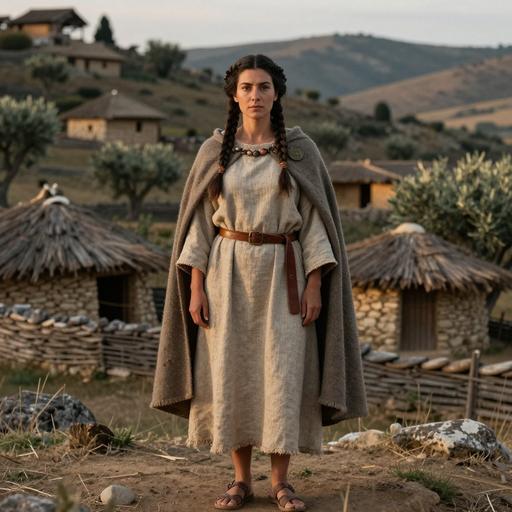
Portrait reconstruction of MIV001
Ancient Individual

A woman buried in Spain in the Bronze Age era

MIV001
2200 BCE - 2000 BCE
Female
Neolithic to Bronze Age Transition in Iberia
Spain
Scroll to begin
Chapter I

Identity

The biological and cultural markers that define this ancient individual

Sample ID

MIV001

Date Range

2200 BCE - 2000 BCE

Biological Sex

Female

mtDNA Haplogroup

J1c3g

Cultural Period

Neolithic to Bronze Age Transition in Iberia

Chapter II

Place

Where this individual was discovered

Country Spain
Locality Barcelona. Terrasa. Miquel Vives
Coordinates 41.5696, 2.0160
Chapter III

Time

When this individual lived in the broader context of human history

MIV001 2200 BCE - 2000 BCE
Chapter IV

Story

The narrative of this ancient life

The Neolithic to Bronze Age transition in Iberia, covering roughly from 3000 BCE to 1500 BCE, marks a significant period in the region’s prehistoric cultural development. This era is characterized by profound transformations in social structures, technology, and economic practices, influencing the trajectory of societies on the Iberian Peninsula.

Neolithic Period Overview

Social and Settlement Patterns

During the Neolithic period, communities in Iberia were primarily agrarian, with societies organized around small, kin-based settlements. The Neolithic saw the emergence of permanent villages, characterized by simple, rectangular houses made from stone, wood, and clay. Larger community structures such as megalithic tombs began to appear, indicating social stratification and communal religious or ritual practices.

Economy and Technology

The Neolithic economy in Iberia was based on agriculture and animal husbandry, with the cultivation of cereals such as wheat and barley, alongside legumes and fruits. Livestock including cattle, sheep, and goats were integral to the Neolithic lifestyle, providing food, clothing, and labor. Neolithic tools were primarily made from stone, with advancements in the sophistication and specialization of implements for farming and crafting.

Cultural and Artistic Expressions

Cultural practices during the Neolithic were deeply influenced by animistic and possibly shamanistic beliefs, reflected in the region’s rock art, pottery, and ceremonial structures. Pottery from the period is notable for its decorative patterns, which were often geometrical and executed using a range of techniques, including incision and painting.

Transition to the Bronze Age

Metallurgical Advancements

The introduction of metallurgy marks the beginning of the Bronze Age in Iberia, with copper initially being worked in the early Chalcolithic (Copper Age) and later replaced or supplemented by bronze. This transition reflects substantial technological innovation, with the production of metal tools and weapons offering significant advantages over stone counterparts.

Economic and Social Changes

Metallurgy stimulated changes in social and economic structures. There was a shift towards more complex societies with hierarchical organization, likely influenced by the social dynamics surrounding the control and distribution of metal resources. Trade routes expanded as communities sought copper, tin, and other materials, fostering increased interaction and cultural exchange both within Iberia and with neighboring regions.

Emergence of Complex Societies

With the development of enhanced agricultural techniques and surplus production, populations grew, leading to the establishment of more complex, stratified societies. Settlement patterns shifted from isolated hamlets to more centralized and fortified sites, often located strategically for trade or defense.

Cultural Developments

Architecture and Settlement Structures

The Bronze Age saw more sophisticated architectural developments, including the construction of fortified hilltop settlements known as \castros." These structures provided defense and symbolized the increasing social differentiation and competition among groups.

Ritual and Ideology

The ideological landscape evolved with the construction of elaborate burial sites and monuments, such as tholoi (beehive-shaped tombs) and large stone stelae featuring anthropomorphic and symbolic engravings. These structures indicate a continuation and enhancement of ritual significance from the Neolithic period, suggesting a continuity of beliefs but with evolving expressions.

Art and Craftsmanship

Bronze Age art in Iberia demonstrates increased sophistication, seen in finely crafted metalwork, including weapons, jewelry, and ceremonial objects. Pottery continued to evolve, with styles reflecting broader European influences yet retaining distinctly Iberian characteristics.

Regional Variations

Throughout Iberia, regional differences emerged in the pace and nature of the Neolithic to Bronze Age transition. In the southwest, particularly around modern-day Portugal, the process was more rapid, possibly due to earlier exposure to metallurgical practices. In contrast, northern and northeastern regions exhibited a slower transition, maintaining Neolithic practices longer due to geographical isolation or resistance to change.

Conclusion

The Neolithic to Bronze Age transition in Iberia represents a pivotal era that laid the foundations for the region's later historical developments. This period of technological innovation, social restructuring, and cultural diversification reflects the dynamic interactions of local traditions with wider European influences, setting the stage for the subsequent Iron Age societies and the eventual emergence of recognizable historical cultures in Iberia, such as the Tartessians, Iberians, and Celtiberians."

Chapter V

Genetics

The genetic ancestry of this ancient individual

Ancient Genetic Admixture

This analysis compares the DNA profile of MIV001 with ancient reference populations, showing the genetic composition in terms of prehistoric ancestral groups.

Neolithic Farmers 42.7%
European Hunter-Gatherers 29.6%
Western Steppe Pastoralists 27.8%

Modern Genetic Admixture

This analysis compares the DNA profile with present-day reference populations, showing what percentage of genetic makeup resembles modern populations from different regions.

Europe 98.2%
Southern European 74.9%
Iberian 44.9%
Italian 19.4%
Sardinian 10.6%
Northwestern European 23.2%
English 14.6%
Northwestern European 8.6%
Asia 1.4%
Japanese & Korean 1.1%
Japanese 1.1%

Closest Modern Populations

These are the modern populations showing the closest statistical alignment to A woman buried in Spain in the Bronze Age era, ranked by genetic distance. Lower distance values indicate closer statistical similarity.

1
Spanish La Rioja
1.8350
2
Spanish Castilla La Mancha
1.9879
3
Spanish Cantabria
1.9909
4
Spanish Aragon
1.9955
5
Spanish Burgos
2.0409
6
Spanish Pirineu
2.0782
7
Spanish Valencia
2.0928
8
Spanish Navarra
2.1331
9
Spanish Terres De L'ebre
2.1712
10
Spanish Andalucia
2.3457
Chapter VI

Context

Other ancient individuals connected to this sample

Sources

References

Scientific publications and genetic data

Scientific Publication

Genomic transformation and social organization during the Copper Age-Bronze Age transition in southern Iberia

Authors Villalba-Mouco V, Oliart C, Rihuete-Herrada C
Abstract

The emerging Bronze Age (BA) of southeastern Iberia saw marked social changes. Late Copper Age (CA) settlements were abandoned in favor of hilltop sites, and collective graves were largely replaced by single or double burials with often distinctive grave goods indirectly reflecting a hierarchical social organization, as exemplified by the BA El Argar group. We explored this transition from a genomic viewpoint by tripling the amount of data available for this period. Concomitant with the rise of El Argar starting ~2200 cal BCE, we observe a complete turnover of Y-chromosome lineages along with the arrival of steppe-related ancestry. This pattern is consistent with a founder effect in male lineages, supported by our finding that males shared more relatives at sites than females. However, simple two-source models do not find support in some El Argar groups, suggesting additional genetic contributions from the Mediterranean that could predate the BA.

G25 Coordinates

The G25 coordinates for sample MIV001 can be used for detailed admixture analysis in our G25 Studio tool.

MIV001,0.11759526,0.15070358,0.04198208,-0.00669138,0.05062234,-0.00410308,-0.00132222,0.00392636,0.02970872,0.0423579,-0.00690162,0.01247814,-0.02031754,-0.01068072,0.00690258,-0.00213782,-0.00779106,-0.00080852,-0.00153578,-0.00506648,0.00308164,0.0026789,-0.00770408,-0.01008966,0.00013827
Analyze in G25 Studio
Use code for 40% off Expires Feb 27