Menu
Store
Blog
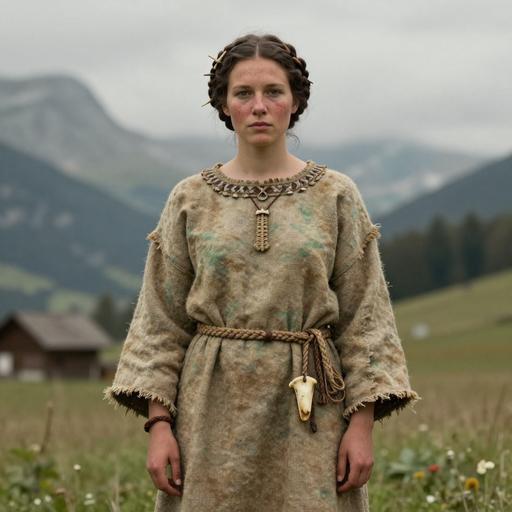
Portrait reconstruction of MX193
Ancient Individual

A woman buried in Switzerland in the Early Bronze Age era

MX193
2283 BCE - 2030 BCE
Female
Early Bronze Age 1 Switzerland
Switzerland
Scroll to begin
Chapter I

Identity

The biological and cultural markers that define this ancient individual

Sample ID

MX193

Date Range

2283 BCE - 2030 BCE

Biological Sex

Female

mtDNA Haplogroup

K1a-a4

Cultural Period

Early Bronze Age 1 Switzerland

Chapter II

Place

Where this individual was discovered

Country Switzerland
Locality Spreitenbach CWC
Coordinates 47.2550, 8.2158
Chapter III

Time

When this individual lived in the broader context of human history

MX193 2283 BCE - 2030 BCE
Chapter IV

Story

The narrative of this ancient life

The Early Bronze Age in Switzerland, often referred to in archaeological terms as part of the broader Central European Bronze Age, is a period marked by significant cultural, technological, and social transformations. This era, generally spanning from around 2200 to 1550 BCE, witnessed the development of new societal structures, advancements in metallurgy, and shifts in settlement patterns.

Geography and Environment

Switzerland during the Early Bronze Age was characterized by diverse landscapes, including the Alpine regions, the central plateau, and the Jura mountains. This geographical diversity provided a wide range of resources and influenced settlement patterns. The climate was moderately warmer than today, enabling a variety of agricultural practices.

Settlement Patterns

Communities during this period typically settled in areas that offered strategic advantages, such as proximity to water sources and fertile land. Settlements were often situated on elevated areas or terraces to avoid flooding, but also to control trade routes. Evidence of circular and rectangular houses suggests a blend of architectural practices, often constructed using wattle and daub, with thatched roofs.

Society and Social Structure

The Early Bronze Age in Switzerland saw the emergence of increasingly complex societal structures. Graves and burial traditions suggest the presence of a hierarchical society. Burial mounds or tumuli sometimes contained rich grave goods, indicating social stratification. These grave goods often included weapons, jewelry, and pottery, illustrating the growing importance of personal wealth and status.

Economy and Trade

The economy during this period was primarily based on agriculture, supplemented by hunting and gathering. The domestication of animals, including cattle, sheep, goats, and pigs, was well-established. The cultivation of grains such as wheat and barley formed the basis of early agriculture.

Trade was crucial during the Early Bronze Age. Switzerland's central location facilitated interactions with neighboring cultures, such as the Unetice culture to the north. Items like amber, salt, and metals were exchanged, with copper and tin being particularly significant for the production of bronze. The existence of trade routes is evidenced by the discovery of foreign goods in Swiss archaeological sites.

Metallurgy

One of the defining features of the Early Bronze Age is the development of metallurgy. The introduction and refinement of bronze, an alloy of copper and tin, revolutionized tool and weapon manufacturing. Early Bronze Age metallurgists in Switzerland produced various bronze artifacts, including axes, swords, and jewelry. The complexity and craftsmanship of these items improved significantly over time, illustrating growing technical expertise.

Art and Culture

Artistic expression in Early Bronze Age Switzerland is primarily seen through pottery and metalwork. Pottery styles were varied, often reflecting regional influences. Decorations ranged from simple geometric patterns to more complex designs. Metal objects, including jewelry and weaponry, were often intricately designed and served as status symbols.

Religion and cosmology are less well understood, but burial practices provide some insights into spiritual beliefs. The use of grave goods suggests a belief in an afterlife, and some sites include evidence of ritualistic activities.

Innovations and Legacy

The Early Bronze Age laid the groundwork for further cultural and technological developments in Switzerland. This era set the stage for increased connectivity across Europe, fostering an exchange of ideas and innovations. The advancements in metallurgy, agriculture, and societal organization had lasting impacts, influencing not only subsequent cultures in the region but also contributing to broader European prehistoric developments.

In summary, Early Bronze Age Switzerland was a period of transformation and growth. The era was marked by significant advances in technology, artistry, and social complexity, reflective of broader trends throughout Bronze Age Europe. The archaeological legacy of this time continues to offer valuable insights into the origins of European civilization.

Chapter V

Genetics

The genetic ancestry of this ancient individual

Ancient Genetic Admixture

This analysis compares the DNA profile of MX193 with ancient reference populations, showing the genetic composition in terms of prehistoric ancestral groups.

Neolithic Farmers 59.8%
European Hunter-Gatherers 23.9%
Western Steppe Pastoralists 16.3%

Modern Genetic Admixture

This analysis compares the DNA profile with present-day reference populations, showing what percentage of genetic makeup resembles modern populations from different regions.

Europe 96.6%
Southern European 96.6%
Iberian 48.1%
Sardinian 32.7%
Italian 15.8%
Asia 2.0%
Northern West Asian 2.0%
Cypriot 2.0%
Africa 1.5%
North African 1.4%
North African 1.4%

Closest Modern Populations

These are the modern populations showing the closest statistical alignment to A woman buried in Switzerland in the Early Bronze Age era, ranked by genetic distance. Lower distance values indicate closer statistical similarity.

1
Sardinian
3.7349
2
Spanish La Rioja
5.0822
3
French Corsica
5.2760
4
Spanish Castilla La Mancha
5.4147
5
Spanish Castello
5.4770
6
Spanish Pirineu
5.4802
7
Spanish Aragon
5.5102
8
Spanish Navarra
5.5281
9
Spanish Burgos
5.5372
10
Spanish Cantabria
5.5394
Chapter VI

Context

Other ancient individuals connected to this sample

Sources

References

Scientific publications and genetic data

Scientific Publication

Comparison of target enrichment strategies for ancient pathogen DNA

Authors Furtwängler A, Neukamm J, Böhme L
Abstract

In ancient DNA research, the degraded nature of the samples generally results in poor yields of highly fragmented DNA; targeted DNA enrichment is thus required to maximize research outcomes. The three commonly used methods - array-based hybridization capture and in-solution capture using either RNA or DNA baits - have different characteristics that may influence the capture efficiency, specificity and reproducibility. Here we compare their performance in enriching pathogen DNA of Mycobacterium leprae and Treponema pallidum from 11 ancient and 19 modern samples. We find that in-solution approaches are the most effective method in ancient and modern samples of both pathogens and that RNA baits usually perform better than DNA baits.

G25 Coordinates

The G25 coordinates for sample MX193 can be used for detailed admixture analysis in our G25 Studio tool.

MX193,0.12056772,0.16011268,0.03334776,-0.02764852,0.05729148,-0.01470044,-0.00177388,0.00626236,0.03657484,0.06221944,-0.005874,0.0143888,-0.02549696,-0.012445,-0.00377944,0.00359464,0.00327448,-0.00086224,-0.00097204,-0.00308088,0.00222744,0.00538352,-0.01189564,-0.0176226,0.00414349
Analyze in G25 Studio
Use code for 40% off Expires Feb 27