Menu
Store
Blog
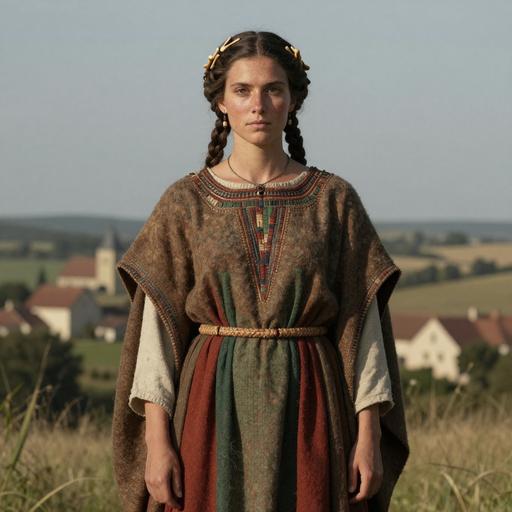
Portrait reconstruction of NIED
Ancient Individual

A woman buried in France in the Late Bronze Age era

NIED
950 BCE - 800 BCE
Female
Late Bronze Age Grand Est, France
France
Scroll to begin
Chapter I

Identity

The biological and cultural markers that define this ancient individual

Sample ID

NIED

Date Range

950 BCE - 800 BCE

Biological Sex

Female

mtDNA Haplogroup

U5b2b

Cultural Period

Late Bronze Age Grand Est, France

Chapter II

Place

Where this individual was discovered

Country France
Locality Grand-Est (East). Niederergheim. Innere Allmende
Coordinates 47.9848, 7.3992
Chapter III

Time

When this individual lived in the broader context of human history

NIED 950 BCE - 800 BCE
Chapter IV

Story

The narrative of this ancient life

The Late Bronze Age in the Grand Est region of France, located at the crossroads of Europe, represents a period of significant cultural evolution and transition. This era, roughly dating from 1200 to 800 BCE, marks a captivating phase in European prehistory characterized by advancements in metallurgy, trade, and social organization. This period also sets the stage for the eventual emergence of the Celtic culture.

Geography and Environment

The Grand Est region, as it is known today, comprises Alsace, Champagne-Ardenne, and Lorraine. This area is geographically diverse, featuring the Vosges Mountains, plateaus, river valleys like the Rhine and its tributaries, and fertile plains. This diversity fostered a range of settlement types and economic activities. The fertile lands were ideal for agriculture, while the forests provided resources such as wood and game.

Metallurgy and Craftsmanship

The Late Bronze Age in this region was marked by significant advancements in metallurgy, specifically bronze-working. The people of this era were skilled metalworkers, producing a variety of tools, weapons, and ornaments. Bronze, an alloy of copper and tin, was the principal material used. Artefacts from this period include swords, spearheads, axes, and personal adornments like bracelets and pins. Many of these items reflect intricate designs and high levels of craftsmanship, indicating a sophisticated knowledge of metalworking techniques.

Trade and Economy

Trade networks during the Late Bronze Age in the Grand Est region were extensive, connecting communities across Europe. The region's strategic location facilitated the exchange of goods such as metals, pottery, textiles, and foodstuffs. The presence of raw materials like tin and copper, essential for bronze production, was limited. Hence, long-distance trade networks were vital. The exchange routes likely extended as far as the British Isles, Scandinavia, the Mediterranean, and Central Europe.

Settlements and Social Organization

Settlements from the Late Bronze Age in this area varied from small villages to larger, more complex, fortified sites. These fortified settlements often served as local centers of power and trade. The social structure within these communities was likely hierarchical, with evidence suggesting the presence of elites who controlled trade and accumulated wealth. Burial practices indicate social stratification, with elite members receiving more elaborate graves goods and burial rites.

Cultural Practices and Beliefs

While specific details of their religious beliefs are scant, the people of the Late Bronze Age Grand Est likely practiced a form of ancestor worship, and certain natural features, such as rivers and mountains, were possibly held sacred. Artefacts such as ritual objects and remnants of structured burial sites suggest complex spiritual beliefs and practices. Additionally, the construction of large burial mounds and the careful placement of grave goods reflect an emphasis on the afterlife.

Transition to the Celtic Culture

The culmination of the Late Bronze Age saw the gradual emergence of what we identify as Celtic culture. This transition involved changes in language, art, and societal organization. Elements of the Late Bronze Age material culture, social hierarchies, and trade practices laid the groundwork for the Celtic societies that would come to dominate parts of Europe in the Iron Age. The Hallstatt culture, originating in this region, exemplifies the transformation from Bronze Age societies to classical Celtic tribes.

Conclusion

The Late Bronze Age in the Grand Est region of France was a dynamic period that laid foundational cultural, technological, and societal elements for the subsequent Celtic culture. The advancements in metallurgy, emergence of complex social structures, and expansive trade networks define this era as a remarkable phase of human innovation and cultural development. As such, this period provides critical insights into the broader prehistoric processes that shaped ancient Europe.

Chapter V

Genetics

The genetic ancestry of this ancient individual

Ancient Genetic Admixture

This analysis compares the DNA profile of NIED with ancient reference populations, showing the genetic composition in terms of prehistoric ancestral groups.

Neolithic Farmers 37.7%
Western Steppe Pastoralists 27.9%
European Hunter-Gatherers 26.4%
Ancient Asians 7.9%

Modern Genetic Admixture

This analysis compares the DNA profile with present-day reference populations, showing what percentage of genetic makeup resembles modern populations from different regions.

Europe 97.4%
Southern European 62.3%
Italian 21.8%
Iberian 20.8%
Sardinian 11.7%
Balkan 8.0%
Northwestern European 35.2%
Northwestern European 20.5%
English 13.9%
Scandinavian 0.8%
Asia 1.7%
Chinese & Southeast Asian 1.7%
Tibetan 0.9%
Indonesian Khmer Thai Myanma 0.8%
America 0.5%
America 0.5%

Closest Modern Populations

These are the modern populations showing the closest statistical alignment to A woman buried in France in the Late Bronze Age era, ranked by genetic distance. Lower distance values indicate closer statistical similarity.

1
Spanish Lleida
2.1796
2
Spanish Barcelones
2.2060
3
Spanish Penedes
2.2309
4
Spanish Valencia
2.2682
5
French Auvergne
2.2801
6
Spanish Cantabria
2.2912
7
Spanish Cataluna
2.3046
8
Spanish Terres De L'ebre
2.3194
9
Spanish Camp De Tarragona
2.3476
10
Spanish Aragon
2.3583
Chapter VI

Context

Other ancient individuals connected to this sample

Sources

References

Scientific publications and genetic data

Scientific Publication

Ancient genomes from present-day France unveil 7,000 years of its demographic history

Authors Brunel S, Bennett EA, Cardin L
Abstract

Genomic studies conducted on ancient individuals across Europe have revealed how migrations have contributed to its present genetic landscape, but the territory of present-day France has yet to be connected to the broader European picture. We generated a large dataset comprising the complete mitochondrial genomes, Y-chromosome markers, and genotypes of a number of nuclear loci of interest of 243 individuals sampled across present-day France over a period spanning 7,000 y, complemented with a partially overlapping dataset of 58 low-coverage genomes. This panel provides a high-resolution transect of the dynamics of maternal and paternal lineages in France as well as of autosomal genotypes. Parental lineages and genomic data both revealed demographic patterns in France for the Neolithic and Bronze Age transitions consistent with neighboring regions, first with a migration wave of Anatolian farmers followed by varying degrees of admixture with autochthonous hunter-gatherers, and then substantial gene flow from individuals deriving part of their ancestry from the Pontic steppe at the onset of the Bronze Age. Our data have also highlighted the persistence of Magdalenian-associated ancestry in hunter-gatherer populations outside of Spain and thus provide arguments for an expansion of these populations at the end of the Paleolithic Period more northerly than what has been described so far. Finally, no major demographic changes were detected during the transition between the Bronze and Iron Ages.

G25 Coordinates

The G25 coordinates for sample NIED can be used for detailed admixture analysis in our G25 Studio tool.

NIED,0.12045928,0.13241694,0.04357806,0.00715242,0.04858634,0.00191848,-2.146E-05,-0.0003025,0.01795376,0.02765986,-0.00630122,0.01117356,-0.01911544,-0.0127159,0.0089325,-0.0059343,-0.0056564,-5.724E-05,0.00084426,-0.00301036,0.00420498,0.00175078,-0.00929918,0.00052136,-0.00141756
Analyze in G25 Studio
Use code for 40% off Expires Feb 26