Menu
Store
Blog
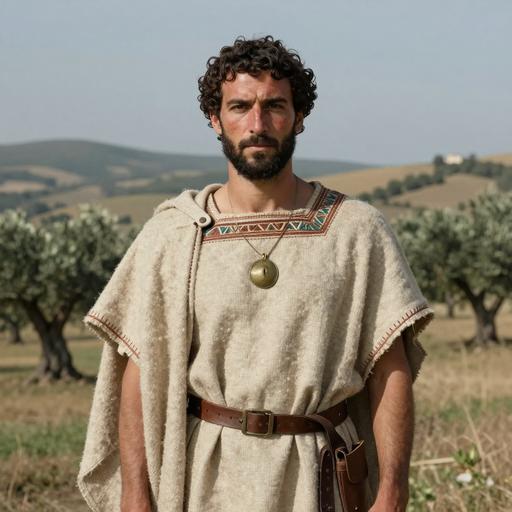
Portrait reconstruction of ORD011
Ancient Individual

A man buried in Italy in the Iron Age era

ORD011
800 BCE - 1200 CE
Male
Daunian Culture Salapia, Italy
Italy
Scroll to begin
Chapter I

Identity

The biological and cultural markers that define this ancient individual

Sample ID

ORD011

Date Range

800 BCE - 1200 CE

Biological Sex

Male

mtDNA Haplogroup

H1e

Y-DNA Haplogroup

Not available

Cultural Period

Daunian Culture Salapia, Italy

Chapter II

Place

Where this individual was discovered

Country Italy
Locality Apulia. Ordona. Herdonia
Coordinates 41.3167, 15.6330
Chapter III

Time

When this individual lived in the broader context of human history

ORD011 800 BCE - 1200 CE
Chapter IV

Story

The narrative of this ancient life

The Daunian culture represents a significant part of the ancient history of Italy, specifically flourishing in the region that is now modern-day Apulia (Puglia) in southern Italy. This culture is predominantly associated with the Iapygian tribes, specifically the Daunians, who occupied northern Apulia. Among the notable sites of Daunian habitation is Salapia, an area rich in archaeological and historical significance.

Geographic Context and Settlements

Salapia, often referred to in ancient sources, was situated near the coastal lagoons of the Adriatic Sea in the province of Foggia. The landscape during the Daunian period comprised fertile plains and coastal marshes which facilitated agriculture and trade. The location was strategic for trade routes connecting the Italic peninsula with the wider Mediterranean world. Settlements such as Salapia evolved into fortified urban centers, reflecting both the need for protection and the increasing complexity of urban life.

Historical Background

The Daunians, along with the other Iapygian tribes such as the Peucetians and the Messapians, are believed to have migrated to Italy in the early Iron Age, around the 9th to 8th centuries BCE. Their origin is often debated but is traditionally attributed to Illyrian or Balkan roots, reflecting a wider context of movement and interaction across the Adriatic Sea.

Cultural Characteristics

  1. Language and Writing: The Daunian language was part of the Iapygian language group, which is not fully deciphered but is known from inscriptions using a variant of the Greek alphabet. These inscriptions provide invaluable insights into their socio-political structures and cultural influences from the Greek world.

  2. Art and Pottery: Daunian art is distinguished by its geometric styles and motifs, with pottery being a prominent feature. The pottery often includes intricate patterns and figurative designs that depict mythological and everyday themes. The shapes of the pottery are unique and serve both practical and ritualistic purposes.

  3. Religion and Mythology: The religious practices of the Daunians involved a pantheon of deities, likely influenced by both Italic and Hellenic traditions. Archaeological finds suggest the presence of sanctuaries and ritual objects that point to a complex spiritual life involving nature worship and rites for fertility and protection.

  4. Social Structure: The society was tribal but exhibited increasing complexity with the development of urban centers. This is evidenced by archaeological sites showing evidence of defensive structures, public buildings, and organized civic spaces, indicating a society with distinct social hierarchies and governance systems.

  5. Economy and Trade: Agriculture was the economic backbone due to the region's fertile lands, complemented by craftsmanship in metalwork, textiles, and ceramics. The proximity of Salapia to the coast facilitated trade not only with neighboring tribes but also across the Adriatic to the Greek colonies and beyond. This led to significant cultural exchanges that influenced Daunian material culture.

Archaeological Evidence

Significant archaeological work has been conducted in the region, revealing settlements, burial sites, and artifacts that provide insight into Daunian life. The necropoleis, or burial grounds, are particularly rich sources of information, showcasing elaborate burial customs with grave goods that indicate belief systems and social stratification.

Legacy

The Daunian culture ultimately became subsumed within the broader Italic and Roman contexts as Roman expansion reached the region in the 4th century BCE. Nevertheless, the imprint of the Daunians and their interactions with Greek and other Italic cultures contributed to the rich tapestry of Italy’s pre-Roman history. The vestiges of their settlements, artifacts, and cultural influence continue to be subjects of archaeological and historical investigation, reflecting a vibrant chapter in the narrative of Mediterranean antiquity.

Chapter V

Genetics

The genetic ancestry of this ancient individual

Modern Genetic Admixture

This analysis compares the DNA profile with present-day reference populations, showing what percentage of genetic makeup resembles modern populations from different regions.

Europe 93.2%
Southern European 59.8%
Italian 24.0%
Iberian 19.3%
Sardinian 16.5%
Northwestern European 33.5%
Northwestern European 22.0%
Finnish 6.4%
Scandinavian 5.1%
Asia 6.8%
Northern West Asian 6.8%
Cypriot 6.8%

Closest Modern Populations

These are the modern populations showing the closest statistical alignment to A man buried in Italy in the Iron Age era, ranked by genetic distance. Lower distance values indicate closer statistical similarity.

1
Spanish La Rioja
2.9889
2
Spanish Murcia
2.9982
3
Spanish Andalucia
3.0123
4
Spanish Castilla La Mancha
3.0441
5
Spanish Cantabria
3.0707
6
Spanish Valencia
3.0851
7
Spanish Castello
3.1584
8
Spanish Pirineu
3.2472
9
Spanish Aragon
3.2699
10
Spanish Alacant
3.3047
Chapter VI

Context

Other ancient individuals connected to this sample

Sources

References

Scientific publications and genetic data

Scientific Publication

The Genetic Origin of Daunians and the Pan-Mediterranean Southern Italian Iron Age Context

Authors Aneli S, Saupe T, Montinaro F
Abstract

The geographical location and shape of Apulia, a narrow land stretching out in the sea at the South of Italy, made this region a Mediterranean crossroads connecting Western Europe and the Balkans. Such movements culminated at the beginning of the Iron Age with the Iapygian civilization which consisted of three cultures: Peucetians, Messapians, and Daunians. Among them, the Daunians left a peculiar cultural heritage, with one-of-a-kind stelae and pottery, but, despite the extensive archaeological literature, their origin has been lost to time. In order to shed light on this and to provide a genetic picture of Iron Age Southern Italy, we collected and sequenced human remains from three archaeological sites geographically located in Northern Apulia (the area historically inhabited by Daunians) and radiocarbon dated between 1157 and 275 calBCE. We find that Iron Age Apulian samples are still distant from the genetic variability of modern-day Apulians, they show a degree of genetic heterogeneity comparable with the cosmopolitan Republican and Imperial Roman civilization, even though a few kilometers and centuries separate them, and they are well inserted into the Iron Age Pan-Mediterranean genetic landscape. Our study provides for the first time a window on the genetic make-up of pre-Roman Apulia, whose increasing connectivity within the Mediterranean landscape, would have contributed to laying the foundation for modern genetic variability. In this light, the genetic profile of Daunians may be compatible with an at least partial autochthonous origin, with plausible contributions from the Balkan peninsula.

G25 Coordinates

The G25 coordinates for sample ORD011 can be used for detailed admixture analysis in our G25 Studio tool.

ORD011,0.11484408,0.14910062,0.03573386,-0.01776426,0.054013,-0.01155842,-0.00242396,0.00279126,0.03058608,0.04554166,-0.00777826,0.00698814,-0.01375376,-0.0130057,0.00802136,0.0034655,0.0039254,-0.00168546,5.152E-05,-0.00067834,0.00054294,0.00064486,-0.00554842,-0.01389142,0.0037375
Analyze in G25 Studio
Use code for 35% off Expires Apr 19