Menu
Store
Blog
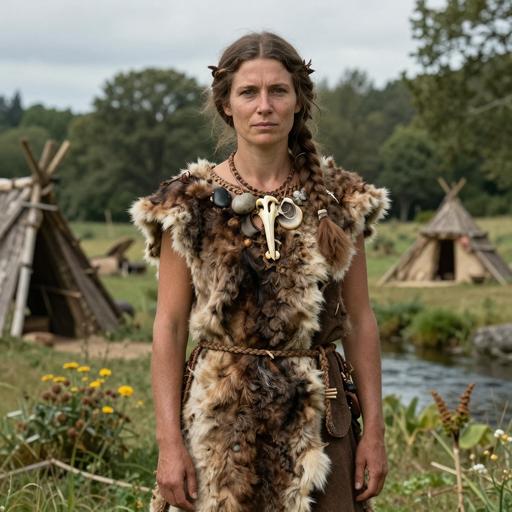
Portrait reconstruction of PER503
Ancient Individual

A woman buried in France in the Mesolithic era

PER503
7200 BCE - 7000 BCE
Female
Mesolithic Nouvelle-Aquitaine, France
France
Scroll to begin
Chapter I

Identity

The biological and cultural markers that define this ancient individual

Sample ID

PER503

Date Range

7200 BCE - 7000 BCE

Biological Sex

Female

mtDNA Haplogroup

U5b1-a

Cultural Period

Mesolithic Nouvelle-Aquitaine, France

Chapter II

Place

Where this individual was discovered

Country France
Locality Nouvelle-Aquitaine (South-West). Agris. Les Perrats
Coordinates 45.7700, 0.3300
Chapter III

Time

When this individual lived in the broader context of human history

PER503 7200 BCE - 7000 BCE
Chapter IV

Story

The narrative of this ancient life

The Mesolithic era in Nouvelle-Aquitaine, France, marks a fascinating period in prehistory, approximately spanning from 10,000 to 5,000 BCE. This epoch is characterized by significant climatic changes following the last Ice Age, which ushered in a warmer climate and transformed the landscape of what is now southwestern France. The Mesolithic period acted as a bridge between the Paleolithic era of big game hunters and the Neolithic era of settled agriculturalists, encompassing a gradual shift from purely hunting and gathering practices to more complex societal structures.

Environment and Landscape

During the Mesolithic, the region of Nouvelle-Aquitaine was undergoing significant environmental transformations. The retreat of glaciers led to the rise of dense forests and the formation of rivers and lakes, providing a variety of ecosystems that were rich in flora and fauna. This period saw the expansion of deciduous woodlands, which replaced the tundra-like landscapes that were prevalent during the Ice Age. The diversification of the environment provided ample resources for the hunter-gatherer communities, promoting a broader spectrum of subsistence strategies.

Subsistence Strategies

The Mesolithic inhabitants of Nouvelle-Aquitaine were adept hunter-gatherers who exploited the rich and varied landscapes for survival. Their subsistence strategies were centered around the hunting of medium to small game such as deer, wild boar, and birds. The abundant aquatic resources also played a crucial role, with evidence suggesting that fishing and the gathering of shellfish became prominent activities. The exploitation of plant resources, including nuts, berries, and tubers, was also an integral part of their diet.

Tools and Technology

The technological advancements during the Mesolithic are evident in the development of microlithic tools. These small, often geometrically shaped stone tools were used as components in composite implements, such as arrows, spears, and harpoons, indicating increased sophistication in hunting techniques. Additionally, the advent of bow and arrow technology marked a significant leap in hunting efficiency.

Other notable technological progressions included the creation of lightweight and portable tools, which facilitated the mobile lifestyle of these communities. Bone and antler were also used to manufacture tools and weapons, showcasing a diversified utilization of available materials.

Settlements and Mobility

The Mesolithic populations of Nouvelle-Aquitaine were typically nomadic or semi-nomadic, adapting to seasonal variations and resource availability. They established temporary campsites, often in proximity to rivers, lakes, and coastlines. The analysis of these sites reveals that they were strategically chosen for their access to diverse resources. Over time, there was a tendency towards greater sedentism, with evidence of more permanent structures appearing towards the late Mesolithic.

Social Structure and Culture

While specific details about the social structure of Mesolithic communities remain elusive, archaeological evidence suggests that these societies were organized into small, kin-based groups. Social stratification appears minimal, with a cooperative approach to subsistence and resource sharing.

Art and symbolic behavior during the Mesolithic in Nouvelle-Aquitaine is reflected in the production of personal ornaments, such as beads and pendants made from bone, antler, and stone. Evidence of rock art, although not as prolific as in earlier times, continues to indicate the importance of symbolic expression and communication.

Interaction and Trade

The Mesolithic era also saw the beginnings of trade and interaction over long distances, facilitated by networks of exchange for raw materials such as flint, and possibly other goods like shells and feathers. This increased interaction likely played a role in the diffusion of technological innovations and cultural practices across regions.

Transition to Neolithic

The transition from the Mesolithic to the Neolithic in Nouvelle-Aquitaine involved the gradual adoption of agriculture and animal domestication. This shift was not abrupt but rather a slow process influenced by both environmental changes and interactions with incoming Neolithic cultures from the Near East and other parts of Europe. The assimilation of new practices led to profound changes in settlement patterns, social organization, and technology.

In summary, the Mesolithic era in Nouvelle-Aquitaine represents a period of adaptation and innovation. As the region's hunter-gatherers navigated a changing world, they laid the groundwork for the complex societies that would eventually emerge with the advent of agriculture. This era is essential for understanding the long-term human-environment interactions that have shaped the cultural landscape of southwestern France.

Chapter V

Genetics

The genetic ancestry of this ancient individual

Ancient Genetic Admixture

This analysis compares the DNA profile of PER503 with ancient reference populations, showing the genetic composition in terms of prehistoric ancestral groups.

Western Steppe Pastoralists 68.7%
European Hunter-Gatherers 25.3%
Ancient Asians 6.0%

Modern Genetic Admixture

This analysis compares the DNA profile with present-day reference populations, showing what percentage of genetic makeup resembles modern populations from different regions.

Europe 98.2%
Northwestern European 87.7%
Finnish 37.4%
English 35.3%
Scandinavian 13.2%
Northwestern European 1.8%
Southern European 10.5%
Iberian 10.5%
Oceania 1.2%
Melanesian 1.2%
Papuan 1.2%
Africa 0.6%

Closest Modern Populations

These are the modern populations showing the closest statistical alignment to A woman buried in France in the Mesolithic era, ranked by genetic distance. Lower distance values indicate closer statistical similarity.

1
Swedish
2.4782
2
Polish Kashubian
2.7845
3
Czech
2.9799
4
German Hamburg
2.9928
5
Polish
3.1083
6
German East
3.3502
7
Polish Silesian
3.5526
8
Danish
3.5600
9
Norwegian
3.6514
10
Icelandic
3.7043
Chapter VI

Context

Other ancient individuals connected to this sample

Sources

References

Scientific publications and genetic data

Scientific Publication

Ancient genomes from present-day France unveil 7,000 years of its demographic history

Authors Brunel S, Bennett EA, Cardin L
Abstract

Genomic studies conducted on ancient individuals across Europe have revealed how migrations have contributed to its present genetic landscape, but the territory of present-day France has yet to be connected to the broader European picture. We generated a large dataset comprising the complete mitochondrial genomes, Y-chromosome markers, and genotypes of a number of nuclear loci of interest of 243 individuals sampled across present-day France over a period spanning 7,000 y, complemented with a partially overlapping dataset of 58 low-coverage genomes. This panel provides a high-resolution transect of the dynamics of maternal and paternal lineages in France as well as of autosomal genotypes. Parental lineages and genomic data both revealed demographic patterns in France for the Neolithic and Bronze Age transitions consistent with neighboring regions, first with a migration wave of Anatolian farmers followed by varying degrees of admixture with autochthonous hunter-gatherers, and then substantial gene flow from individuals deriving part of their ancestry from the Pontic steppe at the onset of the Bronze Age. Our data have also highlighted the persistence of Magdalenian-associated ancestry in hunter-gatherer populations outside of Spain and thus provide arguments for an expansion of these populations at the end of the Paleolithic Period more northerly than what has been described so far. Finally, no major demographic changes were detected during the transition between the Bronze and Iron Ages.

G25 Coordinates

The G25 coordinates for sample PER503 can be used for detailed admixture analysis in our G25 Studio tool.

PER503,0.13557552,0.12733448,0.0719774,0.06536782,0.0389922,0.03069144,0.0076913,0.00905572,0.0036801,-0.01401536,-0.00528828,-0.00094316,0.0056544,0.00835058,0.00980292,0.0062405,-0.00675898,0.00482754,0.0029839,0.00308662,0.00154466,-0.00313348,0.00915844,0.00671366,0.00171924
Analyze in G25 Studio
Use code for 40% off Expires Feb 26