Menu
Store
Blog
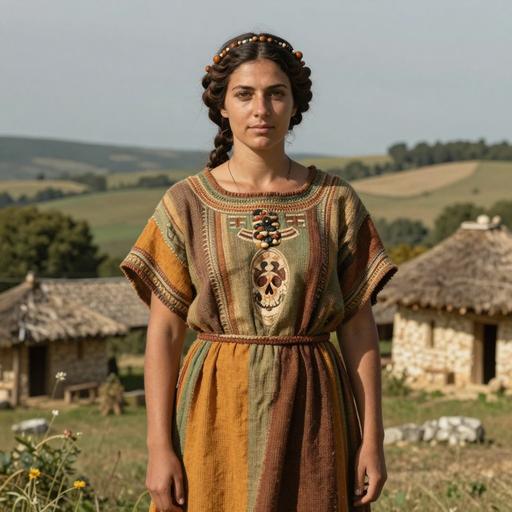
Portrait reconstruction of Pir6
Ancient Individual

A woman buried in France in the Middle Bronze Age era

Pir6
1744 BCE - 1519 BCE
Female
Middle Bronze Age Occitanie, France
France
Scroll to begin
Chapter I

Identity

The biological and cultural markers that define this ancient individual

Sample ID

Pir6

Date Range

1744 BCE - 1519 BCE

Biological Sex

Female

mtDNA Haplogroup

V

Cultural Period

Middle Bronze Age Occitanie, France

Chapter II

Place

Where this individual was discovered

Country France
Locality Occitanie (South). Valros. Le Pirou
Coordinates 43.2516, 3.2202
Chapter III

Time

When this individual lived in the broader context of human history

Pir6 1744 BCE - 1519 BCE
Chapter IV

Story

The narrative of this ancient life

The Middle Bronze Age in the region now known as Occitanie, France, which spans roughly 1600 to 1200 BCE, represents a fascinating era marked by significant cultural and technological developments. This period is often associated not with the Celts—who would rise to prominence later—but rather with the indigenous cultures that influenced and set the stage for Celtic civilization. Here's an extensive and detailed description of this intriguing epoch:

Geography and Environment

Occitanie, located in the southern part of modern-day France, boasts a diverse landscape that includes rugged coastlines, fertile plains, and mountainous regions such as the Pyrenees and the Massif Central. During the Middle Bronze Age, these varied environments played critical roles in shaping the lives of the communities that inhabited them. The availability of natural resources like fertile soil, mineral deposits, and timber was likely a significant factor in settlement patterns and economic activities.

Societal Structure and Settlements

Communities during this time were primarily agrarian, with an economy based on agriculture, animal husbandry, and trade. Settlement patterns suggest a mixture of small, scattered hamlets and larger, more organized proto-urban centers. The presence of fortified settlements, often located on elevated terrains for defensive purposes, indicates a degree of social organization and stratification. The societal structure was likely tribal, comprising extended family units or clans, with leadership possibly based on chieftainship or elder councils.

Material Culture

The Middle Bronze Age in Occitanie is noted for its advancements in metalworking, particularly with bronze—a copper and tin alloy. The region’s craftsmen excelled in producing a variety of bronze tools, weapons, and ornamental items. Swords, axes, and spearheads became more sophisticated and widespread, indicating not only technological progress but also a society that valued martial prowess.

Pottery from this period shows increased variety and complexity in shapes and decorative motifs. Ceramics were often used for both functional and ceremonial purposes, suggesting an evolving sense of aesthetic and perhaps religious or social symbolism.

Trade and Economy

Trade networks expanded significantly during the Middle Bronze Age, facilitating the exchange of goods such as metals, salt, and luxury items like amber and pottery. These networks likely extended far beyond regional boundaries, connecting Occitanie with other parts of Western Europe and even the Mediterranean. Such interactions would have led to cultural exchanges that influenced local practices and technologies.

Burials and Religion

Burial practices in Middle Bronze Age Occitanie reveal much about the cultural and religious beliefs of its people. The era saw the continued use of tumuli (burial mounds) and individual graves, often accompanied by grave goods that included pottery, jewelry, and weapons. These practices suggest a belief in an afterlife and indicate social hierarchies, as wealthier individuals were buried with more elaborate offerings.

The religious landscape was likely animistic, with a belief in spirits and deities associated with natural elements and features. Rituals and ceremonies, which may have included feasting and offerings, played an essential role in community life, helping to bind the society together and reinforce social norms.

Technological and Cultural Influence

During the Middle Bronze Age, Occitanie was a melting pot of indigenous and incoming influences. The technological innovations, especially in metallurgy, agriculture, and construction, had far-reaching impacts on cultural development. These advancements laid the groundwork for the later arrival and integration of Celtic culture in the region.

The gradual transition to more complex societal structures, driven by these technological and economic changes, set the stage for the significant transformations that would occur in the Late Bronze Age and the subsequent Iron Age, heralding the rise of the Celtic cultures in Gaul.

Conclusion

The Middle Bronze Age in Occitanie was a period of dynamic change, underpinned by technological innovation, expanding trade networks, and developing social structures. It was an era that not only reflected the resilience and adaptability of its people but also laid critical foundations for the rich tapestry of cultures that would emerge in subsequent millennia in southern France.

Chapter V

Genetics

The genetic ancestry of this ancient individual

Ancient Genetic Admixture

This analysis compares the DNA profile of Pir6 with ancient reference populations, showing the genetic composition in terms of prehistoric ancestral groups.

Neolithic Farmers 37.6%
Western Steppe Pastoralists 32.3%
European Hunter-Gatherers 22.3%
Ancient Asians 4.6%
Ancient Africans 3.2%

Modern Genetic Admixture

This analysis compares the DNA profile with present-day reference populations, showing what percentage of genetic makeup resembles modern populations from different regions.

Europe 92.5%
Northwestern European 50.3%
Scandinavian 21.7%
English 19.1%
Northwestern European 9.4%
Southern European 42.2%
Iberian 24.3%
Sardinian 18.0%
Asia 5.0%
Central Asian, Northern Indian & Pakistani 5.0%
Indian 5.0%
America 1.7%
America 1.7%
Native American 1.7%
Africa 0.8%
West African 0.8%
Nigerian 0.8%

Closest Modern Populations

These are the modern populations showing the closest statistical alignment to A woman buried in France in the Middle Bronze Age era, ranked by genetic distance. Lower distance values indicate closer statistical similarity.

1
Spanish Biscay
2.3785
2
Spanish Barcelones
2.4409
3
French South
2.5244
4
French Occitanie
2.6500
5
Spanish Aragon
2.7100
6
Spanish Valencia
2.7174
7
French Chalosse
2.7193
8
Spanish Pirineu
2.7450
9
Spanish Cantabria
2.7669
10
French Auvergne
2.7730
Chapter VI

Context

Other ancient individuals connected to this sample

Sources

References

Scientific publications and genetic data

Scientific Publication

Ancient genomes from present-day France unveil 7,000 years of its demographic history

Authors Brunel S, Bennett EA, Cardin L
Abstract

Genomic studies conducted on ancient individuals across Europe have revealed how migrations have contributed to its present genetic landscape, but the territory of present-day France has yet to be connected to the broader European picture. We generated a large dataset comprising the complete mitochondrial genomes, Y-chromosome markers, and genotypes of a number of nuclear loci of interest of 243 individuals sampled across present-day France over a period spanning 7,000 y, complemented with a partially overlapping dataset of 58 low-coverage genomes. This panel provides a high-resolution transect of the dynamics of maternal and paternal lineages in France as well as of autosomal genotypes. Parental lineages and genomic data both revealed demographic patterns in France for the Neolithic and Bronze Age transitions consistent with neighboring regions, first with a migration wave of Anatolian farmers followed by varying degrees of admixture with autochthonous hunter-gatherers, and then substantial gene flow from individuals deriving part of their ancestry from the Pontic steppe at the onset of the Bronze Age. Our data have also highlighted the persistence of Magdalenian-associated ancestry in hunter-gatherer populations outside of Spain and thus provide arguments for an expansion of these populations at the end of the Paleolithic Period more northerly than what has been described so far. Finally, no major demographic changes were detected during the transition between the Bronze and Iron Ages.

G25 Coordinates

The G25 coordinates for sample Pir6 can be used for detailed admixture analysis in our G25 Studio tool.

Pir6,0.11810504,0.13670538,0.04102878,0.0170666,0.0446619,0.0054396,-0.00087818,0.00304526,0.02387264,0.03152162,-0.00854278,0.01144086,-0.0197143,-0.00911418,0.01151822,-0.0042623,-0.01351498,-0.0012225,-0.00039634,-0.00196466,0.00630718,0.004374,-0.01003944,-0.00422606,-0.00010171
Analyze in G25 Studio
Use code for 40% off Expires Feb 26