


Chapter IV
Story
The narrative of this ancient life
The Late Unai Period in Ritidian, Guam, marks a significant era in the prehistoric cultural development of the Chamorro people, traditionally believed to have occurred approximately between 1000 to 1521 AD. This period is characterized by significant advancements in social organization, subsistence strategies, architectural achievements, and artistic expressions.
Geographical Context
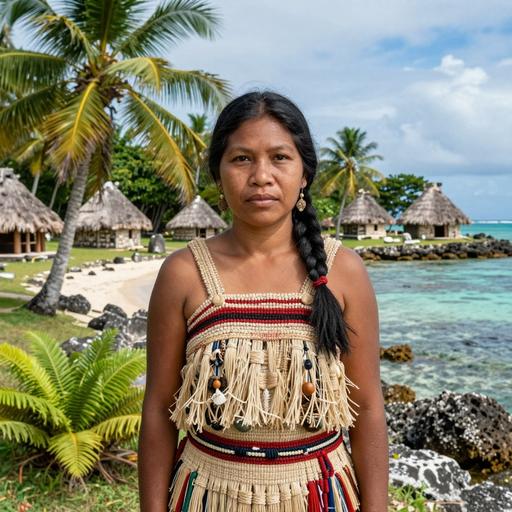
Ritidian Point, located at the northernmost tip of Guam, offers a unique setting with its rugged cliffs, fertile limestone forest, and pristine coastal areas. This environment provided the Chamorro people with abundant resources, including marine life from the surrounding coral reefs, and terrestrial flora and fauna.
Social and Political Structure
During the Late Unai Period, Chamorro society was organized into matrilineal clans, with descent and inheritance passed through the female line. The society was stratified, with the magalahi (chiefs) and the matua (nobility) at the top, followed by the achaot (subordinate chiefs or lower nobility), and the manachang (commoners or lower class). This hierarchy was important in maintaining social order and distributing resources and responsibilities within the community.
The Chamorros were also known for their complex maritime trading networks, which extended throughout the Mariana Islands and possibly beyond. Canoes and other seafaring vessels were vital for trade and communication, enhancing cultural exchanges and resource distribution.
Architectural and Technological Innovations
One of the most defining elements of this period is the construction of latte structures, which are large stone pillars capped with hemispherical stones. These served as foundations for raised dwellings or community structures. The latte stones found in Ritidian and other parts of Guam reflected the Chamorros' architectural ingenuity and are significant cultural symbols even today.
Technological advancements during the Late Unai Phase included the refinement of tools and artifacts made from stone, bone, and shell. These tools were used for fishing, agriculture, and daily activities, indicating a well-adapted lifestyle to their island environment.
Subsistence and Economy
The economy of the Late Unai Period was primarily based on fishing, agriculture, and foraging. The abundant marine resources were exploited using various fishing techniques, such as netting, spearfishing, and the use of fish traps. Agriculture was practiced through the cultivation of taro, yam, and breadfruit, which were staple crops for the Chamorro diet.
The Chamorros also practiced animal husbandry, with domesticated animals such as pigs and chickens complementing their diet. The integrated approach to subsistence demonstrated a keen adaptability to the natural environment.
Cultural and Artistic Expression
Cultural expressions of the Late Unai Period are evident in the Chamorros' pottery, which evolved into complex decorative forms with intricate designs. Pottery was an essential part of daily life, used for cooking, storage, and ceremonial purposes. The artistic designs often symbolized status, clan identity, or spiritual beliefs.
Additionally, Chamorro oral traditions, music, and dance played a crucial role in maintaining social cohesion and transmitting cultural values. Myths and legends were shared orally, preserving the history and cosmology of the Chamorro people.
Spiritual and Ritualistic Practices
The Chamorro worldview was deeply spiritual, with a belief system that involved ancestor worship and reverence for the natural environment. Rituals and ceremonies were conducted to honor ancestors, seek guidance, and ensure harmony with the spirits of the land and sea. Shamans, known as makåhna or suruhånu/suruhåna, were respected figures responsible for spiritual and medicinal practices.
Conclusion
The Late Unai Period at Ritidian represents a pinnacle of Chamorro culture, characterized by societal complexity, architectural prowess, and vibrant cultural traditions. Despite external pressures and eventual changes due to European contact and colonization, the legacy of this period continues to influence contemporary Chamorro culture and identity. The archaeological remains at Ritidian and other sites across Guam provide invaluable insights into the lifeways of the ancient Chamorros, celebrating their resilience, creativity, and enduring cultural heritage.