Menu
Store
Blog
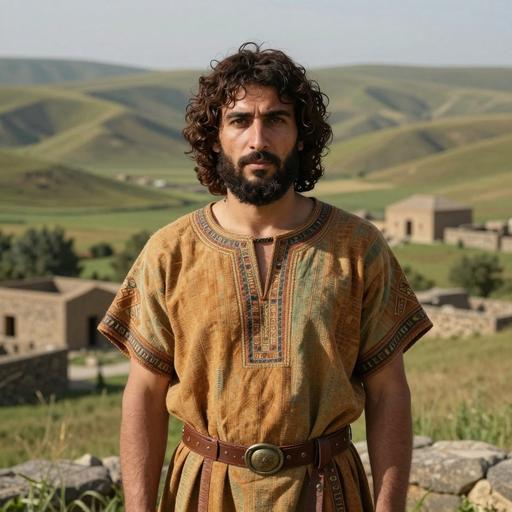
Portrait reconstruction of RISE413
Ancient Individual

A man buried in Armenia in the Middle Bronze Age era

RISE413
1919 BCE - 1696 BCE
Male
Middle Bronze Age Armenia
Armenia
Scroll to begin
Chapter I

Identity

The biological and cultural markers that define this ancient individual

Sample ID

RISE413

Date Range

1919 BCE - 1696 BCE

Biological Sex

Male

mtDNA Haplogroup

T2c1f

Y-DNA Haplogroup

R-P297

Cultural Period

Middle Bronze Age Armenia

Chapter II

Place

Where this individual was discovered

Country Armenia
Locality Nerquin Getashen
Coordinates 40.1400, 45.2600
Chapter III

Time

When this individual lived in the broader context of human history

RISE413 1919 BCE - 1696 BCE
Chapter IV

Story

The narrative of this ancient life

The Middle Bronze Age in Armenia, spanning from around 2000 to 1500 BCE, marks a significant period in the cultural and social development of ancient Near Eastern civilizations. This era in Armenian history reflects a tapestry of influences and innovations in technology, politics, art, and society. The land, characterized by its rugged mountainous terrain and strategic position bridging the East and West, played a crucial role in shaping its history and intercultural exchanges.

Geography and Environment

Armenia's geographic features, including the Armenian Highlands, fertile valleys, rivers, and significant peaks like Mount Ararat, provided a wealth of natural resources. This facilitated both agriculture and animal husbandry, and offered strategic advantages for trade and defense. The region's position served as a crossroads between the civilizations of Mesopotamia, Anatolia, and the Caucasus, influencing cultural exchanges and interactions.

Society and Culture

Social Structure

The Middle Bronze Age saw the emergence of distinct social strata in Armenian society. Settlements often comprised fortified towns and villages, hinting at organized socio-political structures and possibly early forms of centralized authority. Communities were led by chieftains or local kings, whose power likely derived from control over land, livestock, and trade routes. The social hierarchy also included a class of skilled artisans, merchants, and farmers.

Language and Writing

During this era, the peoples of Armenia likely spoke languages related to Hurro-Urartian or early Indo-European, though concrete linguistic evidence is sparse. Writing systems from neighboring cultures, such as cuneiform from Mesopotamia, might have influenced the administration and record-keeping, although direct evidence of local writing from this time is minimal.

Religion and Spirituality

Polytheistic beliefs dominated, with deities associated with natural forces and phenomena, reflecting a deep connection to their environment. Temples and shrines were likely important community centers for religious activities, though much of this evidence comes from later periods influenced by earlier traditions.

Economy and Technology

Agriculture and Trade

The economy during the Middle Bronze Age relied heavily on agriculture, with cultivation of wheat, barley, and grapes. The domestication of animals such as sheep, goats, and cattle also played a vital role, providing resources like wool, meat, and dairy products. Armenia's position facilitated trade of raw materials like metals (copper and tin), which were critical for Bronze Age metallurgy.

Technological Advances

Significant technological advances during this period included the development and refinement of bronze metallurgy. The ability to create stronger and more durable tools, weapons, and ornamentation marked a progressive leap from earlier ages. Innovations in pottery and textile production, along with improved infrastructure for irrigation and farming, supported growing communities.

Art and Architecture

Artistic Expression

The Middle Bronze Age in Armenia saw advancements in various forms of artistic expression. Pottery from this era often features elaborate designs with geometric patterns and motifs that reflect cultural and trade exchanges with surrounding regions. Metalwork, especially in bronze, included finely crafted tools, weapons, jewelry, and ritual objects.

Architecture

Armenian settlements during the Middle Bronze Age often included fortified structures, indicative of the need for defense and the centralized organizational skills of their builders. Architectural remnants suggest the construction of complex stone buildings and public spaces, including early prototypes of religious and community centers.

Interregional Connections

Influences and Interactions

Armenia's position facilitated cultural and commercial exchanges with neighboring regions such as Anatolia, Mesopotamia, and later the Hurrian and Hittite civilizations. These interactions brought new ideas, technologies, and artistic styles into Armenian society. Evidence of artifact exchange and shared motifs in art and architecture highlight Armenia's role as a cultural bridge.

Conclusion

The Middle Bronze Age in Armenia reflects a period of dynamic change influenced by internal developments and external interactions. With advancements in social organization, technology, and cultural expression, it laid significant groundwork for future civilizations in the region. The cultural richness and strategic importance of ancient Armenia during this era contributed to the broader tapestry of the ancient Near Eastern world.

Chapter V

Genetics

The genetic ancestry of this ancient individual

Ancient Genetic Admixture

This analysis compares the DNA profile of RISE413 with ancient reference populations, showing the genetic composition in terms of prehistoric ancestral groups.

Neolithic Farmers 43.4%
Western Steppe Pastoralists 35.9%
European Hunter-Gatherers 20.7%

Modern Genetic Admixture

This analysis compares the DNA profile with present-day reference populations, showing what percentage of genetic makeup resembles modern populations from different regions.

Asia 63.6%
Northern West Asian 40.4%
Caucasian 38.1%
Mesopotamian 2.3%
Central Asian, Northern Indian & Pakistani 23.1%
Pakistan 14.9%
Indian 8.2%
Europe 21.5%
Northwestern European 21.5%
Scandinavian 14.3%
Northwestern European 7.2%
Africa 14.4%
North African 11.4%
Egyptian 11.4%
African Hunter-Gatherer 3.0%
Oceania 0.5%
Melanesian 0.5%
Papuan 0.5%

Closest Modern Populations

These are the modern populations showing the closest statistical alignment to A man buried in Armenia in the Middle Bronze Age era, ranked by genetic distance. Lower distance values indicate closer statistical similarity.

1
Kumyk
2.6089
2
Tat Dagestan Dzhalgan
2.8550
3
Azerbaijani Dagestan
3.2375
4
Chechen
3.5257
5
Ingushian
3.5395
6
Tabasaran
3.7761
7
Karachay
3.7778
8
Lezgin
3.7811
9
Avar O
3.9043
10
Tat Azerbaijan
3.9548
Chapter VI

Context

Other ancient individuals connected to this sample

Sources

References

Scientific publications and genetic data

Scientific Publication

Population genomics of Bronze Age Eurasia

Authors Allentoft ME, Sikora M, Sjögren KG
Abstract

The Bronze Age of Eurasia (around 3000-1000 BC) was a period of major cultural changes. However, there is debate about whether these changes resulted from the circulation of ideas or from human migrations, potentially also facilitating the spread of languages and certain phenotypic traits. We investigated this by using new, improved methods to sequence low-coverage genomes from 101 ancient humans from across Eurasia. We show that the Bronze Age was a highly dynamic period involving large-scale population migrations and replacements, responsible for shaping major parts of present-day demographic structure in both Europe and Asia. Our findings are consistent with the hypothesized spread of Indo-European languages during the Early Bronze Age. We also demonstrate that light skin pigmentation in Europeans was already present at high frequency in the Bronze Age, but not lactose tolerance, indicating a more recent onset of positive selection on lactose tolerance than previously thought.

G25 Coordinates

The G25 coordinates for sample RISE413 can be used for detailed admixture analysis in our G25 Studio tool.

RISE413,0.08615076,0.09034964,-0.03136388,-0.00984372,-0.03712116,0.00454856,0.00898332,-0.00661932,-0.04795688,-0.03446224,-0.00288292,0.0084648,-0.01227024,-0.00470908,0.01038588,-0.00223256,0.00458004,-0.0008162,-0.00128644,0.0046732,0.00212976,0.00022632,0.00523372,0.00749492,-0.00106357
Analyze in G25 Studio
Use code for 40% off Expires Feb 26